
Edgar Huntly
Autor Charles Brockden Brownen Limba Engleză Paperback – 25 apr 2016
Preț: 184.78 lei
Puncte Express: 277
Carte disponibilă
Livrare economică 18 noiembrie-02 decembrie
Livrare prin curier în România Termenul estimat este afișat lângă disponibilitate.
Transport gratuit de la 400.00 lei Plată online sau ramburs, în funcție de opțiunile comenzii.
Retur gratuit în 14 zile Comandă securizată și suport în română.
Specificații
ISBN-13: 9783741134364
ISBN-10: 3741134368
Pagini: 256
Dimensiuni: 140 x 216 x 18 mm
Greutate: 0.33 kg
Editura: Hansebooks
ISBN-10: 3741134368
Pagini: 256
Dimensiuni: 140 x 216 x 18 mm
Greutate: 0.33 kg
Editura: Hansebooks
V-ar putea interesa
-
 Preț: 90.63 lei
 -
 The Development of the Sonnet: An IntroductionMichael R. G. Spiller-18%Preț: 1112.48 lei1356.68 lei
 -
 HTML5 SolutionsMarco Casario-20%Preț: 221.94 lei277.43 lei
 -
 "Pictures" & "Poems" for "Perfect" "People"L. W. LoewPreț: 195.60 lei
 -
 Preț: 124.78 lei
 -
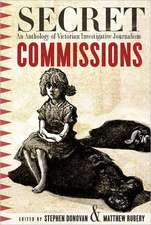 -18%Preț: 354.58 lei433.87 lei
 -
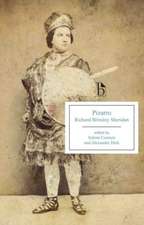 PizarroRichard Brinsley Sheridan-23%Preț: 222.08 lei287.51 lei
 -
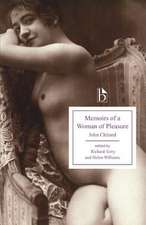 Memoirs of a Woman of PleasureJohn Cleland-18%Preț: 153.88 lei186.61 lei
 -
 The Piazza TalesHerman Melville-23%Preț: 162.86 lei211.62 lei
 -
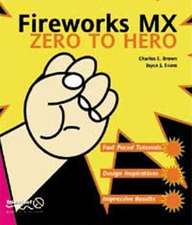 Fireworks MX Zero to HeroCharles Brown-20%Preț: 161.82 lei202.26 lei
 -
 Fireworks MX 2004 Zero to HeroCharles Brown-20%Preț: 185.51 lei231.89 lei
 -
 The Essential Guide to Flex 2 with ActionScript 3.0Charles Brown-20%Preț: 250.24 lei312.80 lei
 -
 The Essential Guide to Flex 3Charles Brown-20%Preț: 292.02 lei365.02 lei
 -
 Preț: 488.40 lei
Descriere
Descriere de la o altă ediție sau format:
Edgar Huntly is a compelling tale of sleepwalking, murder, and frontier violence set in rural Pennsylvania in the 1780s. His memory and wits shaken by the scenes he has witnessed, ordinary republican citizen Edgar Huntly relates the unpredictable and catastrophic consequences of his chance encounter with Clithero Edny, a mysterious Irish immigrant whose unfortunate but violent history catches up with him in the New World. Huntly’s growing obsession with Clithero plunges both men into physical and mental danger, unsettling the colonial territories of the Delaware basin and the cognitive territory of Huntly’s own mind. Brockden Brown’s artful sensationalism transplants the European form of the gothic romance to the new United States, yielding one of the most exciting, metaphysically sophisticated, and historically self-aware novels in early American literary culture.
This Broadview Edition includes a rich selection of historical materials on the gothic and sublime, sleepwalking, captivity narratives, and early American literary nationalism.
Edgar Huntly is a compelling tale of sleepwalking, murder, and frontier violence set in rural Pennsylvania in the 1780s. His memory and wits shaken by the scenes he has witnessed, ordinary republican citizen Edgar Huntly relates the unpredictable and catastrophic consequences of his chance encounter with Clithero Edny, a mysterious Irish immigrant whose unfortunate but violent history catches up with him in the New World. Huntly’s growing obsession with Clithero plunges both men into physical and mental danger, unsettling the colonial territories of the Delaware basin and the cognitive territory of Huntly’s own mind. Brockden Brown’s artful sensationalism transplants the European form of the gothic romance to the new United States, yielding one of the most exciting, metaphysically sophisticated, and historically self-aware novels in early American literary culture.
This Broadview Edition includes a rich selection of historical materials on the gothic and sublime, sleepwalking, captivity narratives, and early American literary nationalism.
Recenzii
Edgar Huntly is a compelling tale of sleepwalking, murder, and frontier violence set in rural Pennsylvania in the 1780s. His memory and wits shaken by the scenes he has witnessed, ordinary republican citizen Edgar Huntly relates the unpredictable and catastrophic consequences of his chance encounter with Clithero Edny, a mysterious Irish immigrant whose unfortunate but violent history catches up with him in the New World. Huntly’s growing obsession with Clithero plunges both men into physical and mental danger, unsettling the colonial territories of the Delaware basin and the cognitive territory of Huntly’s own mind. Brockden Brown’s artful sensationalism transplants the European form of the gothic romance to the new United States, yielding one of the most exciting, metaphysically sophisticated, and historically self-aware novels in early American literary culture.
This Broadview Edition includes a rich selection of historical materials on the gothic and sublime, sleepwalking, captivity narratives, and early American literary nationalism.
“Siân Silyn Roberts has done readers, students, and scholars a tremendous service in assembling this critical edition of Edgar Huntly. An authoritative scholarly edition of the text of the novel is placed among a remarkable range of contemporary extracts that help readers understand the text in the contexts of late-eighteenth-century aesthetic and moral philosophy, transatlantic literary culture and the gothic boom, and other topics. Roberts also adds an elegant critical introduction, thus making her own important contribution to the critical scholarship. This new edition pulls Brown’s fascinating and difficult novel into a new set of critical and theoretical conversations that reflect early American literary studies today; it will surely make this canonical, yet somewhat under-studied early American novel accessible to new generations of readers.” — Ezra Tawil, University of Rochester
“Siân Silyn Roberts has raised the bar considerably in her edition of Charles Brockden Brown’s notoriously difficult Edgar Huntly. In taking up Brown’s ‘dare’ to readers, Roberts provides the most comprehensive toolbox for both new and returning students, and for those of us who have sustained the discomfiting realm of Brown’s world for years. The excellent introduction demonstrates Brown’s broad-ranging investments and influences, from the regional to the transatlantic, native American to radical Irishman, US literary nationalism to the extensive literary archives his work engages with. Roberts illuminates the connections between the 1790s and today, and as a result, invites readers to imagine historical trajectories as Brown’s work demands. This is important and timely—I can’t wait to use it in my classes.” — Gretchen Woertendyke, University of South Carolina
This Broadview Edition includes a rich selection of historical materials on the gothic and sublime, sleepwalking, captivity narratives, and early American literary nationalism.
“Siân Silyn Roberts has done readers, students, and scholars a tremendous service in assembling this critical edition of Edgar Huntly. An authoritative scholarly edition of the text of the novel is placed among a remarkable range of contemporary extracts that help readers understand the text in the contexts of late-eighteenth-century aesthetic and moral philosophy, transatlantic literary culture and the gothic boom, and other topics. Roberts also adds an elegant critical introduction, thus making her own important contribution to the critical scholarship. This new edition pulls Brown’s fascinating and difficult novel into a new set of critical and theoretical conversations that reflect early American literary studies today; it will surely make this canonical, yet somewhat under-studied early American novel accessible to new generations of readers.” — Ezra Tawil, University of Rochester
“Siân Silyn Roberts has raised the bar considerably in her edition of Charles Brockden Brown’s notoriously difficult Edgar Huntly. In taking up Brown’s ‘dare’ to readers, Roberts provides the most comprehensive toolbox for both new and returning students, and for those of us who have sustained the discomfiting realm of Brown’s world for years. The excellent introduction demonstrates Brown’s broad-ranging investments and influences, from the regional to the transatlantic, native American to radical Irishman, US literary nationalism to the extensive literary archives his work engages with. Roberts illuminates the connections between the 1790s and today, and as a result, invites readers to imagine historical trajectories as Brown’s work demands. This is important and timely—I can’t wait to use it in my classes.” — Gretchen Woertendyke, University of South Carolina
Cuprins
Acknowledgements
Introduction
Charles Brockden Brown: A Brief Chronology
A Note on the Text
Edgar Huntly; or, Memoirs of a Sleep-Walker
Appendix A: Literary Nationalism and the Romance
Introduction
Charles Brockden Brown: A Brief Chronology
A Note on the Text
Edgar Huntly; or, Memoirs of a Sleep-Walker
Appendix A: Literary Nationalism and the Romance
- Charles Brockden Brown, “The Difference Between History and Romance,” Monthly Magazine and American Review (April 1800)
- From Sir Walter Scott, “Essay on Romance” (1823)
- From Nathaniel Hawthorne, Preface to The House of the Seven Gables (1851)
- From Edmund Burke, A Philosophical Enquiry into the Origin of Our Ideas of the Sublime and Beautiful(1757)
- From Immanuel Kant, Observations on the Feeling of the Beautiful and Sublime (1764)
- From Percy Bysshe Shelley, “Mont Blanc” (1817)
- From Charles Brockden Brown, “Terrific Novels,” Literary Magazine and American Register (April 1805)
- Charles Brockden Brown (?), “A Receipt for a Modern Romance,” Weekly Magazine (June 1798)
- From John Locke, An Essay Concerning Human Understanding (1690)
- From Erasmus Darwin, Zoonomia; or, the Laws of Organic Life (1794–96)
- Charles Brockden Brown, “Somnambulism. A Fragment,” Literary Magazine and American Register (May 1805)
- From Adam Smith, The Theory of Moral Sentiments (1759)
- From Jean-Jacques Rousseau, Discourse on the Origin and Foundations of Inequality Among Mankind (1755)
- From Benjamin Rush, An Inquiry into the Influence of Physical Causes Upon the Moral Faculty (1786)
- A True Narrative of the Sufferings of Mary Kinnan (1794)
- From Minutes of conferences, held with the Indians, at Easton, in the months of July and November, 1756 (1757)
- From Benjamin Franklin, A narrative of the late massacres, in Lancaster County, of a number of Indians (1764)
- From “Peter Porcupine” [William Cobbett], Detection of a conspiracy, formed by the United Irishmen (1798)
Notă biografică
Charles Brockden Brown (1771-1810) was a pioneering American novelist, editor, and essayist, often credited as the first professional American novelist. Born in Philadelphia, Pennsylvania, Brown's literary career flourished during the early years of the United States, a time marked by political upheaval and intellectual ferment. Brown is best known for his contributions to American Gothic literature, a genre he helped establish with his novels that explored themes of terror, mystery, and psychological suspense. His works often delved into the darker aspects of human nature and society, reflecting the anxieties and uncertainties of his time. One of Brown's most famous novels is "Wieland; or, The Transformation" (1798), which tells the story of a family plagued by religious fanaticism and psychological terror. This novel is considered one of the earliest examples of American Gothic fiction and remains a key work in the genre. Brown's other notable works include "Arthur Mervyn; or, Memoirs of the Year 1793" (1799-1800), which portrays the social and moral challenges faced by its protagonist in post-Revolutionary War America, and "Ormond; or, The Secret Witness" (1799), a complex narrative of intrigue and psychological depth set in Philadelphia. Although Brown's literary career was relatively short-he died at the age of 39-his influence on American literature was profound. He is recognized for his innovative approach to storytelling, his exploration of Gothic themes within an American context, and his contributions to the development of the psychological novel. Charles Brockden Brown's legacy as a pioneering American novelist continues to be studied and celebrated for its literary merit and its exploration of timeless themes that resonate with readers to this day.