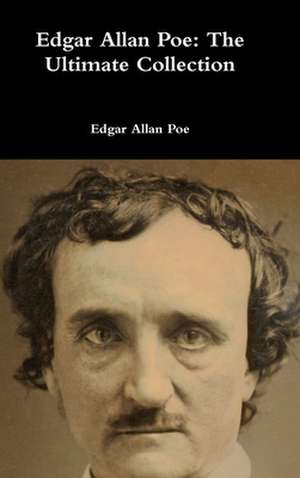
Edgar Allan Poe
Autor Edgar Allan Poeen Limba Engleză Hardback – 14 dec 2016
Preț: 252.86 lei
Puncte Express: 379
Carte tipărită la comandă
Livrare economică 27 noiembrie-11 decembrie
Livrare prin curier în România Termenul estimat este afișat lângă disponibilitate.
Transport gratuit de la 400.00 lei Plată online sau ramburs, în funcție de opțiunile comenzii.
Retur gratuit în 14 zile Comandă securizată și suport în română.
Specificații
ISBN-13: 9781365611223
ISBN-10: 1365611221
Pagini: 338
Dimensiuni: 157 x 235 x 23 mm
Greutate: 0.59 kg
Editura: Lulu.Com
ISBN-10: 1365611221
Pagini: 338
Dimensiuni: 157 x 235 x 23 mm
Greutate: 0.59 kg
Editura: Lulu.Com
V-ar putea interesa
-
 Tales of Mystery and ImaginationEdgar Allan PoePreț: 28.01 lei
 -
 The View from the Cheap SeatsNeil GaimanPreț: 73.55 lei
 -
 UtopiaThomas More-20%Preț: 45.54 lei56.80 lei
 -
 Dracula: Clothbound Classics. Idee de cadouBram Stoker-28%Preț: 105.97 lei147.00 lei
 -
 FrankensteinMary Shelley-26%Preț: 102.42 lei137.91 lei
 -
 The Portrait of a LadyHenry James-22%Preț: 127.58 lei164.07 lei
 -
 The Portable Edgar Allan PoeEdgar Allan Poe-22%Preț: 102.06 lei130.79 lei
 -
 Selected TalesEdgar Allan PoePreț: 54.26 lei
 -
 The Ring of the NibelungRichard Wagner-21%Preț: 155.23 lei197.56 lei
 -
 -17%Preț: 133.92 lei161.41 lei
 -
 The Complete Tales and PoemsEdgar Allan PoePreț: 138.39 lei
 -
 The Complete Poetry Of Edgar Allan PoeEdgar Allan PoePreț: 42.97 lei
 -
 Tales of Mystery & ImaginationEdgar Allan PoePreț: 61.84 lei
 -
 The Penguin Complete Tales and Poems of Edgar Allan PoeEdgar Allan Poe-28%Preț: 158.72 lei221.97 lei
 -
 The Essential Tales and Poems of Edgar Allan PoeEdgar Allan PoePreț: 94.45 lei
 -
 The Essential Tales and Poems of Edgar Allan PoeEdgar Allan Poe-15%Preț: 95.12 lei112.23 lei
 -
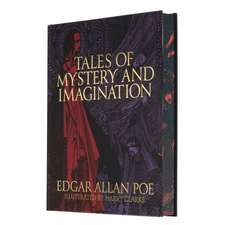 Edgar Allan Poe's Tales of Mystery and ImaginationEdgar Allan PoePreț: 175.22 lei
 -
 The Classic Edgar Allan Poe CollectionEdgar Allan PoePreț: 266.99 lei
 -
 Edgar Allan Poe's Classic Tales of Mystery and ImaginationEdgar Allan PoePreț: 112.33 lei
 -
 The Complete Tales and Poems of Edgar Allan PoeEdgar Allan Poe-28%Preț: 248.37 lei344.20 lei
 -
 Dinosaur SoundsSam TaplinPreț: 103.30 lei
 -
 The RavenEdgar Allan PoePreț: 37.50 lei
 -
 Edgar Allan Poe: The Master of the MacabreLevi Lionel Leland-18%Preț: 64.98 lei79.50 leiRecomandat
 -
 Tales and PoemsEdgar Allan Poe-33%Preț: 53.10 lei79.52 lei
 -
 The Edgar Allan Poe CollectionEdgar Allan PoePreț: 90.86 lei
 -
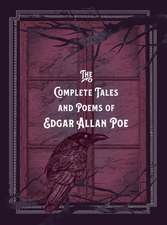 The Complete Tales & Poems of Edgar Allan PoeEdgar Allan Poe-12%Preț: 149.43 lei170.51 lei
 -
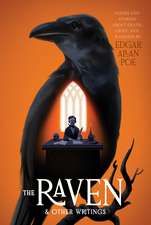 The Raven & Other WritingsEdgar Allan PoePreț: 52.89 leiRecomandat
 -
 A Collection of Poems by Robert FrostRobert FrostPreț: 156.39 lei
 -
 Gulliver's Travels: Collector EdtionJonathan Swift-16%Preț: 79.59 lei95.06 lei
Descriere
Descriere de la o altă ediție sau format:
Edgar Allan Poe’s stories and poems are among the most haunting and indelible in American literature, but critics for decades persisted in seeing Poe as an anomaly, or even an anachronism. His works, with their bizarrely motivated characters and mysterious settings, did not seem to be a part of the literature of early nineteenth-century America. Critics realize now, though, that Poe was even more a part of the contemporary American literary scene than many of his more “nationalistic” peers, and that in much of his work Poe was making commentaries on slavery and Southern social attitudes, technology, the urban landscape, political economy, and other subjects.
This Broadview Edition includes a selection of Poe’s poems, tales, and sketches in such diverse modes of writing as tales of the supernatural and psychic conflict, satires and hoaxes, science fiction and detective fiction, and nonfiction essays on literary and social topics. These are supplemented by a selection of contextual documents—newspaper and magazine articles, treatises, and other historical texts—that will help readers understand the social, literary, and intellectual milieus in which Poe wrote.
Edgar Allan Poe’s stories and poems are among the most haunting and indelible in American literature, but critics for decades persisted in seeing Poe as an anomaly, or even an anachronism. His works, with their bizarrely motivated characters and mysterious settings, did not seem to be a part of the literature of early nineteenth-century America. Critics realize now, though, that Poe was even more a part of the contemporary American literary scene than many of his more “nationalistic” peers, and that in much of his work Poe was making commentaries on slavery and Southern social attitudes, technology, the urban landscape, political economy, and other subjects.
This Broadview Edition includes a selection of Poe’s poems, tales, and sketches in such diverse modes of writing as tales of the supernatural and psychic conflict, satires and hoaxes, science fiction and detective fiction, and nonfiction essays on literary and social topics. These are supplemented by a selection of contextual documents—newspaper and magazine articles, treatises, and other historical texts—that will help readers understand the social, literary, and intellectual milieus in which Poe wrote.
Recenzii
Edgar Allan Poe’s stories and poems are among the most haunting and indelible in American literature, but critics for decades persisted in seeing Poe as an anomaly, or even an anachronism. His works, with their bizarrely motivated characters and mysterious settings, did not seem to be a part of the literature of early nineteenth-century America. Critics realize now, though, that Poe was even more a part of the contemporary American literary scene than many of his more “nationalistic” peers, and that in much of his work Poe was making commentaries on slavery and Southern social attitudes, technology, the urban landscape, political economy, and other subjects.
This Broadview Edition includes a selection of Poe’s poems, tales, and sketches in such diverse modes of writing as tales of the supernatural and psychic conflict, satires and hoaxes, science fiction and detective fiction, and nonfiction essays on literary and social topics. These are supplemented by a selection of contextual documents—newspaper and magazine articles, treatises, and other historical texts—that will help readers understand the social, literary, and intellectual milieus in which Poe wrote.
“Carefully selected, expertly edited, and judiciously annotated, James M. Hutchisson’s Broadview Edition makes an excellent introduction to Poe’s imaginative and critical writings. Though intended for classroom use, this exciting new edition will appeal to all readers who wish to deepen their appreciation of Edgar Allan Poe, the ‘bad boy’ of American literature.” — Kevin Hayes, University of Central Oklahoma
“Edgar Allan Poe: Selected Poetry and Tales brilliantly represents the best scholarly material on Poe, delivered in an accessible, conversational tone that will appeal to students. The contents run the gamut from Poe’s notorious and imaginative horror tales to his literary criticism. Moreover, James M. Hutchisson has included examples of Poe’s science fiction stories, detective tales, and the oft-overlooked satires. Instructors and students alike will benefit from this edition’s introduction, timeline, footnotes, and appendices, which help to place Poe within his literary and social timeframe, a consideration too often neglected.” — Amy Branam, Frostburg State University
This Broadview Edition includes a selection of Poe’s poems, tales, and sketches in such diverse modes of writing as tales of the supernatural and psychic conflict, satires and hoaxes, science fiction and detective fiction, and nonfiction essays on literary and social topics. These are supplemented by a selection of contextual documents—newspaper and magazine articles, treatises, and other historical texts—that will help readers understand the social, literary, and intellectual milieus in which Poe wrote.
“Carefully selected, expertly edited, and judiciously annotated, James M. Hutchisson’s Broadview Edition makes an excellent introduction to Poe’s imaginative and critical writings. Though intended for classroom use, this exciting new edition will appeal to all readers who wish to deepen their appreciation of Edgar Allan Poe, the ‘bad boy’ of American literature.” — Kevin Hayes, University of Central Oklahoma
“Edgar Allan Poe: Selected Poetry and Tales brilliantly represents the best scholarly material on Poe, delivered in an accessible, conversational tone that will appeal to students. The contents run the gamut from Poe’s notorious and imaginative horror tales to his literary criticism. Moreover, James M. Hutchisson has included examples of Poe’s science fiction stories, detective tales, and the oft-overlooked satires. Instructors and students alike will benefit from this edition’s introduction, timeline, footnotes, and appendices, which help to place Poe within his literary and social timeframe, a consideration too often neglected.” — Amy Branam, Frostburg State University
Cuprins
Acknowledgements
Introduction
Edgar Allan Poe: A Brief Chronology
A Note on the Texts
POETRY
Tamerlane (1827)
Sonnet—To Science (1829)
[Alone] (1829)
Romance (1829)
The City in the Sea (1831)
Israfel (1831)
The Sleeper (1831)
Lenore (1831)
To Helen (1832)
Dream-Land (1844)
The Raven (1845)
A Valentine (1846)
Ulalume—A Ballad (1847)
The Bells (1848)
Annabel Lee (1849)
For Annie (1849)
Eldorado (1849)
TALES
Metzengerstein (1832)
MS. Found in a Bottle (1833)
Loss of Breath (1835)
Berenice (1835)
Morella (1835)
King Pest (1835)
How to Write a Blackwood Article (1838)
A Predicament (1838)
Ligeia (1838)
Silence—A Fable (1838)
The Man That Was Used Up (1839)
The Fall of the House of Usher (1839)
William Wilson (1839)
The Man of the Crowd (1840)
Philosophy of Furniture (1840)
A Descent into the Maelström (1841)
The Murders in the Rue Morgue (1841)
The Masque of the Red Death (1842)
The Pit and the Pendulum (1842)
The Oval Portrait (1842)
The Tell-Tale Heart (1843)
The Black Cat (1843)
The Purloined Letter (1844)
“Thou Art the Man” (1844)
The Imp of the Perverse (1845)
The Facts in the Case of M. Valdemar (1845)
The Cask of Amontillado (1846)
Hop-Frog (1849)
Appendix A: Social and Historical Contexts
Introduction
Edgar Allan Poe: A Brief Chronology
A Note on the Texts
POETRY
Tamerlane (1827)
Sonnet—To Science (1829)
[Alone] (1829)
Romance (1829)
The City in the Sea (1831)
Israfel (1831)
The Sleeper (1831)
Lenore (1831)
To Helen (1832)
Dream-Land (1844)
The Raven (1845)
A Valentine (1846)
Ulalume—A Ballad (1847)
The Bells (1848)
Annabel Lee (1849)
For Annie (1849)
Eldorado (1849)
TALES
Metzengerstein (1832)
MS. Found in a Bottle (1833)
Loss of Breath (1835)
Berenice (1835)
Morella (1835)
King Pest (1835)
How to Write a Blackwood Article (1838)
A Predicament (1838)
Ligeia (1838)
Silence—A Fable (1838)
The Man That Was Used Up (1839)
The Fall of the House of Usher (1839)
William Wilson (1839)
The Man of the Crowd (1840)
Philosophy of Furniture (1840)
A Descent into the Maelström (1841)
The Murders in the Rue Morgue (1841)
The Masque of the Red Death (1842)
The Pit and the Pendulum (1842)
The Oval Portrait (1842)
The Tell-Tale Heart (1843)
The Black Cat (1843)
The Purloined Letter (1844)
“Thou Art the Man” (1844)
The Imp of the Perverse (1845)
The Facts in the Case of M. Valdemar (1845)
The Cask of Amontillado (1846)
Hop-Frog (1849)
Appendix A: Social and Historical Contexts
- Death and Bereavement
- From Joseph Taylor, The Dangers of Premature Interment (1816)
- From Washington Irving, Biography and Poetical Remains of the Late Margaret Miller Davidson (1841)
- Pseudo-Sciences and Scientific Inquiry
- From Sir David Brewster, Letters on Natural Magic (1832)
- From J.G. Spurzheim, Phrenology; or, The Doctrine of Mental Phenomena (1833)
- From Poe’s Review of Robert Montgomery Bird’s Sheppard Lee (1836)
- From Chauncey Hare Townshend, Facts in Mesmerism (1840)
- Fantastic Journeys
- From [John Cleves Symmes, Jr.], Symzonia: Voyage of Discovery by Captain Adam Seaborn (1820)
- From [Richard Adams Locke], “Great Astronomical Discoveries,” New York Sun (26 and 27 August 1835)
- The South and Slavery
- From Poe’s Commentary on Lucian Minor’s An Address on Education (1835)
- From [Nathaniel Beverley Tucker’s] Review of J.K. Paulding’s Slavery in the United States and William Drayton’s The South Vindicated from the Treason and Fanaticism of the Northern Abolitionists (1836)
- From Poe’s Review of James Russell Lowell’s A Fable for Critics (1849)
- The Gothic and Its Trappings
- From Sophia Lee, The Recess (1783)
- From William Godwin, Things As They Are; or, The Adventures of Caleb Williams (1794)
- From Charles Brockden Brown, Wieland; or, The Transformation (1798)
- [William Maginn], “The Man in the Bell” (1821)
- Nathaniel Hawthorne, “The Prophetic Pictures” (1837)
- Gallows Narratives and Urban Exposés
- Charles Dickens, “A Madman’s Manuscript” (1836)
- Washington Irving, “An Unwritten Drama of Lord Byron” (1835)
- From George Lippard, The Quaker City; or, The Monks of Monk-Hall (1844)
- Theories of Poetry
- From A.W. Schlegel, “Lecture XI” (1815)
- From Samuel Taylor Coleridge, Biographia Literaria (1817)
- On Poetry
- “Letter to B——” (1831)
- “The Philosophy of Composition” (1846)
- On Other Poets
- On Thomas Moore (1840)
- On Henry Wadsworth Longfellow (1842)
- On Elizabeth Barrett Browning and Percy Bysshe Shelley (1845)
- On Frances Sargent Osgood (1846)
- On the Tale
- From a Review of Charles Dickens’s Watkins Tottle (1836)
- From a Review of Edward Bulwer-Lytton’s Night and Morning (1841)
- From a Review of Nathaniel Hawthorne’s Twice-Told Tales (1842)
- On Magazine Editing, Reviewing, and the Literary Scene
- From a Review of Joseph Rodman Drake’s The Culprit Fay and Fitz-Greene Halleck’s Alnwick Castle (1836)
- “Exordium to Critical Notices” (1842)
- “Some Secrets of the Magazine Prison-House” (1845)