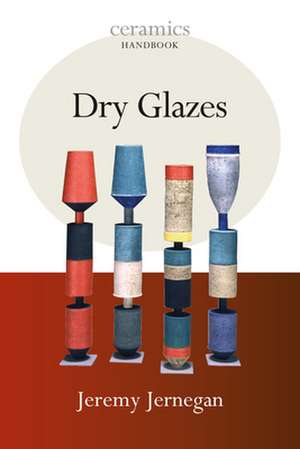
Dry Glazes
Autor Jeremy Jerneganen Limba Engleză Paperback – dec 2009
| Toate formatele și edițiile | Preț | Express |
|---|---|---|
| Paperback (2) | 97.98 lei 3-5 săpt. | +86.20 lei 6-12 zile |
| Bloomsbury Publishing – 13 dec 2018 | 97.98 lei 3-5 săpt. | +86.20 lei 6-12 zile |
| University of Pennsylvania Press – dec 2009 | 211.36 lei 3-5 săpt. |
Preț: 211.36 lei
Puncte Express: 317
Preț estimativ în valută:
37.41€ • 43.62$ • 32.41£
37.41€ • 43.62$ • 32.41£
Carte disponibilă
Livrare economică 06-20 februarie
Preluare comenzi: 021 569.72.76
Specificații
ISBN-13: 9780812220971
ISBN-10: 0812220978
Pagini: 128
Dimensiuni: 156 x 234 x 15 mm
Greutate: 0.36 kg
Editura: University of Pennsylvania Press
ISBN-10: 0812220978
Pagini: 128
Dimensiuni: 156 x 234 x 15 mm
Greutate: 0.36 kg
Editura: University of Pennsylvania Press
V-ar putea interesa
-
 British Tea and Coffee Cups: 1745–1940Steven Goss-33%Preț: 34.35 lei51.20 lei
 -
 Art Deco TilesHans van Lemmen-33%Preț: 44.23 lei65.90 lei
 -
 Great & Noble Jar: Traditional Stoneware of South CarolinaCinda K. BaldwinPreț: 253.00 lei
 -
 The Teabowl: East and WestBonnie Kemske-46%Preț: 188.70 lei349.14 lei
 -
 Ceramics: 400 Years of British Collecting in 100 MasterpiecesPatricia F. Ferguson-38%Preț: 258.55 lei419.92 lei
 -
 -42%Preț: 97.58 lei167.91 lei
 -
 Techniques Using SlipsJohn Mathieson-41%Preț: 109.47 lei185.98 lei
 -
 Vessels and VarietyAnnette Rathje-22%Preț: 354.92 lei455.28 lei
Notă biografică
Jeremy Jernegan is Associate Professor of Art at Tulane University. His sculptural and tile-based works have been widely collected and exhibited. He currently lives on the waterfront in Eastern New Orleans, where he maintains Chef Pass Studio.
Descriere
Descriere de la o altă ediție sau format:
The ultimate guide to understanding and creating dry glazes.
This book covers everything you need to know to understand and create dry glazes. Dry glazes are used by many potters - Lucie Rie and Hans Coper are well-known examples - and often by ceramicists creating sculpture, where a shiny glaze is not appropriate.
Learn all about slips and engobes, oxides and stains, matt glazes and low alumina surfaces, textured and pitted glazes as well as what makes up dry glazes and how to create them. The book is beautifully illustrated with famous artists' work, as well as many test tiles of examples of dry glazes with their corresponding recipes, making it a valuable resource for ceramicists working in this area or anyone curious to explore the medium.
The ultimate guide to understanding and creating dry glazes.
This book covers everything you need to know to understand and create dry glazes. Dry glazes are used by many potters - Lucie Rie and Hans Coper are well-known examples - and often by ceramicists creating sculpture, where a shiny glaze is not appropriate.
Learn all about slips and engobes, oxides and stains, matt glazes and low alumina surfaces, textured and pitted glazes as well as what makes up dry glazes and how to create them. The book is beautifully illustrated with famous artists' work, as well as many test tiles of examples of dry glazes with their corresponding recipes, making it a valuable resource for ceramicists working in this area or anyone curious to explore the medium.
Cuprins
Acknowledgements
Introduction
1. What makes a dry glaze dry?
2. Health and safety
3. Developing the surface and visual texture
4. Slips and engobes
5. Alkaline glazes: rich in sodium, potassium and lithium
6. Boron, lead and zinc matts
7. Calcium and magnesium matts
8. Barium and strontium matts
9. Special effects glazes
10. Colouring oxides and raku-fired matts
References
Bibliography
Glossary
List of suppliers
Index
Introduction
1. What makes a dry glaze dry?
2. Health and safety
3. Developing the surface and visual texture
4. Slips and engobes
5. Alkaline glazes: rich in sodium, potassium and lithium
6. Boron, lead and zinc matts
7. Calcium and magnesium matts
8. Barium and strontium matts
9. Special effects glazes
10. Colouring oxides and raku-fired matts
References
Bibliography
Glossary
List of suppliers
Index
Recenzii
there is much here for the glaze enthusiast
This book covers everything you need to know to create a range of glazes
This book covers everything you need to know to create a range of glazes