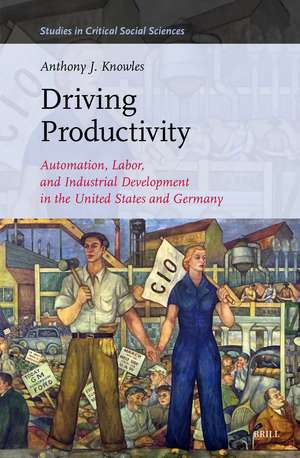
Driving Productivity: Automation, Labor, and Industrial Development in the United States and Germany: Studies in Critical Social Sciences, cartea 331
Autor Anthony J. Knowlesen Limba Engleză Hardback – 31 iul 2025
Remarcăm în Driving Productivity o analiză riguroasă a studiilor de caz ce vizează evoluția tehnologică în industria auto, punând accent pe modul în care automatizarea și deplasarea forței de muncă au fost gestionate diferit în Statele Unite și Germania. Autorul, Anthony J. Knowles, examinează trecerea de la producția meșteșugărească timpurie la liniile de asamblare Ford și, ulterior, la sistemele de producție de tip 'lean' și Industria 4.0, oferind o perspectivă critică asupra presiunii constante pentru eficiență.
Această lucrare reprezintă o alternativă la Social Reconstructions of the World Automobile Industry pentru cursurile de sociologie industrială sau istorie economică, având avantajul unei perspective istorice extinse, de tip longue durée. În timp ce alte studii se concentrează pe perioada post-1980, Anthony J. Knowles reconstruiește fundamentele productivității încă de la începutul secolului XX, analizând inclusiv raționalizarea ghidată de stat în timpul celui de-al Doilea Război Mondial.
Structura volumului este organizată cronologic și tematic, începând cu dinamica socială a automatizării și continuând cu momentele de cotitură din perioada interbelică. Apreciem modul în care cuprinsul evidențiază tranziția de la regimurile de valoare la transformările socioeconomice profunde, demonstrând că productivitatea nu este doar un indicator tehnic, ci un imperativ social. Driving Productivity completează literatura de specialitate, oferind un cadru teoretic solid pentru înțelegerea modului în care paradigmele diferite de integrare a afacerilor, muncii și guvernului modelează viitorul industrial.
Din seria Studies in Critical Social Sciences
-
 Preț: 239.43 lei
 -
 Preț: 285.78 lei
 - 11%
 Preț: 404.27 lei
 - 18%
 Preț: 808.79 lei
 - 18%
 Preț: 817.69 lei
 - 18%
 Preț: 1182.26 lei
 - 18%
 Preț: 1022.45 lei
 - 18%
 Preț: 747.41 lei
 - 18%
 Preț: 710.99 lei
 - 18%
 Preț: 614.40 lei
 - 18%
 Preț: 693.61 lei
 - 18%
 Preț: 825.52 lei
 - 18%
 Preț: 801.93 lei
 - 18%
 Preț: 1080.81 lei
 - 18%
 Preț: 722.98 lei
 - 18%
 Preț: 653.12 lei
 - 18%
 Preț: 663.10 lei
 - 15%
 Preț: 598.77 lei
 - 18%
 Preț: 640.69 lei
 -
 Preț: 167.57 lei
 -
 Preț: 168.23 lei
 -
 Preț: 365.55 lei
 -
 Preț: 225.42 lei
 -
 Preț: 167.52 lei
 -
 Preț: 168.09 lei
 -
 Preț: 234.05 lei
 -
 Preț: 231.47 lei
 -
 Preț: 230.10 lei
 -
 Preț: 166.73 lei
 -
 Preț: 230.54 lei
 -
 Preț: 168.03 lei
 -
 Preț: 124.59 lei
 -
 Preț: 287.95 lei
 -
 Preț: 160.03 lei
 - 18%
 Preț: 804.62 lei
 - 18%
 Preț: 1056.11 lei
 - 18%
 Preț: 893.68 lei
 - 18%
 Preț: 1117.49 lei
 - 18%
 Preț: 777.69 lei
 - 18%
 Preț: 823.43 lei
 - 18%
 Preț: 800.21 lei
 - 18%
 Preț: 851.81 lei
 - 18%
 Preț: 696.78 lei
 - 18%
 Preț: 663.06 lei
 - 15%
 Preț: 574.39 lei
 - 18%
 Preț: 764.63 lei
 - 18%
 Preț: 835.12 lei
 - 18%
 Preț: 830.79 lei
 - 18%
 Preț: 728.24 lei
Preț: 891.11 lei
Preț vechi: 1086.71 lei
-18%
Carte disponibilă
Livrare economică 06-17 noiembrie
Specificații
ISBN-10: 9004736700
Pagini: 412
Dimensiuni: 155 x 235 x 28 mm
Greutate: 0.81 kg
Editura: Brill
Colecția Brill
Seria Studies in Critical Social Sciences
De ce să citești această carte
O resursă esențială pentru cercetătorii în sociologie și economie politică interesați de evoluția muncii industriale. Cititorul câștigă o înțelegere profundă a modului în care automatizarea transformă societatea, dincolo de simplele cifre de producție. Este recomandată pentru analiza comparativă a modelelor de dezvoltare industrială între SUA și Germania, oferind argumente solide despre impactul politicilor naționale asupra progresului tehnologic.
Despre autor
Anthony J. Knowles este un cercetător axat pe intersecția dintre tehnologie, muncă și sociologie economică. Prin contribuția sa în seria Studies in Critical Social Sciences de la Brill, acesta se impune ca o voce importantă în analiza critică a sistemelor de producție. Lucrarea sa de față reflectă un interes academic profund pentru istoria industrială și dinamica capitalismului global, explorând modul în care inovațiile tehnice sunt integrate în structurile sociale și politice ale marilor puteri economice.
Notă biografică
Descriere
Cuprins
Abbreviations
Introduction: the Social Dynamics of Productivity, Automation, and Technological Displacement
1 Limits and Dynamics of Socioeconomic Transformation
2 Capital as Value in Motion among Value-Regimes
3 Production under Productivity Pressure
4 Transformations of Production over the Longue Durée
1 Fork in the Road: between Craft and Mass Production in the Early 20th Century
1 The Industrial Revolution and the Prehistory of the Automobile
2 The Automotive Idea and the Genesis of the Auto Industry
3 Earliest Craft Production Systems in the United States and Germany
4 Fordist Mass Production and German ‘Mass-Craft Production’
5 Growth, Maturation, and Rationalization in the 1920s
6 Evaluating Outcomes of Craft and Mass Production
2 State Guided Rationalization Through Depression and World War
1 The Great Depression and World War Transforms Industry
2 German ‘Modernization’ and Motorization during the Third Reich
3 The Great Depression and Unionization
4 The Arsenal of Democracy vs the Arsenal of Fascism
5 Postwar Reconstruction and Reconfiguration
6 Fordist Transformations between Depression and War
3 Prosperity or Automation Hysteria? Contradictions of Growth, Productivity, and Mechanization in the Postwar Decades
1 Postwar Growth and the Economic Miracle
2 Transfer Machine Automation in the US and Germany
3 The Great Automation Debate
4 Pursuing Competitive Advantage: Combative vs Cooperative Industrial Relations
5 Convergent Automation, Divergent Industrial Relations
4 Productivity Gaps as Competitive Crisis: between Automation, Quality, and Lean Production in the 1970s–1990s
1 Tripartite Competition in a Stagnant Era
2 Lean Production as Japanese Challenge
3 Automation ‘Leapfrog’ and Productivity Strategies in the US
4 The Rise and Fall of the German Quality Production System
5 Productivity Trumps Automation
5 Globalization and the Race for Productivity
1 Productivity Pressure in the Age of Globalization
2 Productivity Convergence and Divergence in the 21st Century
3 Globalization and Opportunities for Growth
4 Electric Vehicles, Industry 4.0, and the Never-Ending Pursuit of Productivity
5 Global Generalization and General Globalization
6 Productivity as Social Imperative—towards a Critical Theory of Automation, Technological Displacement, and Social Domination
1 The Drivers of History
2 Productivity Pressure as Social Domination
3 Communication and the Social Logic of Capital
4 Convergence and Divergence of Productive Systems
5 Mediations and Limitations
6 Political Implications
7 Conclusion
Archival Bibliography
Bibliography
Index