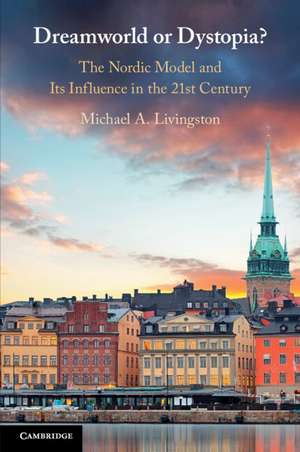
Dreamworld or Dystopia?
Autor Michael A. Livingstonen Limba Engleză Paperback – 18 aug 2022
Preț: 274.76 lei
Puncte Express: 412
Carte tipărită la comandă
Livrare economică 23 noiembrie-07 decembrie
Livrare prin curier în România Termenul estimat este afișat lângă disponibilitate.
Transport gratuit de la 400.00 lei Plată online sau ramburs, în funcție de opțiunile comenzii.
Retur gratuit în 14 zile Comandă securizată și suport în română.
Specificații
ISBN-13: 9781108739788
ISBN-10: 1108739784
Pagini: 166
Dimensiuni: 152 x 229 x 10 mm
Greutate: 0.25 kg
Editura: Cambridge University Press
Locul publicării:New York, United States
ISBN-10: 1108739784
Pagini: 166
Dimensiuni: 152 x 229 x 10 mm
Greutate: 0.25 kg
Editura: Cambridge University Press
Locul publicării:New York, United States
Cuprins
Part I. Image: 1. The Nordic model and its (somewhat surprising) persistence; 2. Utopia: The ideal of Norden and its overseas marketing; 3. Dystopia: Nordic pretensions and the Anglo-American right; Part II. Reality: 4. Human rights: universal principles meet local reality; 5. Environment: carbon tax, Gretamania, and the Green New Deal; 6. Innovation: from Scandinavian to Nordic and back again; Part 3. Conclusion: 7. A regional culture confronts a globalized world.
Descriere
This book explains why the Nordic Model retains its influence, especially on the Anglo-American left, notwithstanding internal problems.