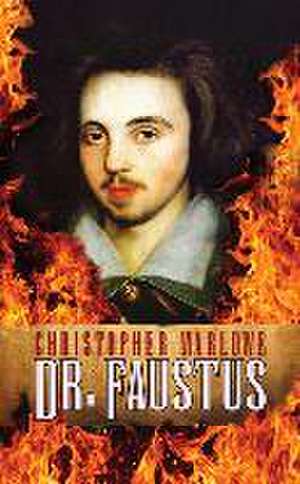
Dr. Faustus
Autor Christopher Marloween Limba Engleză Paperback – 16 ian 2024
Christopher Marlowe, figura centrală a teatrului elisabetan înainte de ascensiunea lui Shakespeare, a oferit prin Dr. Faustus una dintre cele mai profunde explorări ale condiției umane și ale limitelor ambiției. Găsim în această lucrare tranziția de la mitul popular german la tragedia clasică, unde doctorul învățat nu mai este doar un personaj de farsă, ci un simbol al omului modern sfâșiat între aspirația spre divin și tentațiile materiale. Considerăm că forța acestui text rezidă în echilibrul dintre elementele fantastice — viziunile cu Lucifer, îngerii în duel sau Cele Șapte Păcate Capitale — și monologurile interioare încărcate de o intensitate tragică autentică. Stilul lui Marlowe se remarcă prin utilizarea magistrală a versului alb, o inovație tehnică ce a oferit textului o cadență solemnă, potrivită pentru gravitatea temei pactului diavolesc. Spre deosebire de alte lucrări incluse în antologii precum Christopher Marlowe: Four Plays sau The Complete Plays, unde explorarea puterii politice este centrală (ca în 'Tamburlaine' sau 'Edward II'), Dr. Faustus se concentrează pe o bătălie metafizică, individuală. Ca alternativă la ediția Doctor Faustus and Other Plays din seria Oxford World's Classics, acest volum de la Dover Publications oferă un format esențializat, ideal pentru studiu aprofundat sau pentru cei care doresc să descopere piesa într-o formă accesibilă, fără aparatul critic extins al volumelor colective, dar păstrând întreaga bogăție a limbajului original.
Preț: 69.38 lei
Carte disponibilă
Livrare economică 14-28 noiembrie
Livrare express 03-07 noiembrie pentru 42.25 lei
Specificații
ISBN-10: 1722503815
Pagini: 108
Dimensiuni: 125 x 208 x 31 mm
Greutate: 0.12 kg
Ediția:Completă
Editura: G&D MEDIA
V-ar putea interesa
-
 Brave New WorldAldous HuxleyPreț: 58.71 lei
 -
 The Complete PlaysChristopher Marlowe-26%Preț: 82.24 lei110.60 lei
 -
 FaustGoethe-25%Preț: 58.84 lei78.73 lei
 -
 Oxford Playscripts: Doctor FaustusChristopher Marlowe-30%Preț: 85.86 lei121.94 lei
 -
 Oxford Student Texts: Christopher Marlowe: Doctor FaustusChristopher Marlowe-28%Preț: 82.06 lei114.37 lei
 -
 Doctor FaustusThomas MannPreț: 74.34 lei
 -
 Faust: Part OneJ. W. von GoethePreț: 58.09 lei
 -
 -15%Preț: 69.61 lei81.85 lei
 -
 The Lord of the Rings Box SetJ. R. R. Tolkien-8%Preț: 522.51 lei567.94 lei
 -
 Doctor FaustusChristopher MarlowePreț: 45.52 lei
 -
 The Metamorphosis and Other StoriesFranz Kafka-19%Preț: 23.12 lei28.58 lei
 -
 Best Served ColdJoe Abercrombie-23%Preț: 73.79 lei96.33 lei
 -
 Preț: 60.96 lei
 -
 Dr Faustus: A TextChristopher MarlowePreț: 158.32 lei
 -
 On the Origin of SpeciesCharles Darwin-32%Preț: 54.11 lei80.12 lei
 -
 Doctor FaustusChristopher Marlowe-18%Preț: 86.77 lei105.44 lei
 -
 FaustJohann Wolfgang von GoethePreț: 45.89 lei
 -
 Preț: 62.80 lei
 -
 The Maiden FaustConor FarringtonPreț: 26.21 lei
 -
 The Faust-Legend and Goethe's 'Faust'H. B. CotterillPreț: 83.45 lei
De ce să citești această carte
Recomandăm această ediție cititorilor pasionați de literatura elisabetană și de marile mituri ale culturii occidentale. Cititorul câștigă acces la textul fundamental care a definit tema pactului cu diavolul, beneficiind de un stil poetic rafinat. Este o lectură esențială pentru a înțelege rădăcinile tragediei moderne și influența masivă pe care Marlowe a exercitat-o asupra teatrului universal, totul într-un format portabil și clar.
Despre autor
Christopher Marlowe (1564–1593) a fost cel mai proeminent dramaturg, poet și traducător din Londra anilor premergători morții sale premature și misterioase. Contemporan cu William Shakespeare, Marlowe a revoluționat teatrul englez prin introducerea versului alb și prin crearea unor protagoniști dominanți, ale căror pasiuni extreme depășesc limitele morale ale epocii. Viața sa, marcată de acuzații de spionaj și violență, s-a încheiat tragic la doar 29 de ani, însă opera sa a rămas un pilon al literaturii engleze, influențând generații de scriitori prin amestecul său unic de umanism, realism emoțional și spectacol grandios.
Descriere scurtă
Notă biografică
Marlowe shunned a life as a clergyman which university wits like himself were expected to follow, and moved to London to pursue the insecure craft of a playwright. Among his early plays were 'Tamburlaine the Great' and 'The Famous Tragedy of the Rich Jew of Malta', all well-received by Elizabethan audiences and displaying an impressive poetic talent that was bold enough to use high-quality blank verse for the first time in English theatre. He collaborated with friend and literary colleague, William Shakespeare, on 'Henry VI' and 'Titus Andronicus' and his influence on Shakespeare is seen in the latter's restrained use of rhyme in 'Richard III'. Traditional rhyme was eschewed by Marlowe in preference for blank verse, over which he acquired a constantly increasing mastery.