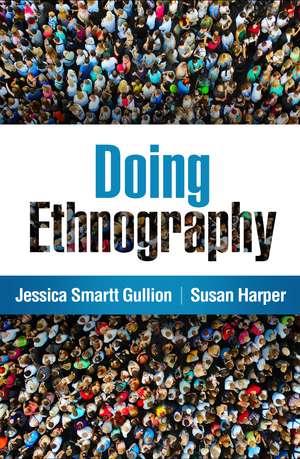
Doing Ethnography
Autor Jessica Smartt Gullion, Susan Harperen Limba Engleză Paperback – 17 feb 2026
Preț: 328.48 lei
Puncte Express: 493
Carte disponibilă
Livrare economică 16-30 noiembrie
Livrare prin curier în România Termenul estimat este afișat lângă disponibilitate.
Transport gratuit de la 400.00 lei Plată online sau ramburs, în funcție de opțiunile comenzii.
Retur gratuit în 14 zile Comandă securizată și suport în română.
Specificații
ISBN-13: 9781462546923
ISBN-10: 1462546927
Pagini: 182
Dimensiuni: 152 x 229 x 11 mm
Greutate: 0.3 kg
Ediția:1
Editura: Guilford Publications
Colecția Guilford Press
ISBN-10: 1462546927
Pagini: 182
Dimensiuni: 152 x 229 x 11 mm
Greutate: 0.3 kg
Ediția:1
Editura: Guilford Publications
Colecția Guilford Press
Notă biografică
Jessica Smartt Gullion, PhD, is Professor of Sociology at Texas Woman’s University. She has published several books and more than 35 book chapters and articles in peer-reviewed journals such as Qualitative Inquiry, the International Review of Qualitative Research, and the Journal of Autoethnography.
Susan Harper, PhD, is Director of Co-Curricular Student Development at Iowa State University. She is an educator, activist, advocate, and scholar whose interests include feminist pedagogy, qualitative inquiry as a tool for social justice, ethnography, and contemporary Paganism.
Susan Harper, PhD, is Director of Co-Curricular Student Development at Iowa State University. She is an educator, activist, advocate, and scholar whose interests include feminist pedagogy, qualitative inquiry as a tool for social justice, ethnography, and contemporary Paganism.
Recenzii
“Doing Ethnography is as clearly written and engaging as the title suggests. Gullion and Harper draw on their own experiences, coupled with classic and contemporary ethnographic works, to explicate the complicated nature and process of engaging in ethnographic research. They encourage readers to contemplate and practice core concepts and activities important to doing ethnographic inquiry. As passionate ethnographers themselves, these authors don’t merely write about ethnography, they take novices and experienced ethnographers into new ways of crafting their research with people, cultures, and communities.”--Barbara Dennis, PhD, Professor of Qualitative and Quantitative Research Methodology, Indiana University
“A great guide for first-time ethnographers and students. Gullion and Harper have managed to reverse engineer the process of fieldwork and the components of ‘the field,’ while also showing why we do research in the first place. They give oodles of practical advice in a conversational style that makes you want to do ethnography.”--Rashmi Sadana, PhD, Department of Sociology and Anthropology, George Mason University
“I recommend Doing Ethnography for graduate students and researchers at all levels. The authors’ explanations of the practical realities of fieldwork make complex processes accessible and actionable. The vignettes and detailed case studies offer a vivid window into ‘What went right?’ and ‘What went wrong?’ Showing how ethnography unfolds in practice, this book serves as both an instructional resource and a step-by-step guide. It equips readers with the tools to navigate the challenges and intricacies of ethnographic inquiry with confidence and insight.”--Regina J. Giraldo-García, PhD, Department of Educational Studies, Ball State University-
“A great guide for first-time ethnographers and students. Gullion and Harper have managed to reverse engineer the process of fieldwork and the components of ‘the field,’ while also showing why we do research in the first place. They give oodles of practical advice in a conversational style that makes you want to do ethnography.”--Rashmi Sadana, PhD, Department of Sociology and Anthropology, George Mason University
“I recommend Doing Ethnography for graduate students and researchers at all levels. The authors’ explanations of the practical realities of fieldwork make complex processes accessible and actionable. The vignettes and detailed case studies offer a vivid window into ‘What went right?’ and ‘What went wrong?’ Showing how ethnography unfolds in practice, this book serves as both an instructional resource and a step-by-step guide. It equips readers with the tools to navigate the challenges and intricacies of ethnographic inquiry with confidence and insight.”--Regina J. Giraldo-García, PhD, Department of Educational Studies, Ball State University-
Cuprins
1. An Invitation to Ethnography
- What Is Ethnography?
- Understanding Culture
- Ethnography as a Research Method
- Interviews
- Insider, Outsider
- The Origins of Ethnography
- Anthropology
- Sociology
- Colonial Roots of Ethnography
- Sacred Knowledge
- Ethnography, Espionage, and War
- Reflecting on History
- Issues of Voice and Representation
- Ethnography Today
- Conclusion
2. Before You Go Into the Field
- Getting Started
- Writing Research Questions
- Ethical Considerations
- The Belmont Report
- Situational and Relational Ethics
- Reflexivity and Diffraction
- Conclusion
3. Field Work
- Beginning Fieldwork
- The Field
- When Your Field Is the Internet
- Safety in the Field
- Culture Shock
- Other Hazards
- International Field Work
- Travel to the Field
- Equipment
- Costs
- Audio/Video Recording, Preservation of Cultural Artifacts
- Field Notes and Memos
- Transcription
- Preservation and Archiving of Data
- The Politics of Fieldwork
- Conclusion
4. Data Organization and Analysis
- Moving to Analysis
- Engaging Data
- Analytic Moves
- Coding
- Writing Social Theory
- Poetic Inquiry
- Collage
- Conclusion
5. (Re)presentation [Writing]
- Written Accounts
- Thick Description
- Authorial Voice
- Maintaining Confidentiality
- Member Checking and Co-Constructed Narratives
- Polishing Your Writing
- Ethnographic Tropes
- Scientific Papers
- Writing for Peer-Reviewed Journals
- Writing Books
- Conclusion
6. Evaluation
- Going on Trial
- The Trial of Alice Goffman
- The Trial of Margaret Mead
- Evaluating Ethnography
- “Science”
- Conclusion
Appendix: Margaret Mead and Alice Goffman Walk into a Bar
Glossary
References
Index
- What Is Ethnography?
- Understanding Culture
- Ethnography as a Research Method
- Interviews
- Insider, Outsider
- The Origins of Ethnography
- Anthropology
- Sociology
- Colonial Roots of Ethnography
- Sacred Knowledge
- Ethnography, Espionage, and War
- Reflecting on History
- Issues of Voice and Representation
- Ethnography Today
- Conclusion
2. Before You Go Into the Field
- Getting Started
- Writing Research Questions
- Ethical Considerations
- The Belmont Report
- Situational and Relational Ethics
- Reflexivity and Diffraction
- Conclusion
3. Field Work
- Beginning Fieldwork
- The Field
- When Your Field Is the Internet
- Safety in the Field
- Culture Shock
- Other Hazards
- International Field Work
- Travel to the Field
- Equipment
- Costs
- Audio/Video Recording, Preservation of Cultural Artifacts
- Field Notes and Memos
- Transcription
- Preservation and Archiving of Data
- The Politics of Fieldwork
- Conclusion
4. Data Organization and Analysis
- Moving to Analysis
- Engaging Data
- Analytic Moves
- Coding
- Writing Social Theory
- Poetic Inquiry
- Collage
- Conclusion
5. (Re)presentation [Writing]
- Written Accounts
- Thick Description
- Authorial Voice
- Maintaining Confidentiality
- Member Checking and Co-Constructed Narratives
- Polishing Your Writing
- Ethnographic Tropes
- Scientific Papers
- Writing for Peer-Reviewed Journals
- Writing Books
- Conclusion
6. Evaluation
- Going on Trial
- The Trial of Alice Goffman
- The Trial of Margaret Mead
- Evaluating Ethnography
- “Science”
- Conclusion
Appendix: Margaret Mead and Alice Goffman Walk into a Bar
Glossary
References
Index