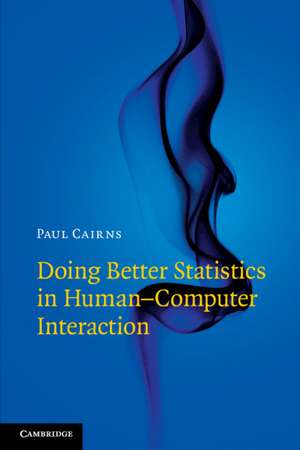
Doing Better Statistics in Human-Computer Interaction
Autor Paul Cairnsen Limba Engleză Paperback – 7 feb 2019
Preț: 227.04 lei
Preț vechi: 296.56 lei
-23%
Puncte Express: 341
Carte indisponibilă temporar
Livrare prin curier în România Termenul estimat este afișat lângă disponibilitate.
Transport gratuit de la 400.00 lei Plată online sau ramburs, în funcție de opțiunile comenzii.
Retur gratuit în 14 zile Comandă securizată și suport în română.
Specificații
ISBN-13: 9781108710596
ISBN-10: 110871059X
Pagini: 250
Ilustrații: 29 b/w illus. 7 tables
Dimensiuni: 149 x 226 x 17 mm
Greutate: 0.36 kg
Editura: Cambridge University Press
Locul publicării:New York, United States
ISBN-10: 110871059X
Pagini: 250
Ilustrații: 29 b/w illus. 7 tables
Dimensiuni: 149 x 226 x 17 mm
Greutate: 0.36 kg
Editura: Cambridge University Press
Locul publicării:New York, United States
V-ar putea interesa
-
 -9%Preț: 278.39 lei305.09 lei
 -
 Research Methods in the Social Sciences: An A-Z of key conceptsJean-Frédéric Morin-12%Preț: 238.82 lei271.54 lei
 -
 Applied Multivariate Statistical ConceptsDebbie L. Hahs-Vaughn-18%Preț: 1612.08 lei1965.94 lei
 -
 Research Methods for Human-Computer InteractionPaul Cairns-11%Preț: 411.10 lei461.92 lei
 -
 An R Companion for Applied Statistics IIDanney Rasco-19%Preț: 500.21 lei617.54 lei
 -
 Preț: 379.62 lei
 -
 -18%Preț: 1408.36 lei1717.51 lei
 -
 -15%Preț: 412.83 lei485.68 lei
 -
 Designing Quality Survey QuestionsSheila B. RobinsonPreț: 457.34 lei
 -
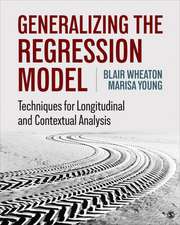 -23%Preț: 877.98 lei1140.23 lei
 -
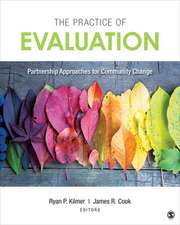 -23%Preț: 881.51 lei1144.82 lei
 -
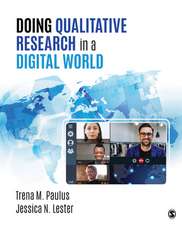 Doing Qualitative Research in a Digital WorldTrena M. Paulus-23%Preț: 657.92 lei854.43 lei
 -
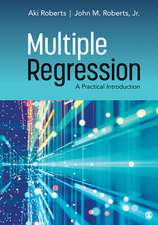 Multiple Regression: A Practical IntroductionAki Roberts-23%Preț: 656.50 lei852.60 lei
 -
 -22%Preț: 883.60 lei1132.82 lei
 -
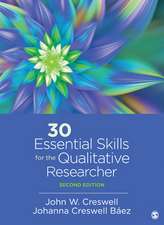 30 Essential Skills for the Qualitative ResearcherJohn W. W. Creswell-18%Preț: 501.89 lei612.05 lei
 -
 Action ResearchAlfredo Ortiz Aragon-18%Preț: 502.03 lei612.23 lei
 -
 -22%Preț: 888.39 lei1138.96 lei
 -
 Using Time Series to Analyze Long-Range Fractal PatternsMatthijs KoopmansPreț: 377.77 lei
 -
 -19%Preț: 557.95 lei688.83 lei
 -
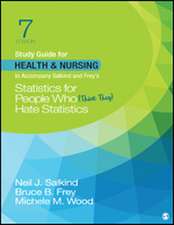 Preț: 356.18 lei
 -
 Why Engagement MattersHeather O'Brien-20%Preț: 621.70 lei777.12 lei
Cuprins
Getting started; Part I. Why We Use Statistics: 1. How statistics support science; 2. Testing the null; 3. Constraining Bayes; 4. Effects: what tests test; Part II. How To Use Statistics: 5. Planning your statistical analysis; 6. A cautionary tail: why you should not do a one-tailed test; 7. Is this normal?; 8. Sorting out outliers; 9. Power and two types of error; 10. Using nonparametric tests; 11. A robust t-test; 12. The ANOVA family and friends; 13. Exploring, over-testing and fishing; 14. When is a correlation not a correlation?; 15. What makes a good Likert item?; 16. The meaning of factors; 17. Unreliable reliability: the problem of Cronbach's alpha; 18. Tests for questionnaires.
Recenzii
'If you, and your experiments, have been bruised by statistical misfortune, then this is the book for you. Paul Cairns' wise and pragmatic advice talks us through the practical use of statistics in Human-Computer Interaction, showing his own bruises when necessary. This should become the standard reference that the field needs.' Alan Blackwell, University of Cambridge
'In Human-Computer Interaction, we gather data from experiment designs that are often more complex or messy than those presented as examples in a basic textbook on statistics. Cairns presents digestible information for an interdisciplinary audience with expertise and authority. I will be buying a copy of this book for my students, and also one for myself!' Regan Mandryk, University of Saskatchewan, Canada
'This is a must-read for novice or well-established researchers alike, who are worried about whether they are conducting the correct statistical analyses of their data. Paul Cairns makes learning about statistics seem both fun and interesting. I'm confident that this book will positively impact the quality of future Human-Computer Interaction research.' Anna L. Cox, University College London Interaction Centre
'In Human-Computer Interaction, we gather data from experiment designs that are often more complex or messy than those presented as examples in a basic textbook on statistics. Cairns presents digestible information for an interdisciplinary audience with expertise and authority. I will be buying a copy of this book for my students, and also one for myself!' Regan Mandryk, University of Saskatchewan, Canada
'This is a must-read for novice or well-established researchers alike, who are worried about whether they are conducting the correct statistical analyses of their data. Paul Cairns makes learning about statistics seem both fun and interesting. I'm confident that this book will positively impact the quality of future Human-Computer Interaction research.' Anna L. Cox, University College London Interaction Centre
Descriere
This book addresses common questions from HCI researchers when trying to do statistical analysis on their data.