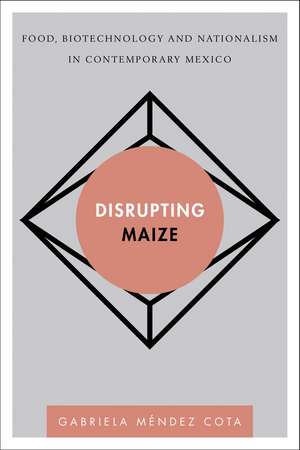
Disrupting Maize: Food, Biotechnology and Nationalism in Contemporary Mexico: Disruptions
Autor Gabriela Méndez Cotaen Limba Engleză Paperback – 14 apr 2016
Disrupting Maize mobilizes contemporary theoretical resources in a critical examination of the cultural politics at work in the Mexican defence of maize. From such an examination 'biotechnological disruption' emerges provocatively as constitutive of Mexican nationalism rather than externally imposed to it by corporate players. Furthermore, it is conceptualized as a gift, a promise of a more democratic Mexico.
Din seria Disruptions
-
 Preț: 440.23 lei
 - 15%
 Preț: 441.01 lei
 - 15%
 Preț: 437.27 lei
 - 15%
 Preț: 445.35 lei
 -
 Preț: 199.00 lei
 -
 Preț: 438.09 lei
 - 23%
 Preț: 312.66 lei
 - 15%
 Preț: 468.63 lei
 - 8%
 Preț: 444.08 lei
 - 15%
 Preț: 446.89 lei
 - 15%
 Preț: 431.97 lei
 -
 Preț: 442.82 lei
 - 15%
 Preț: 486.50 lei
 -
 Preț: 437.16 lei
 - 15%
 Preț: 432.69 lei
 - 15%
 Preț: 437.28 lei
 -
 Preț: 212.32 lei
 - 15%
 Preț: 452.58 lei
 - 15%
 Preț: 428.17 lei
 - 33%
 Preț: 761.96 lei
 - 15%
 Preț: 440.17 lei
 - 15%
 Preț: 433.06 lei
 - 15%
 Preț: 427.27 lei
 - 15%
 Preț: 458.23 lei
 - 15%
 Preț: 431.97 lei
 - 15%
 Preț: 425.82 lei
 - 15%
 Preț: 515.79 lei
 - 15%
 Preț: 426.55 lei
 - 15%
 Preț: 540.90 lei
 -
 Preț: 244.69 lei
 - 25%
 Preț: 355.69 lei
 -
 Preț: 438.09 lei
 -
 Preț: 212.72 lei
 - 15%
 Preț: 511.60 lei
 -
 Preț: 437.63 lei
 - 15%
 Preț: 454.98 lei
 - 15%
 Preț: 515.06 lei
 - 15%
 Preț: 467.32 lei
 - 8%
 Preț: 436.85 lei
 - 15%
 Preț: 428.70 lei
 - 15%
 Preț: 514.70 lei
 - 15%
 Preț: 431.97 lei
 - 15%
 Preț: 519.40 lei
 - 8%
 Preț: 441.88 lei
Preț: 342.12 lei
Preț vechi: 482.20 lei
-29%
Puncte Express: 513
Carte tipărită la comandă
Livrare economică 09-23 decembrie
Livrare prin curier în România Termenul estimat este afișat lângă disponibilitate.
Transport gratuit de la 400.00 lei Plată online sau ramburs, în funcție de opțiunile comenzii.
Retur gratuit în 14 zile Comandă securizată și suport în română.
Specificații
ISBN-13: 9781783486076
ISBN-10: 1783486074
Pagini: 218
Dimensiuni: 138 x 217 x 16 mm
Greutate: 0.27 kg
Editura: Bloomsbury Publishing
Colecția Rowman & Littlefield
Seria Disruptions
Locul publicării:New York, United States
ISBN-10: 1783486074
Pagini: 218
Dimensiuni: 138 x 217 x 16 mm
Greutate: 0.27 kg
Editura: Bloomsbury Publishing
Colecția Rowman & Littlefield
Seria Disruptions
Locul publicării:New York, United States
Cuprins
Acknowledgements / Introduction / 1. Mexican Maize: A Biotechnological Story / 2. Colonial Legacies, Constitutive Disruptions / 3. Resisting Technoscience: The Nationalist Trap / 4. The People of Maize and the Technoscience of Culture / 5. The Gift of Biotechnological Disruption / Index
Recenzii
The problem is complex and the authors' ideas are stimulating. There's no doubt, as the history shows, that growing and eating maize became a political objective for Mexican postrevolutionary governments, and that a sacredness of maize was somehow crafted to achieve that goal.
Disrupting Maize offers a detailed and innovative examination of the ways in which food both becomes heritage and a focus of political activism. In 2010, Mexican cuisine was added to UNESCO's list of intangible cultural heritage. Méndez Cota maps the complex and dynamic field of dissent and disagreements that challenged the nationalizing narrative represented by the listing. In doing so, she argues that diversity and dissent is an ongoing and integral aspect of intangible heritage. In illustrating the ways in which intangible heritage interconnects with disputes over knowledge production and biotechnological developments and applications the book provides a rare and sophisticated glimpse into the political and cultural complexity of 'living heritage'.
Contamination is present in all sovereignty and identity is always necessarily transgenic. In the maize wars nationalist desire crosses biotechnical critique on its way to a posited refoundation that cannot know its limits and confuses its core. This fascinating book disrupts biological disruption itself while refusing to give in to endemic cultural moralisms. Its wager for democracy actively dislocates the compromised nostalgia of some emancipatory narratives while resisting the calculation of the future.
Disrupting Maize offers a detailed and innovative examination of the ways in which food both becomes heritage and a focus of political activism. In 2010, Mexican cuisine was added to UNESCO's list of intangible cultural heritage. Méndez Cota maps the complex and dynamic field of dissent and disagreements that challenged the nationalizing narrative represented by the listing. In doing so, she argues that diversity and dissent is an ongoing and integral aspect of intangible heritage. In illustrating the ways in which intangible heritage interconnects with disputes over knowledge production and biotechnological developments and applications the book provides a rare and sophisticated glimpse into the political and cultural complexity of 'living heritage'.
Contamination is present in all sovereignty and identity is always necessarily transgenic. In the maize wars nationalist desire crosses biotechnical critique on its way to a posited refoundation that cannot know its limits and confuses its core. This fascinating book disrupts biological disruption itself while refusing to give in to endemic cultural moralisms. Its wager for democracy actively dislocates the compromised nostalgia of some emancipatory narratives while resisting the calculation of the future.