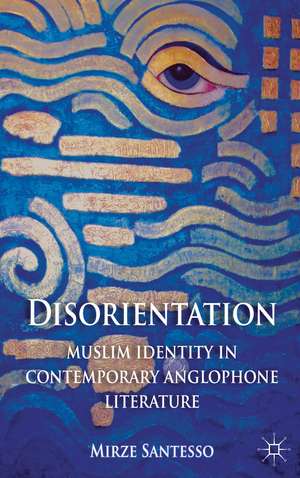
Disorientation
Autor E. Santessoen Limba Engleză Hardback – 12 sep 2013
Preț: 393.74 lei
Puncte Express: 591
Carte tipărită la comandă
Livrare economică 27 noiembrie-11 decembrie
Livrare prin curier în România Termenul estimat este afișat lângă disponibilitate.
Transport gratuit de la 400.00 lei Plată online sau ramburs, în funcție de opțiunile comenzii.
Retur gratuit în 14 zile Comandă securizată și suport în română.
Specificații
ISBN-13: 9781137281715
ISBN-10: 1137281715
Pagini: 223
Ilustrații: VII, 223 p.
Dimensiuni: 142 x 216 x 23 mm
Greutate: 0.52 kg
Ediția:2013 edition
Editura: Palgrave Macmillan UK
Locul publicării:London, United Kingdom
ISBN-10: 1137281715
Pagini: 223
Ilustrații: VII, 223 p.
Dimensiuni: 142 x 216 x 23 mm
Greutate: 0.52 kg
Ediția:2013 edition
Editura: Palgrave Macmillan UK
Locul publicării:London, United Kingdom
V-ar putea interesa
-
 BoyhoodJ. M. Coetzee-20%Preț: 62.42 lei77.97 lei
 -
 A Tale of Love and DarknessAmos Oz-29%Preț: 67.50 lei94.89 lei
 -
 Roddy DoyleJonathan Noakes-18%Preț: 35.34 lei43.03 lei
 -
 PatrimonyPhilip Roth-33%Preț: 55.71 lei83.75 lei
 -
 Cosmopolitanism in Contemporary British FictionF. McCullochPreț: 402.80 lei
 -
 War Trauma and English ModernismC. KrockelPreț: 408.25 lei
 -
 Middlebrow Literary CulturesE. BrownPreț: 407.29 lei
 -
 Mysticism and the Mid-Century NovelJ. ClementsPreț: 390.09 lei
 -
 Utopian Spaces of ModernismR. GregoryPreț: 392.97 lei
 -
 British Muslim FictionsC. ChambersPreț: 400.73 lei
 -
 The Making of LondonS. GroesPreț: 388.93 lei
 -
 Afterlife and Narrative in Contemporary FictionAlice BennettPreț: 391.06 lei
 -
 Sylvia PlathSylvia PlathPreț: 69.02 lei
 -
 Selected Poems of Lawrence DurrellLawrence DurrellPreț: 90.34 lei
 -
 Moments Of BeingVirginia Woolf-18%Preț: 76.45 lei93.76 lei
 -
 Maeve BrennanAngela BourkePreț: 95.83 lei
 -
 Dylan Thomas: A New LifeAndrew Lycett-26%Preț: 89.10 lei120.98 lei
 -
 Five Looks at Elizabeth BishopAnne StevensonPreț: 92.51 lei
Cuprins
Introduction 1. Islam and British Literature 2. Rethinking Hybridity in Monica Ali's Brick Lane 3. Subaltern Desire in Leila Aboulela's Minaret 4. Mimicry in Fadia Faqir's Cry of the Dove 5. Cosmopolitanism and Transnationalism in Camilla Gibb's Sweetness in the Belly 6. Resisting Disorientation Notes Bibliography Index
Recenzii
“Santesso offers another compelling interventioninto the gaps of many studies of contemporary Anglophone literature: theirtreatment of everyday religious faith and practice, particularly for diasporicMuslim women. … through an examination of narratives of disorientation,Santesso suggests that a more complex and textured portrait emerges ofimmigrant Muslim women.” (Emily Johansen, Contemporary Women's Writing, Vol. 10(1), March, 2016)
Notă biografică
Esra Mirze Santesso is Assistant Professor of English at the University of Georgia, USA, where she teaches postcolonial literature. She has published a wide range of articles on contemporary British literature, Muslim diasporic identity, and Turkish literature and film, including an interview with Orhan Pamuk.