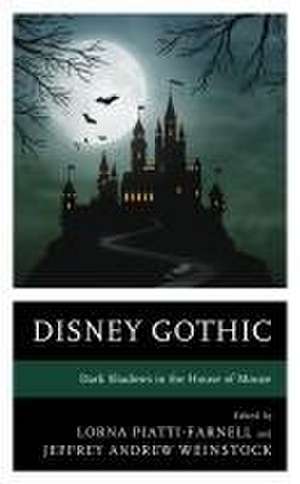
Disney Gothic: Dark Shadows in the House of Mouse: Research in Horror Studies
Editat de Lorna Piatti-Farnell, Jeffrey Andrew Weinstock Contribuţii de Murray Leeder, Terry Lindvall, Jay Bamber, Carl H. Sederholm, Kathy Merlock Jackson, Gwyneth Peaty, Kevin J. Wetmore, J.S. Mackley, Nancy Johnson-Hunt, Antonio Sanna, Christy Tidwell, Joan Ormrod, Angelique Nairn, Simon Bacon, Blair Speakmanen Limba Engleză Hardback – 10 mai 2024
Din seria Research in Horror Studies
- 34%
 Preț: 598.78 lei
 - 34%
 Preț: 571.39 lei
 - 33%
 Preț: 585.88 lei
 - 32%
 Preț: 552.03 lei
 - 28%
 Preț: 221.28 lei
 - 28%
 Preț: 221.53 lei
 - 27%
 Preț: 228.05 lei
 - 26%
 Preț: 259.19 lei
 - 32%
 Preț: 553.17 lei
 - 32%
 Preț: 491.67 lei
 - 34%
 Preț: 598.57 lei
 - 36%
 Preț: 524.19 lei
 - 23%
 Preț: 220.25 lei
 -
 Preț: 220.37 lei
 - 35%
 Preț: 527.27 lei
 - 32%
 Preț: 648.31 lei
 - 33%
 Preț: 591.45 lei
 - nou
 Preț: 629.46 lei
Preț: 596.39 lei
Preț vechi: 911.69 lei
-35%
Puncte Express: 895
Carte tipărită la comandă
Livrare economică 07-21 decembrie
Livrare prin curier în România Termenul estimat este afișat lângă disponibilitate.
Transport gratuit pentru acest produs Plată online sau ramburs, în funcție de opțiunile comenzii.
Retur gratuit în 14 zile Comandă securizată și suport în română.
Specificații
ISBN-13: 9781666907209
ISBN-10: 1666907200
Pagini: 266
Ilustrații: 34 BW Photos
Dimensiuni: 159 x 237 x 22 mm
Greutate: 0.56 kg
Editura: Bloomsbury Publishing
Colecția Lexington Books
Seria Research in Horror Studies
Locul publicării:New York, United States
ISBN-10: 1666907200
Pagini: 266
Ilustrații: 34 BW Photos
Dimensiuni: 159 x 237 x 22 mm
Greutate: 0.56 kg
Editura: Bloomsbury Publishing
Colecția Lexington Books
Seria Research in Horror Studies
Locul publicării:New York, United States
Cuprins
Introduction: Dark Shadows in the House of Mouse
Lorna Piatti-Farnell and Jeffrey Andrew Weinstock
Part 1: Dark Beginnings and Gothic Technologies
Chapter 1: Silly Spookiness: The Skeletons of Early Disney
Murray Leeder
Chapter 2: From Gothic to Gags: Disney's Comic Deconstruction of Death
Terry Lindvall
Chapter 3: Hidden Histories: The Many Ghosts of Disney's Haunted Mansion
Jeffrey Andrew Weinstock
Chapter 4: Monsters on the Mouse-Tube: The Gothic Horror Cinematic Tradition and the Disney Channel Original Movie
Jay Bamber
Chapter 5: Sinister Surveillance: Threatened Youth in Disney's Watcher in the Woods and Something Wicked This Way Comes
Carl H. Sederholm and Kathy Merlock Jackson
Chapter 6: The Game is Playing Itself: Fear, Technology, and the Disney Slasher
Gwyneth Peaty
Part 2: Monsters and Magic
Chapter 7: Disney's Tetratologies: Animated Discourses on Monsters and Heroes
Kevin J. Wetmore
Chapter 8: 'Who is the monster and who is the man?': Disney's Medieval Gothic in The Hunchback of Notre Dame
J.S. Mackley
Chapter 9: Voodoo, Hoodoo, and Friends on the Other Side: Magic, Cultural Echoes, and the Gothic Trajectories of Difference in Disney's The Princess and the Frog
Nancy Johnson-Hunt and Lorna Piatti-Farnell
Chapter 10: The Human/Animal Divide: Feral Children, Liminalities, and the Gothic in Disney's The Jungle Book and Tarzan
Antonio Sanna
Chapter 11: Primitive Life and Animated Death: Fantasia's 'Rite of Spring' as Ecogothic
Christy Tidwell
Part 3: Something Wicked
Chapter 12: Maleficent: Monstrosity, Truth, and Post-Truth in Disney's Transmedia Fairyverse
Joan Ormrod
Chapter 13: Mother Knows Best: Questioning the Moral and the Immoral in Disney's Tangled
Angelique Nairn
Chapter 14: The Vampire Queen of the Disney Scene: The Vampiric, Gothic Excess of Ursula from The Little Mermaid
Simon Bacon
Chapter 15: Gorgeous, Vicious and a "Little Bit Mad": Queer-Gothic and Excessive Desire in Cruella
Blair Speakman
Lorna Piatti-Farnell and Jeffrey Andrew Weinstock
Part 1: Dark Beginnings and Gothic Technologies
Chapter 1: Silly Spookiness: The Skeletons of Early Disney
Murray Leeder
Chapter 2: From Gothic to Gags: Disney's Comic Deconstruction of Death
Terry Lindvall
Chapter 3: Hidden Histories: The Many Ghosts of Disney's Haunted Mansion
Jeffrey Andrew Weinstock
Chapter 4: Monsters on the Mouse-Tube: The Gothic Horror Cinematic Tradition and the Disney Channel Original Movie
Jay Bamber
Chapter 5: Sinister Surveillance: Threatened Youth in Disney's Watcher in the Woods and Something Wicked This Way Comes
Carl H. Sederholm and Kathy Merlock Jackson
Chapter 6: The Game is Playing Itself: Fear, Technology, and the Disney Slasher
Gwyneth Peaty
Part 2: Monsters and Magic
Chapter 7: Disney's Tetratologies: Animated Discourses on Monsters and Heroes
Kevin J. Wetmore
Chapter 8: 'Who is the monster and who is the man?': Disney's Medieval Gothic in The Hunchback of Notre Dame
J.S. Mackley
Chapter 9: Voodoo, Hoodoo, and Friends on the Other Side: Magic, Cultural Echoes, and the Gothic Trajectories of Difference in Disney's The Princess and the Frog
Nancy Johnson-Hunt and Lorna Piatti-Farnell
Chapter 10: The Human/Animal Divide: Feral Children, Liminalities, and the Gothic in Disney's The Jungle Book and Tarzan
Antonio Sanna
Chapter 11: Primitive Life and Animated Death: Fantasia's 'Rite of Spring' as Ecogothic
Christy Tidwell
Part 3: Something Wicked
Chapter 12: Maleficent: Monstrosity, Truth, and Post-Truth in Disney's Transmedia Fairyverse
Joan Ormrod
Chapter 13: Mother Knows Best: Questioning the Moral and the Immoral in Disney's Tangled
Angelique Nairn
Chapter 14: The Vampire Queen of the Disney Scene: The Vampiric, Gothic Excess of Ursula from The Little Mermaid
Simon Bacon
Chapter 15: Gorgeous, Vicious and a "Little Bit Mad": Queer-Gothic and Excessive Desire in Cruella
Blair Speakman
Recenzii
Editors Piatti-Farnell and Weinstock and their 15 fellow contributors take a different approach to Disney, showing that its family-friendly fare has had many gothic elements since the studio was established nearly a century ago. Analyzing an assortment of Disney films, television shows, video games, theme parks, and animation, they discovered many instances of perversion, violence, eroticism, transgression, melancholia, loss, death, horror, and morbidity carried out by monsters, ghosts, skeletons, and villains and set in haunted houses, cemeteries, or spooky castles. They discuss nightmarish plots where a human skeleton scares the fur off the backs of two fighting cats or a mad scientist schemes to produce a Pluto-headed chicken, sawing off the animals' heads and joining them to non-matching bodies. There is merit in this madness, the authors argue, claiming that such chilling, almost dead-end scenarios are set up for favorite characters (e.g., Mickey Mouse) to make heroic interventions that lead to restoration, reconciliation, and the usual Disney happy ending. Disney Gothic brings light to a topic rarely studied, using an assortment of adequately documented story lines (some not well-known). Recommended. Advanced undergraduates through graduate students.
In Disney Gothic, Lorna Piatti-Farnell and Jeffrey Andrew Weinstock disrupt the truism that Disney embodies sanitized storytelling for kids by showing how central Gothic horror is to the studio's brand. From The Skeleton Dance to the Haunted Mansion, 'Night on Bald Mountain' to Turning Red, the outstanding essays in this collection examine a delightful and macabre spectrum of Disney creations, revealing the extent to which the Gothic lurks beneath the surface and within the shadows of the House of Mouse. Disney will never look quite the same again.
This new collection mines Gothic gold, as it demonstrates how the best Disney films, both live and animated, have crafted a complex world of good and evil that speaks meaningfully to a broad audience. Thanks to Piatti-Farnell, Weinstock, and their insightful contributors for revealing how horror, excess, menace, and a sense of helplessness are woven into so much of the Disney 'family' tradition.
In Disney Gothic, Lorna Piatti-Farnell and Jeffrey Andrew Weinstock disrupt the truism that Disney embodies sanitized storytelling for kids by showing how central Gothic horror is to the studio's brand. From The Skeleton Dance to the Haunted Mansion, 'Night on Bald Mountain' to Turning Red, the outstanding essays in this collection examine a delightful and macabre spectrum of Disney creations, revealing the extent to which the Gothic lurks beneath the surface and within the shadows of the House of Mouse. Disney will never look quite the same again.
This new collection mines Gothic gold, as it demonstrates how the best Disney films, both live and animated, have crafted a complex world of good and evil that speaks meaningfully to a broad audience. Thanks to Piatti-Farnell, Weinstock, and their insightful contributors for revealing how horror, excess, menace, and a sense of helplessness are woven into so much of the Disney 'family' tradition.