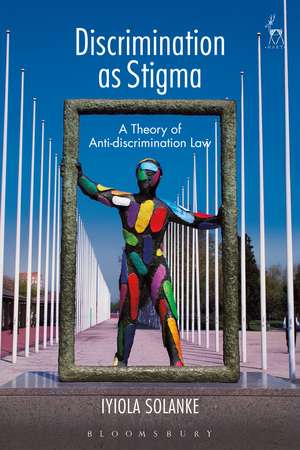
Discrimination as Stigma: A Theory of Anti-discrimination Law
Autor Iyiola Solankeen Limba Engleză Paperback – 30 iun 2019
Preț: 298.00 lei
Preț vechi: 395.23 lei
-25%
Puncte Express: 447
Carte tipărită la comandă
Livrare economică 25 noiembrie-09 decembrie
Livrare prin curier în România Termenul estimat este afișat lângă disponibilitate.
Transport gratuit de la 400.00 lei Plată online sau ramburs, în funcție de opțiunile comenzii.
Retur gratuit în 14 zile Comandă securizată și suport în română.
Specificații
ISBN-13: 9781509929825
ISBN-10: 1509929827
Pagini: 256
Dimensiuni: 154 x 232 x 16 mm
Greutate: 0.4 kg
Editura: Bloomsbury Publishing
Colecția Hart Publishing
Locul publicării:London, United Kingdom
ISBN-10: 1509929827
Pagini: 256
Dimensiuni: 154 x 232 x 16 mm
Greutate: 0.4 kg
Editura: Bloomsbury Publishing
Colecția Hart Publishing
Locul publicării:London, United Kingdom
V-ar putea interesa
-
 -33%Preț: 805.68 lei1197.63 lei
 -
 The Idea of Labour LawGuy Davidov-22%Preț: 411.99 lei528.04 lei
 -
 Unlocking Employment LawChris Turner-8%Preț: 455.22 lei494.80 lei
 -
 Key Cases: Employment LawChris TurnerPreț: 376.51 lei
 -
 -27%Preț: 1022.32 lei1394.99 lei
 -
 -27%Preț: 943.13 lei1285.79 lei
 -
 Workforce Restructuring in EuropeEdzard Clifton-Dey-24%Preț: 1630.67 lei2136.98 lei
 -
 -30%Preț: 537.77 lei769.01 lei
Cuprins
Introduction
I. Construction of the Anti-stigma Principle
II. Application of the Anti-stigma Principle
1. Stigma
I. Defining Stigma
II. Erwin Goffman and Stigma
III. The Process of Stigmatisation
IV. Developments in the Theory of Stigma
V. Power
VI. Conclusion
2. Legal Protection from Discrimination
I. Introduction
II. Equality and Inequality in Political Philosophy
III. The Anti-discrimination Principle in International Law
IV. Closed Lists
V. Open Lists
VI. Dignity, Immutability and the Anti-discrimination Principle
VII. The Limits of Dignity
VIII. The Idea of Immutability
IX. Conclusion
3. Stigma and Litigation
I. Goffman in Legal Scholarship
II. Litigation in Europe
III. Conclusion
4. The Anti-stigma Principle
I. Linking Interpersonal and Structural Stigma
II. Models of Stigma and Public Health
III. The Discrimination Virus
IV. Conclusion
5. Public Action to Combat Discrimination
I. Tackling a Public Health Virus: The Ebola Outbreak of 2014
II. The Transmission of Stigma
III. Positive Action and the Public Sector Equality Duty (PSED)
IV. Public Action to Tackle the Virus of Discrimination
V. Conclusion
6. Stigma, Synergy and Intersectionality
I. Understanding Intersectional Discrimination
II. Categorisation in Anti-discrimination Law
III. Addressing Intersectional Discrimination
IV. Applying Intersectional Discrimination
V. Conclusion
I. Construction of the Anti-stigma Principle
II. Application of the Anti-stigma Principle
1. Stigma
I. Defining Stigma
II. Erwin Goffman and Stigma
III. The Process of Stigmatisation
IV. Developments in the Theory of Stigma
V. Power
VI. Conclusion
2. Legal Protection from Discrimination
I. Introduction
II. Equality and Inequality in Political Philosophy
III. The Anti-discrimination Principle in International Law
IV. Closed Lists
V. Open Lists
VI. Dignity, Immutability and the Anti-discrimination Principle
VII. The Limits of Dignity
VIII. The Idea of Immutability
IX. Conclusion
3. Stigma and Litigation
I. Goffman in Legal Scholarship
II. Litigation in Europe
III. Conclusion
4. The Anti-stigma Principle
I. Linking Interpersonal and Structural Stigma
II. Models of Stigma and Public Health
III. The Discrimination Virus
IV. Conclusion
5. Public Action to Combat Discrimination
I. Tackling a Public Health Virus: The Ebola Outbreak of 2014
II. The Transmission of Stigma
III. Positive Action and the Public Sector Equality Duty (PSED)
IV. Public Action to Tackle the Virus of Discrimination
V. Conclusion
6. Stigma, Synergy and Intersectionality
I. Understanding Intersectional Discrimination
II. Categorisation in Anti-discrimination Law
III. Addressing Intersectional Discrimination
IV. Applying Intersectional Discrimination
V. Conclusion
Recenzii
...the author deserves praise for daring to tackle this subject in depth - something that has not been common amongst legal scholars until now ... In doing so, she has aided not only in highlighting the importance of the concept of stigma to questions regarding legal issues but also in encouraging others to follow suit.
Solanke's monograph offers a genuinely innovative theory of antidiscrimination law, embracing an interdisciplinary approach that remains all too rare in legal scholarship ... Focusing on the link between law and society can only be a good thing, particularly in such trying times. Solanke's monograph is highly recommended. It is a much-needed contribution to anti-discrimination scholarship.
It is rare that practitioners stand back and consider the theories, basic principles, the ideology and even the sociology underlying the legal concepts that are the day-to-day bread and butter of substantive law. When they do, as in the UNISON ET fees challenge, resulting in the Supreme Court's focus on the meaning of the concept of the rule of law and the role of access to the courts in maintaining the rule of law, the result may go far beyond expectations. Engaging with Solanke's work suggests a similar potential.
Solanke's project ... is doubtless a worthy one. And Solanke's emphasis on stigma as a key ingredient in a successful theory of discrimination law is a constructive contribution, pointing the way for future work in this rich field of inquiry.
Investigating the causal link between stigmatisation and discrimination is ... the agenda set by Solanke in her perspective-shifting and timely book Discrimination as Stigma: A Theory of Anti-Discrimination Law. By shifting the focus to stigmatisation, the book sheds a new light on discrimination theory... Solanke's book is both inspiring and thought-provoking. It can be highly recommended.
Solanke's monograph offers a genuinely innovative theory of antidiscrimination law, embracing an interdisciplinary approach that remains all too rare in legal scholarship ... Focusing on the link between law and society can only be a good thing, particularly in such trying times. Solanke's monograph is highly recommended. It is a much-needed contribution to anti-discrimination scholarship.
It is rare that practitioners stand back and consider the theories, basic principles, the ideology and even the sociology underlying the legal concepts that are the day-to-day bread and butter of substantive law. When they do, as in the UNISON ET fees challenge, resulting in the Supreme Court's focus on the meaning of the concept of the rule of law and the role of access to the courts in maintaining the rule of law, the result may go far beyond expectations. Engaging with Solanke's work suggests a similar potential.
Solanke's project ... is doubtless a worthy one. And Solanke's emphasis on stigma as a key ingredient in a successful theory of discrimination law is a constructive contribution, pointing the way for future work in this rich field of inquiry.
Investigating the causal link between stigmatisation and discrimination is ... the agenda set by Solanke in her perspective-shifting and timely book Discrimination as Stigma: A Theory of Anti-Discrimination Law. By shifting the focus to stigmatisation, the book sheds a new light on discrimination theory... Solanke's book is both inspiring and thought-provoking. It can be highly recommended.