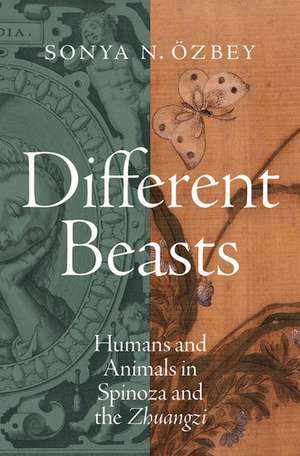
Different Beasts: Humans and Animals in Spinoza and the Zhuangzi
Autor Sonya N. Özbeyen Limba Engleză Hardback – 26 feb 2024
Recomandăm acest volum pentru nivelul de studiu licență avansată și master, fiind o resursă esențială pentru cercetătorii interesați de filozofia comparativă și etica relației om-animal. Ne-a atras atenția modul în care Sonya N. Özbey reușește să pună în dialog două tradiții aparent divergente: raționalismul european al lui Benedict de Spinoza și taoismul clasic din Zhuangzi. Departe de a fi o simplă juxtapunere de idei, textul chestionează modul în care noțiunile de umanitate și animalitate fundamentează ordinea socială și solidaritatea umană.
Observăm o schimbare de paradigmă față de lucrările care tratează aceste texte ca pe niște surse de „înțelepciune armonioasă”. Özbey argumentează că valoarea lor transformatoare rezidă tocmai în explorarea unicității, a nebuniei și a superiorității umane, oferind o perspectivă critică asupra binarității om-animal. Din punct de vedere metodologic, lucrarea completează perspectiva oferită de Animality de Zhao Jing. În timp ce volumul lui Jing investighează statutul animalului prin prisma metafizicii occidentale (de la Grecia antică la Heidegger) și a biopoliticii, Different Beasts adaugă dimensiunea filozofiei est-asiatice, demonstrând că dezbaterea despre „animalul interior” nu este limitată la canonul euro-american. De asemenea, spre deosebire de The History of Animals: A Philosophy de Oxana Timofeeva, care propune o acceptare a animalității prin negația metafizicii creștine, Özbey folosește textele lui Spinoza și Zhuangzi pentru a analiza cum aceste concepte se intersectează cu ierarhiile de gen și abilitate, oferind o structură analitică mai ancorată în sociologia filozofică.
Preț: 533.51 lei
Preț vechi: 763.72 lei
-30%
Carte disponibilă
Livrare economică 23 octombrie-03 noiembrie
Specificații
ISBN-10: 0197686389
Pagini: 340
Dimensiuni: 226 x 163 x 46 mm
Greutate: 0.61 kg
Editura: Oxford University Press
Colecția OUP USA
Locul publicării:New York, United States
De ce să citești această carte
Pentru studenții și specialiștii în filozofie, această carte oferă un instrumentar critic nou pentru a naviga între tradițiile occidentale și orientale. Cititorul câștigă o înțelegere profundă a modului în care definiția „animalului” a fost folosită istoric pentru a justifica ierarhii umane. Este o recomandare solidă pentru oricine dorește să depășească clișeele despre armonia orientală și să exploreze rigoarea conceptuală a lui Spinoza într-un context global.
Despre autor
Sonya N. Özbey este o cercetătoare specializată în filozofie comparativă, cu un interes distinct pentru dialogul dintre gândirea chineză antică și filozofia modernă timpurie europeană. Lucrarea sa, publicată sub egida Oxford University Press, reflectă o expertiză interdisciplinară care combină studiile clasice chineze cu analiza riguroasă a sistemului spinozist. Özbey este recunoscută pentru contribuțiile sale la extinderea canonului filozofic, aducând în prim-plan texte non-canonice și explorând relevanța acestora pentru problemele etice și sociale contemporane, în special în ceea ce privește studiile critice despre animale.
Descriere
Recenzii
Notă biografică
Cuprins
- Acknowledgments
- List of Abbreviations
- Introduction: Cross-Cultural Philosophy and Critical Animality Studies
- A. Intersectional Critiques of Dualistic Thinking
- B. Seeking a Savior in "Monistic" Philosophies
- C. Why Compare? Critical Mimesis and New Areas of Inquiry
- D. Roadmap
- PART I. Reading Spinoza with the Zhuangzi: Conversations and Toolkits
- 1. Contexts and Means for Interpreting the Zhuangzi
- 1.1 Inching Out of Animality: Early Chinese Recipes for Power and Teachings for Humanity
- 1.2 Loitering Idly with Zhuangzi's Big but "Useless" Words
- 2. Contexts and Means for Interpreting Spinoza
- 2.1 Lifting Up and Placing Down Man into the Machine-World: Contested Routes to Knowledge and Salvation
- 2.2 Seeking True Philosophy, in the Proper Order, with Spinoza
- Conclusion: Strange Companions--Thinking about Animals with Spinoza and the Zhuangzi
- A. Form, Context, and Function
- B. Hermeneutical Challenges and Opportunities
- PART II. Portrayals of Human Distinctiveness
- 3. Rich in Complexity: Human Distinctiveness in Spinoza
- 3.1 "That Eternal and Infinite Being We Call God, or Nature"
- 3.2 Eliminating the Anthropomorphic God and the Theomorphic Man
- 3.3 What Distinguishes a Man from an Ass
- 3.4 A Ladder of Complexity: From Worm to Man
- 4. Pinnacles of Versatility: Human Distinctiveness in the Zhuangzi
- 4.1 The Ten Thousand Things under Heaven
- 4.2 Dethroning the Heart
- 4.3 Finding the Pivot of All Daos
- 4.4 What Distinguishes People from Turtles and Fish
- Conclusion: Admiring and Humbling Humanity
- A. Like a Worm, Like a Tree
- B. Finding Empowerment in a Univocal versus Polyvocal World
- C. Certainty with a Bias, Humility without an Agenda
- PART III. Animal Affects: Curiosity versus Threat
- 5. Zhuangzi and the Happy Fish: Animal Affects in the Zhuangzi
- 5.1 Wandering with the Fish, Zhuangzi, and Huizi
- 5.2 Effective and Affective Communication in the Zhuangzi
- 5.3 Bonding through Banter and Laughter
- 6. Spinoza's Serpentine Worries: Animal Affects in Spinoza
- 6.1 Making Use of Beasts as We Please
- 6.2 Choosing Eve over the Serpent
- 6.3 On Misanthropic Melancholy and Fraternal Cheer
- Conclusion: Affects, Solidarity, and Power
- A. The Cementing and Loosening of Human Bonds
- B. The Power to Include and Exclude
- PART IV. The Orderly and the Chaotic
- 7.From Nature's Order to Civil Order: Onto-Political Formations in Spinoza
- 7.1 Individuation and Identity in an Orderly World
- 7.2 Uniting as One Mind and Body
- 7.3 Big Fish Eat Small Fish
- 8. Unmanaging the Personal and the Political Body in the Zhuangzi
- 8.1 From Unity to Fragmentation: Undermining the Heart of the Personal and Political Body
- 8.2 Transforming into a Rat's Liver or a Butterfly's Dream
- 8.3 Muddying the Waters: Reimagining Hundun and Antiquity
- Conclusion: The State of the World: The Topsy-Turvy and the Ship-Shape
- A. Tales of Identity and Disintegration
- B. In the Absence of Civil Order
- PART V. Humans' Animality: Textual Traces and Absences
- 9. Rethinking Animal Imagery in the Zhuangzi
- 9.1 The Zhuangzi on Distant Lands, Humble Professions, and Unruly Minds
- 9.2 Women in the Zhuangzi
- 10. Animalized Others in Spinoza's "Imagination"
- 10.1 On "Turks" and Common People
- 10.2 On Women, the Infantile, and the Sub-rational
- Conclusion: Our Kind
- A. Those "We" Uplift or Leave Behind
- B. The Limits of What "We" Can Imagine "Us" to Be
- Epilogue: Looking at There and Then to Reflect on Here and Now
- References
- Index