
Dickens, C: Christmas Carol
en Paperback
Găsim în paginile acestei ediții A Christmas Carol o atmosferă ce pendulează între frigul tăios al Londrei victoriene și căldura unei speranțe redobândite. Încă de la primele rânduri, suntem avertizați că moartea lui Marley este un fapt cert, o ancoră necesară pentru ca elementul miraculos care urmează să aibă greutate. Ne-a atras atenția modul în care Charles Dickens reușește să transforme un personaj dezolant precum Ebenezer Scrooge într-un vehicul pentru o critică socială profundă, fără a sacrifica însă farmecul unei povești despre spirite și regrete. Structura cărții, organizată în cinci „Stave-uri” (capitole muzicale), ghidează cititorul printr-o călătorie temporală precisă: de la fantoma lui Marley, la spiritele Crăciunului Trecut, Prezent și Viitor, până la rezoluția finală a transformării. Pe același raft cu A Christmas Carol - Kid Classics de Charles Dickens, această ediție Collins Classics se distinge prin păstrarea textului original, neadaptat, oferind acea bogăție a limbajului care l-a consacrat pe autor ca un maestru al prozei britanice. Față de abordările pedagogice sau simplificate, volumul de față păstrează realismul dur al epocii, reflectând preocupările constante ale lui Dickens pentru drepturile copiilor și educație, teme explorate și în Great Expectations sau David Copperfield. Este o lectură în care umorul fin se împletește cu estetica gotică, oferind o experiență mult mai complexă decât o simplă parabolă morală.
Preț: 176.61 lei
Cartea nu mai face parte din oferta noastră
Specificații
V-ar putea interesa
-
 Quentin Blake's a Christmas CarolCharles DickensPreț: 96.09 lei
 -
 A Christmas Carol and Other Christmas WritingsCharles Dickens-27%Preț: 47.53 lei64.69 lei
 -
 Oxford Children's Classics: A Christmas Carol and Other StoriesCharles DickensPreț: 56.14 lei
 -
 A Christmas Carol and Other Christmas BooksCharles Dickens-16%Preț: 49.62 lei59.10 lei
 -
 Penguin Readers Level 1: A Christmas Carol (ELT Graded Reader)Charles DickensPreț: 49.59 lei
 -
 Call Me by Your NameAndré Aciman-30%Preț: 67.43 lei96.33 lei
 -
 Preț: 158.57 lei
 -
 A Christmas CarolAdam MckeownPreț: 123.27 lei
 -
 Ladybird Classics Oliver TwistCharles Dickens-17%Preț: 47.92 lei57.85 lei
 -
 Preț: 71.01 lei
 -
 A Christmas Carol: Accessible Symbolised EditionPipi SpositoPreț: 49.71 lei
 -
 The National Gallery Masterpiece Classics: A Christmas CarolCharles Dickens-26%Preț: 69.89 lei94.08 lei
 -
 Story Fold Classics: A Christmas CarolCharles DickensPreț: 94.47 lei
 -
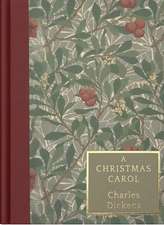 A Christmas Carol (Heritage Collection)Charles DickensPreț: 132.78 lei
 -
 Oliver TwistCharles DickensPreț: 37.41 lei
 -
 Christmas BooksCharles DickensPreț: 37.35 lei
 -
 A Christmas Carol, ComicsCharles DickensPreț: 56.39 lei
De ce să citești această carte
Recomandăm această carte oricărui cititor care dorește să descopere forța narativă originală a lui Charles Dickens dincolo de adaptările cinematografice. Este o oportunitate de a experimenta ritmul autentic al limbii engleze victoriene și de a înțelege de ce această poveste a definit spiritul Crăciunului modern. Cititorul câștigă nu doar o lectură clasică, ci și o perspectivă empatică asupra condiției umane și a posibilității de schimbare.
Despre autor
Charles Dickens (1812–1870) este recunoscut drept cel mai important romancier al epocii victoriene, un observator acut al inechităților sociale din Anglia secolului al XIX-lea. Experiența sa timpurie, lucrând într-o fabrică de cremă de ghete la vârsta de 12 ani în timp ce tatăl său era închis pentru datorii, i-a marcat profund opera, transformându-l într-un apărător neobosit al celor defavorizați. Autor prolific, a scris 15 romane majore, printre care A Tale of Two Cities și Great Expectations, și a pionierat publicarea în foileton. Lucrările sale îmbină realismul social cu umorul satiric și personaje memorabile, rămânând fundamentale pentru literatura universală.
Descriere scurtă
Descriere
Embittered by life, Ebenezer Scrooge finds refuge in lonely isolation from society and from his past. Yet his well-patterned life is shattered in a single night of nostalgia, regret, and grim foreboding. A Christmas classic, Charles Dickens' hopeful tale of innocence and rebirth continues to inspire readers the world over.This new edition features an original foreword by Ashley Carlson, PhD. Dr. Carlson is currently on faculty at the University of New Mexico, where she teaches English composition and literature.Additional titles by this publisher may be found at www.finisterrabooks.com.
Notă biografică
Born in Portsmouth, Dickens left school to work in a factory when his father was incarcerated in a debtors' prison. Despite his lack of formal education, he edited a weekly journal for 20 years, wrote 15 novels, five novellas, hundreds of short stories and non-fiction articles, lectured and performed readings extensively, was an indefatigable letter writer, and campaigned vigorously for children's rights, education, and other social reforms.
Dickens's literary success began with the 1836 serial publication of The Pickwick Papers. Within a few years he had become an international literary celebrity, famous for his humour, satire, and keen observation of character and society. His novels, most published in monthly or weekly instalments, pioneered the serial publication of narrative fiction, which became the dominant Victorian mode for novel publication.[4][5] Cliffhanger endings in his serial publications kept readers in suspense.[6] The installment format allowed Dickens to evaluate his audience's reaction, and he often modified his plot and character development based on such feedback.[5] For example, when his wife's chiropodist expressed distress at the way Miss Mowcher in David Copperfield seemed to reflect her disabilities, Dickens improved the character with positive features.[7] His plots were carefully constructed, and he often wove elements from topical events into his narratives.[8] Masses of the illiterate poor chipped in ha'pennies to have each new monthly episode read to them, opening up and inspiring a new class of readers.[9]
His 1843 novella A Christmas Carol remains especially popular and continues to inspire adaptations in every artistic genre. Oliver Twist and Great Expectations are also frequently adapted and, like many of his novels, evoke images of early Victorian London. His 1859 novel A Tale of Two Cities (set in London and Paris) is his best-known work of historical fiction. The most famous celebrity of his era, he undertook, in response to public demand, a series of public reading tours in the later part of his career.[10] Dickens has been praised by many of his fellow writers-from Leo Tolstoy to George Orwell, G. K. Chesterton, and Tom Wolfe-for his realism, comedy, prose style, unique characterisations, and social criticism. However, Oscar Wilde, Henry James, and Virginia Woolf complained of a lack of psychological depth, loose writing, and a vein of sentimentalism.
The term Dickensian is used to describe something that is reminiscent of Dickens and his writings, such as poor social conditions or comically repulsive characters.