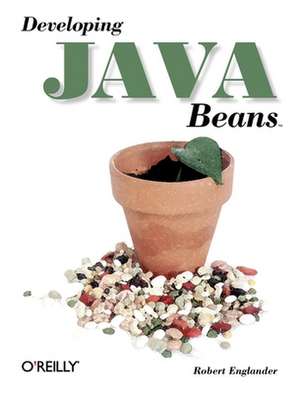
Developing Java Beans
Autor Robert Englanderen Limba Engleză Paperback – 8 iul 1997
Preț: 146.12 lei
Preț vechi: 182.65 lei
-20%
Puncte Express: 219
Carte disponibilă
Livrare economică 05-19 noiembrie
Livrare prin curier în România Termenul estimat este afișat lângă disponibilitate.
Transport gratuit de la 400.00 lei Plată online sau ramburs, în funcție de opțiunile comenzii.
Retur gratuit în 14 zile Comandă securizată și suport în română.
Specificații
ISBN-13: 9781565922891
ISBN-10: 1565922891
Pagini: 316
Dimensiuni: 179 x 235 x 29 mm
Greutate: 0.63 kg
Editura: O'Reilly
ISBN-10: 1565922891
Pagini: 316
Dimensiuni: 179 x 235 x 29 mm
Greutate: 0.63 kg
Editura: O'Reilly
V-ar putea interesa
-
 Java and SoapRobert Englander-20%Preț: 272.39 lei340.49 lei
 -
 Web Database Applications with PHP and MySQLHugh E. Williams-20%Preț: 276.29 lei345.37 lei
 -
 Pro Zend Framework TechniquesForrest Lyman-20%Preț: 219.24 lei274.05 lei
 -
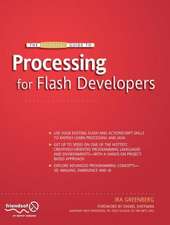 The Essential Guide to Processing for Flash DevelopersIra Greenberg-20%Preț: 248.82 lei311.02 lei
 -
 PHP for Absolute BeginnersJason Lengstorf-20%Preț: 174.70 lei218.38 lei
 -
 Getting StartED with DojoKyle Hayes-20%Preț: 191.75 lei239.69 lei
 -
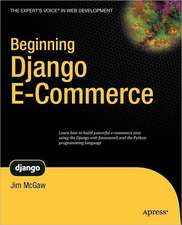 Beginning Django E-CommerceJames McGaw-20%Preț: 305.52 lei381.90 lei
 -
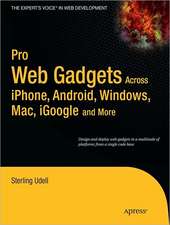 Pro Web Gadgets for Mobile and DesktopSterling Udell-20%Preț: 276.52 lei345.65 lei
 -
 Beginning Smartphone Web DevelopmentGail Frederick-20%Preț: 198.09 lei247.61 lei
 -
 Pro PHP RefactoringFrancesco Trucchia-20%Preț: 246.85 lei308.57 lei
 -
 Beginning PerlJames Lee-20%Preț: 221.79 lei277.23 lei
 -
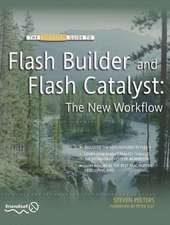 Flash Builder and Flash CatalystSteven Peeters-20%Preț: 217.78 lei272.23 lei
 -
 Pro PHP and jQueryJason Lengstorf-20%Preț: 237.93 lei297.41 lei
 -
 Beginning Drupal 7Todd Tomlinson-20%Preț: 236.81 lei296.00 lei
 -
 Beginning Google BloggerHeather Wright-Porto-20%Preț: 130.91 lei163.65 lei
 -
 Beginning PHP and MySQLW Jason Gilmore-20%Preț: 368.58 lei460.72 lei
 -
 Adobe Coldfusion AnthologyMichael Dinowitz-20%Preț: 324.01 lei405.02 lei
 -
 The Definitive Guide to MagentoAdam McCombs-20%Preț: 329.97 lei412.46 lei
 -
 Node.js for PHP DevelopersDaniel Howard-20%Preț: 139.89 lei174.87 lei
 -
 JavaScript EnlightenmentCody Lindley-20%Preț: 91.02 lei113.78 lei
 -
 Programming TypeScriptBoris Cherny-20%Preț: 278.14 lei347.67 lei
 -
 Think ComplexityAllen B. Downey-20%Preț: 256.48 lei320.60 lei
 -
 D3 for the ImpatientPhilipp K. Janert-20%Preț: 231.70 lei289.62 lei
 -
 Build Chatbot InteractionsDaniel Pritchett-20%Preț: 215.62 lei269.52 lei
 -
 Programming KotlinVenkat Subramaniam-20%Preț: 318.06 lei397.58 lei
 -
 Programming Webassembly with RustKevin Hoffman-20%Preț: 276.90 lei346.13 lei
Descriere
A complete introduction to Java's component architecture, this book describes how to write Beans, which are software components that can be used in visual programming environments. This book discusses event adapters, serialization, introspection, property editors, and customizers, and shows how to use Beans within ActiveX controls.
Cuprins
Dedication;
Preface;
Intended Audience;
A Moment in Time;
How the Book Is Organized;
Conventions Used in This Book;
Acknowledgments;
How to Contact Us;
Providing Feedback to the Author;
Retrieving Examples Online;
Chapter 1: Introduction;
1.1 The Component Model;
1.2 The JavaBeans Architecture;
1.3 JavaBeans Overview;
1.4 Using Design Patterns;
1.5 JavaBeans vs. ActiveX;
1.6 Getting Started;
Chapter 2: Events;
2.1 The Java Event Model;
2.2 Events in the AWT Package;
Chapter 3: Event Adapters;
3.1 Demultiplexing;
3.2 Generic Adapters;
3.3 Event Adapters in the AWT Package;
3.4 Event Filtering;
3.5 Event Queuing;
Chapter 4: Properties;
4.1 Accessing Properties;
4.2 Indexed Properties;
4.3 Bound Properties;
4.4 Constrained Properties;
4.5 Handling Events for Specific Properties;
4.6 A java.awt Example;
Chapter 5: Persistence;
5.1 Object Serialization;
5.2 The java.io.Serializable Interface;
5.3 Class-Specific Serialization;
5.4 Walking the Class Hierarchy;
5.5 Serializing Event Listeners;
5.6 Versioning;
5.7 Object Validation;
5.8 The java.io.Externalizable Interface;
5.9 Instantiating Serialized Objects;
Chapter 6: JAR Files;
6.1 The jar Program;
6.2 The Manifest;
6.3 Using JAR Files with HTML;
6.4 Using JAR Files on the CLASSPATH;
6.5 Archive Signing;
6.6 An Alternative to the jar Program;
Chapter 7: The BeanBox Tool;
7.1 Running BeanBox;
7.2 Dropping Beans on BeanBox;
7.3 Editing a Bean's Properties;
7.4 Hooking Up Beans;
7.5 Saving and Restoring the BeanBox Form;
7.6 Adding Your Own Beans to BeanBox;
Chapter 8: Putting It All Together;
8.1 Defining the Temperature Control Simulator;
8.2 Building the Simulator;
8.3 A Sample Simulator Applet;
8.4 Creating a JAR File;
8.5 Recreating the Sample Using BeanBox;
Chapter 9: Introspection;
9.1 The BeanInfo Interface;
9.2 Providing Additional BeanInfo Objects;
9.3 Introspecting the Environment;
9.4 The BeansBook.SimulatorBeanInfo Classes;
Chapter 10: Property Editors and Customizers;
10.1 Property Editors;
10.2 Customizers;
Chapter 11: ActiveX;
11.1 The JavaBeans ActiveX Bridge;
11.2 Technology Mapping;
11.3 Using Beans in Visual Basic;
Design Patterns;
Event Objects;
Event Listeners;
Registering for Event Notification;
Registering for Unicast Event Notification;
Multiple Parameter Event Methods;
Property Access Methods;
Indexed Property Access Methods;
Constrained Property Access Methods;
Registering for Bound and Constrained Property Event Notifications;
Naming a BeanInfo Class;
The java.beans Package;
Colophon;
Preface;
Intended Audience;
A Moment in Time;
How the Book Is Organized;
Conventions Used in This Book;
Acknowledgments;
How to Contact Us;
Providing Feedback to the Author;
Retrieving Examples Online;
Chapter 1: Introduction;
1.1 The Component Model;
1.2 The JavaBeans Architecture;
1.3 JavaBeans Overview;
1.4 Using Design Patterns;
1.5 JavaBeans vs. ActiveX;
1.6 Getting Started;
Chapter 2: Events;
2.1 The Java Event Model;
2.2 Events in the AWT Package;
Chapter 3: Event Adapters;
3.1 Demultiplexing;
3.2 Generic Adapters;
3.3 Event Adapters in the AWT Package;
3.4 Event Filtering;
3.5 Event Queuing;
Chapter 4: Properties;
4.1 Accessing Properties;
4.2 Indexed Properties;
4.3 Bound Properties;
4.4 Constrained Properties;
4.5 Handling Events for Specific Properties;
4.6 A java.awt Example;
Chapter 5: Persistence;
5.1 Object Serialization;
5.2 The java.io.Serializable Interface;
5.3 Class-Specific Serialization;
5.4 Walking the Class Hierarchy;
5.5 Serializing Event Listeners;
5.6 Versioning;
5.7 Object Validation;
5.8 The java.io.Externalizable Interface;
5.9 Instantiating Serialized Objects;
Chapter 6: JAR Files;
6.1 The jar Program;
6.2 The Manifest;
6.3 Using JAR Files with HTML;
6.4 Using JAR Files on the CLASSPATH;
6.5 Archive Signing;
6.6 An Alternative to the jar Program;
Chapter 7: The BeanBox Tool;
7.1 Running BeanBox;
7.2 Dropping Beans on BeanBox;
7.3 Editing a Bean's Properties;
7.4 Hooking Up Beans;
7.5 Saving and Restoring the BeanBox Form;
7.6 Adding Your Own Beans to BeanBox;
Chapter 8: Putting It All Together;
8.1 Defining the Temperature Control Simulator;
8.2 Building the Simulator;
8.3 A Sample Simulator Applet;
8.4 Creating a JAR File;
8.5 Recreating the Sample Using BeanBox;
Chapter 9: Introspection;
9.1 The BeanInfo Interface;
9.2 Providing Additional BeanInfo Objects;
9.3 Introspecting the Environment;
9.4 The BeansBook.SimulatorBeanInfo Classes;
Chapter 10: Property Editors and Customizers;
10.1 Property Editors;
10.2 Customizers;
Chapter 11: ActiveX;
11.1 The JavaBeans ActiveX Bridge;
11.2 Technology Mapping;
11.3 Using Beans in Visual Basic;
Design Patterns;
Event Objects;
Event Listeners;
Registering for Event Notification;
Registering for Unicast Event Notification;
Multiple Parameter Event Methods;
Property Access Methods;
Indexed Property Access Methods;
Constrained Property Access Methods;
Registering for Bound and Constrained Property Event Notifications;
Naming a BeanInfo Class;
The java.beans Package;
Colophon;