
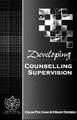
Developing Gestalt Counselling: Developing Counselling series
Autor Jennifer Mackewnen Limba Engleză Paperback – 5 sep 2000
Subliniem, în primul rând, relevanța acestui volum pentru studenții și profesioniștii aflați în proces de acreditare, fiind un text fundamental în cadrul curriculei de formare în psihoterapie. Developing Gestalt Counselling reprezintă o resursă esențială pentru cei care doresc să stăpânească nuanțele practicii clinice, oferind o structură riguroasă ce acoperă 30 de arii critice ale muncii cu clientul. Notăm cu interes modul în care Jennifer Mackewn reușește să sintetizeze stilurile psihologice contemporane, propunând o tranziție necesară de la abordările tradiționale către un model integrativ, bazat pe teoria câmpului și pe dimensiunea relațională. Reținem că structura cărții facilitează o progresie logică, de la stabilirea condițiilor inițiale și explorarea contextului cultural al clientului, până la strategii avansate de diagnostic și intervenție. Spre deosebire de lucrarea sa anterioară, Fritz Perls, unde se concentra pe fundamentarea teoretică a operei fondatorului, aici Mackewn dezvoltă o metodologie proprie, „hands-on”, care încurajează terapeutul să utilizeze creativitatea și intuiția. Volumul funcționează ca o alternativă practică la The Relational Heart of Gestalt Therapy pentru cursurile de psihologie clinică, având avantajul unei organizări tematice ce permite cititorului să acceseze rapid soluții pentru probleme specifice, precum lucrul cu rezistența sau integrarea dimensiunilor transpersonale. Experiența de lectură este marcată de un ton pragmatic și onest. Autorul nu oferă doar teorie, ci instrumente pentru dezvoltarea unei „arte” a consilierii, punând accent pe întâlnirea autentică persoană-la-persoană. Această ediție din Developing Counselling series rămâne un reper prin modul în care echilibrează rigoarea academică a editurii SAGE Publications cu nevoile imediate ale cabinetului de terapie.

Preț: 413.44 lei
Carte disponibilă
Livrare economică 16-30 noiembrie
Livrare express 31 octombrie-06 noiembrie pentru 29.75 lei
Specificații
ISBN-10: 0803978618
Pagini: 274
Ilustrații: Illustrations
Dimensiuni: 127 x 203 x 16 mm
Greutate: 0.33 kg
Ediția:1
Editura: SAGE Publications
Colecția Developing Counselling series
Seria Developing Counselling series
Locul publicării:London, United Kingdom
V-ar putea interesa
-
 -19%Preț: 547.67 lei676.13 lei
 -
 Gestalt Therapy: Excitement and Growth in the Human PersonalityFrederick S. Perls-23%Preț: 99.79 lei129.33 lei
 -
 Gestalt Therapy IntegratedErving Polster-24%Preț: 75.97 lei99.70 lei
 -
 Creative Process Gestalt TherapyJoseph C. Zinker-5%Preț: 94.47 lei99.44 lei
 -
 -5%Preț: 261.97 lei275.76 lei
 -
 -29%Preț: 66.44 lei93.64 lei
 -
 -5%Preț: 301.41 lei317.27 lei
 -
 -5%Preț: 377.32 lei397.18 lei
 -
 -5%Preț: 232.27 lei244.49 lei
 -
 The Handbook of Person-Centred Psychotherapy and CounsellingDr. Gina Di Malta-22%Preț: 294.16 lei376.01 lei
 -
 Preț: 409.53 lei
 -
 Integrative Person-Centred CounsellingRick Murphy-5%Preț: 352.18 lei370.72 lei
 -
 Gestalt TherapyGordon WheelerPreț: 301.12 lei
 -
 Preț: 354.32 lei
 -
 Psychoanalytic Case FormulationNancy McWilliams-8%Preț: 444.11 lei482.73 lei
 -
 New Approaches to Integration in PsychotherapyEleanor O'Leary-5%Preț: 213.03 lei224.24 lei
 -
 -27%Preț: 282.67 lei387.35 lei
 -
 -29%Preț: 172.01 lei243.50 lei
 -
 -28%Preț: 196.89 lei274.44 lei
De ce să citești această carte
Această carte este recomandată consilierilor care doresc să își rafineze abilitățile practice dincolo de conceptele introductive. Cititorul câștigă o înțelegere profundă a modelului relațional modern, învățând cum să gestioneze complexitatea procesului terapeutic prin tehnici creative și experimentale. Este un ghid esențial pentru pregătirea examenelor de certificare, oferind claritate în aplicarea teoriei Gestalt în contexte clinice diverse.
Despre autor
Jennifer Mackewn este o figură proeminentă în lumea psihoterapiei, activând ca psihoterapeut, formator și consultant organizațional. Este membru didactic al Gestalt Psychotherapy Training Institute și trainer în cadrul unor instituții de prestigiu precum Metanoia Institute și Institute for the Arts in Therapy and Education. Expertiza sa este consolidată de co-autoratul volumului Fritz Perls (SAGE, 1993), lucrare ce a sistematizat materialul teoretic al fondatorului terapiei Gestalt. Prin numeroasele sale articole și capitole de specialitate, Mackewn s-a impus ca o autoritate în integrarea metodelor creative în practica clinică și organizațională.
Descriere scurtă
Describing contemporary integrative Gestalt counselling and psychotherapy, this book addresses 30 key issues which will help both trainee and practising counsellors examine and improve crucial areas of their work.
The field theoretical and relational model which underpins the book suggests that therapy is a complex process which requires therapists to be intuitive and self-aware while engaging in a number of interrelated therapeutic tasks. The importance of meeting clients person-to-person in a meaningful relationship is highlighted. Jennifer Mackewn encourages counsellors to focus on areas that they may feel need special attention, and shows them how to blend their skills into a subtle and versatile art form. The book covers vital aspects of Gestalt counselling and psychotherapy, such as: appreciating the significance of beginnings; understanding the client's context; the dialogic relationship; contact and awareness; exploring life themes and support systems; and experimental and creative methods.
Recenzii
Cuprins
A Field Theoretical and Relational Model of Contemporary Integrative Gestalt
Attending to Beginnings
Initial Conditions and Existential Meeting
Exploring the Client's Context and Culture
Developing a Dialogic Relationship as a Crucible for Self Development
Observing Process, Developing Diagnostic Perspectives and Therapeutic Strategies
Exploring Awareness and Contact
Integrating Experimental, Creative and Transpersonal Dimensions
Working with Embodiment, Energy and `Resistance'
Attending to the Background Features and Processes in Clients' Lives
Shaping Counselling over Time
Conclusion
Simplicity, Complexity and Paradox in Gestalt Counselling and Therapy