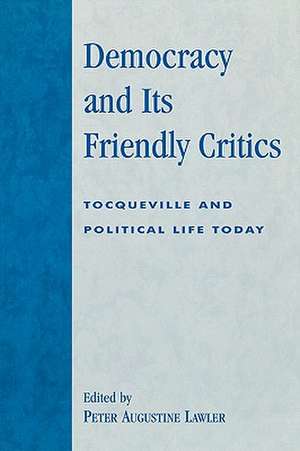
Democracy and Its Friendly Critics: Tocqueville and Political Life Today: Applications of Political Theory
Contribuţii de Patrick J. Deneen, Marc D. Guerra, Ralph C. Hancock, Matthew S. Holland, Joseph M. Knippenberg, Peter Augustine Lawler, Daniel J. Mahoney, Harvey C. Mansfield, Wilson Carey McWilliams, David K. Nichols, Mary P. Nichols, Paul Seaton, Aristide Tessitore, Delba Winthropen Limba Engleză Paperback – aug 2004
Din seria Applications of Political Theory
- 24%
 Preț: 316.28 lei
 - 24%
 Preț: 323.55 lei
 - 26%
 Preț: 293.43 lei
 - 23%
 Preț: 325.20 lei
 - 24%
 Preț: 324.72 lei
 - 26%
 Preț: 291.86 lei
 - 26%
 Preț: 350.78 lei
 - 23%
 Preț: 1085.71 lei
 - 34%
 Preț: 552.32 lei
 -
 Preț: 499.40 lei
 - 28%
 Preț: 263.56 lei
 - 24%
 Preț: 319.16 lei
 - 24%
 Preț: 309.48 lei
 - 24%
 Preț: 307.30 lei
 - 29%
 Preț: 260.81 lei
 - 24%
 Preț: 322.67 lei
 - 24%
 Preț: 305.95 lei
 - 28%
 Preț: 264.49 lei
 - 24%
 Preț: 309.21 lei
 - 26%
 Preț: 346.10 lei
 - 30%
 Preț: 328.85 lei
 - 28%
 Preț: 256.30 lei
 - 24%
 Preț: 310.51 lei
 - 24%
 Preț: 308.64 lei
 - 24%
 Preț: 305.66 lei
 - 24%
 Preț: 307.28 lei
 - 29%
 Preț: 366.52 lei
 - 24%
 Preț: 309.96 lei
Preț: 306.05 lei
Preț vechi: 403.64 lei
-24%
Puncte Express: 459
Carte tipărită la comandă
Livrare economică 08-22 iunie
Specificații
ISBN-13: 9780739107621
ISBN-10: 0739107623
Pagini: 204
Dimensiuni: 177 x 228 x 17 mm
Greutate: 0.31 kg
Ediția:New.
Editura: Bloomsbury Publishing
Colecția Lexington Books
Seria Applications of Political Theory
Locul publicării:New York, United States
ISBN-10: 0739107623
Pagini: 204
Dimensiuni: 177 x 228 x 17 mm
Greutate: 0.31 kg
Ediția:New.
Editura: Bloomsbury Publishing
Colecția Lexington Books
Seria Applications of Political Theory
Locul publicării:New York, United States
Cuprins
1 What Tocqueville Says to Liberals and Conservatives Today
2 National Character and National Soul
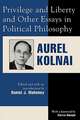
3 Liberty, Equality, Nobility: Kolnai, Tocqueville, and the Moral Foundation of Democracy
4 Tocqueville on Pantheism, Materialism, and Catholicism
5 The Modern Revolution and the Collapse of Moral Analogy: Tocqueville and Guizot
6 Alexis de Tocqueville on the Incommensurability of America's Founding Principles
7 Citizenship as a Vocation
8 Compassionate Conservatism and Biotechnology: Some Tocquevillian Reflections
9 Religion and the Limits of Liberal Pluralism
10 Profiles in American Thomism
11 Christian Love and the Foundations of American Politics: Winthrop, Jefferson, and Lincoln
12 Democracy's Darkside? Robert Kraynak's Catholic Reflections on the Soul in the Liberal Democratic Dispensation
13 Machiavelli Meets the Mob: Palminteri'sA Bronx Tale
2 National Character and National Soul
3 Liberty, Equality, Nobility: Kolnai, Tocqueville, and the Moral Foundation of Democracy
4 Tocqueville on Pantheism, Materialism, and Catholicism
5 The Modern Revolution and the Collapse of Moral Analogy: Tocqueville and Guizot
6 Alexis de Tocqueville on the Incommensurability of America's Founding Principles
7 Citizenship as a Vocation
8 Compassionate Conservatism and Biotechnology: Some Tocquevillian Reflections
9 Religion and the Limits of Liberal Pluralism
10 Profiles in American Thomism
11 Christian Love and the Foundations of American Politics: Winthrop, Jefferson, and Lincoln
12 Democracy's Darkside? Robert Kraynak's Catholic Reflections on the Soul in the Liberal Democratic Dispensation
13 Machiavelli Meets the Mob: Palminteri'sA Bronx Tale
Recenzii
There are many ways to read Tocqueville, but the authors of the essays collected in this extraordinary volume read him in the best way - as a partner in conversation about some of the most important issues confronting us today: democracy, America, and the fate of democracy in America.
These "friendly critics of democracy" go beyond the classic to illuminate American culture and politics. Indeed, these superlative essayists are forced to become friendly critics of Tocqueville in order to complete their work, which culminates, in the most ambitious essays, in the articulation of the relationship between reason and revelation. Thus, the book is an invaluable reminder of the need to understand America as containing within herself the highest themes of political philosophy and hence as possibly the best regime.
Thirteen essays, presented by Lawler, frequently use the observations of de Tocqueville as a jumping off point for their reflections on such topics as religion and materialism, the moral foundations of democracy, citizenship as vocation, and other matters.
Here in America, the land of sunny tolerance, it sometimes seems that the criticism of modern egalitarian democracy is the only truly unpardonable offense left ? a sin that is doubly heinous, since it combines the theological vice of heresy with the political vice of treason. But America deserves better than that, and the good health of democracy requires it. This stimulating and valuable collection gives fresh force to Tocqueville's great and enduring insight, that the liberal-democratic ethos can beat its best only when it is held in tension with the friendly criticism of other principles...
These "friendly critics of democracy" go beyond the classic to illuminate American culture and politics. Indeed, these superlative essayists are forced to become friendly critics of Tocqueville in order to complete their work, which culminates, in the most ambitious essays, in the articulation of the relationship between reason and revelation. Thus, the book is an invaluable reminder of the need to understand America as containing within herself the highest themes of political philosophy and hence as possibly the best regime.
Thirteen essays, presented by Lawler, frequently use the observations of de Tocqueville as a jumping off point for their reflections on such topics as religion and materialism, the moral foundations of democracy, citizenship as vocation, and other matters.
Here in America, the land of sunny tolerance, it sometimes seems that the criticism of modern egalitarian democracy is the only truly unpardonable offense left ? a sin that is doubly heinous, since it combines the theological vice of heresy with the political vice of treason. But America deserves better than that, and the good health of democracy requires it. This stimulating and valuable collection gives fresh force to Tocqueville's great and enduring insight, that the liberal-democratic ethos can beat its best only when it is held in tension with the friendly criticism of other principles...