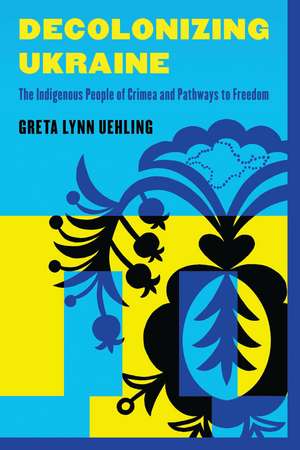
Decolonizing Ukraine
Autor Greta Lynn Uehlingen Limba Engleză Paperback – 19 feb 2025
| Toate formatele și edițiile | Preț | Express |
|---|---|---|
| Paperback (1) | 211.87 lei 6-8 săpt. | |
| Rowman & Littlefield Publishers, Inc. – 19 feb 2025 | 211.87 lei 6-8 săpt. | |
| Hardback (1) | 468.13 lei 6-8 săpt. | |
| Bloomsbury Publishing – 25 feb 2025 | 468.13 lei 6-8 săpt. |
Preț: 211.87 lei
Preț vechi: 267.77 lei
-21%
Puncte Express: 318
Preț estimativ în valută:
37.50€ • 43.75$ • 32.47£
37.50€ • 43.75$ • 32.47£
Carte tipărită la comandă
Livrare economică 26 februarie-12 martie
Preluare comenzi: 021 569.72.76
Specificații
ISBN-13: 9798881804466
Pagini: 270
Ilustrații: 1 b/w illustration; 31 b/w photos
Dimensiuni: 150 x 226 x 18 mm
Greutate: 0.44 kg
Editura: Rowman & Littlefield Publishers, Inc.
Locul publicării:New York, United States
Pagini: 270
Ilustrații: 1 b/w illustration; 31 b/w photos
Dimensiuni: 150 x 226 x 18 mm
Greutate: 0.44 kg
Editura: Rowman & Littlefield Publishers, Inc.
Locul publicării:New York, United States
Cuprins
Contents
List of Illustrations
List of Abbreviations
Note on Translation and Transliteration
Preface
Introduction
The Alchemy of Adversity
A Settler Colonial Project
The Book's Organizational Logic
Recognition
Cognitive Deoccupation
Chapter Overview
I. Part One: Historical Grounding
1. Crimea
Crimea in a Word
The Logic of Russia's Occupation
Discrediting, displacing, and dispossessing Crimean Tatars
Crimea is Ukraine
Rethinking Regional History
The Hybrid Operation to Capture Crimea
The Unlawful Referendum
Passportization
Summary
2. Why Indigeneity Matters for Ukraine
The Basis of Indigenous Status in International Law
Indigenous Rights are Human Rights
Indigenous Rights are More Capacious than Minority Rights
The Case Against Indigenous Status
Indigenous Governance
When Elephants Fight: Indigeneity in Russia
The Other Elephant: Indigeneity in Ukraine
What Crimean Tatars Mean for Ukraine
Summary
II. Part Two: Unraveling
3. Displaced in Time and Space by the 2014 Occupation of Crimea
Displacement in Time and Space
A Return to the USSR
Dreams and Nightmares
"Like an Excursion to an Asylum"
"Like in a science fiction film"
Inverting Moral Hierarchies
Summary
4. Unraveling: Talk of Treason Divides Crimean Society
Everyday War
Accusations of Treason in Crimea: A Brief History
Political and Personal
Romantic Partner Relationships
Voting in the Referendum
Parents and Children
Friendship
Portraits of Stalin
Treason at Scale
Summary
III. Part Three: Coalescing
5. Making Crimean Tatars More Grievable: Mourning and Recognition through the 2016 Eurovision Contest
Meeting Jamala
The Politics of Pity and Recognition
The Song "1944:" What it Mourns
"Where's Your Heart?"
An Apolitical Project
More Grievable Meant More Livable
The Contrast between Grief and Pity: Grief Builds Community
Raising Awareness
Now We Cannot Be Forgotten
The Album "Qirim"
Summary
6. Claiming Freedom
Oppression during the Soviet Period
Claiming Themselves
"I decided to change my life"
"You can say anything you want"
Civic Identity: "Head and Heart"
The National Context
The Cultivation of Freedom
New Narratives
Gradations of Freedom
Summary
IV. Part Four: Reclaiming
7. Barricading Crimea: Reclaiming Power, Territory, and History
Arriving at the Barricade
The Work of the Barricade
The Women's Dormitory
Of Courage and Coloniality
The Imbalances are Structural
Mahatma Gandhi, Che Guevara, and the Political Subjectivity at the Barricade
The Dream
A Crimean Tatar Epistemology of History
Not Everyone Agreed with Non-State Armed Activism
After the Full Scale Invasion of Ukraine
Summary
8. Behind the Lines: Life in Occupied Crimea
The Pragmatic Value of Fear
Dulled Sensations
Staying in Crimea
The Graves of Our Ancestors
Debt to Living Elders and the Land
Politically Motivated Imprisonments
Military Conscription
A Principled Escape
Summary
V. Part Five: Critical Reflections
9. The Limits of Responsibility and Recognition
Responsibility without Blame
Mutual Recognition
Slavic IDPs
Recognition and Redistribution
Layers of Misrecognition
Summary
10. Final Chapter: By Way of Conclusion
The Phenomenological Experience of Occupation and Displacement
The Logic of Expropriation
More than Human: Healing Damaged Ecosystems
Summary
Appendix A: List of Interviewees
Appendix B: Research Methodology
List of Illustrations
List of Abbreviations
Note on Translation and Transliteration
Preface
Introduction
The Alchemy of Adversity
A Settler Colonial Project
The Book's Organizational Logic
Recognition
Cognitive Deoccupation
Chapter Overview
I. Part One: Historical Grounding
1. Crimea
Crimea in a Word
The Logic of Russia's Occupation
Discrediting, displacing, and dispossessing Crimean Tatars
Crimea is Ukraine
Rethinking Regional History
The Hybrid Operation to Capture Crimea
The Unlawful Referendum
Passportization
Summary
2. Why Indigeneity Matters for Ukraine
The Basis of Indigenous Status in International Law
Indigenous Rights are Human Rights
Indigenous Rights are More Capacious than Minority Rights
The Case Against Indigenous Status
Indigenous Governance
When Elephants Fight: Indigeneity in Russia
The Other Elephant: Indigeneity in Ukraine
What Crimean Tatars Mean for Ukraine
Summary
II. Part Two: Unraveling
3. Displaced in Time and Space by the 2014 Occupation of Crimea
Displacement in Time and Space
A Return to the USSR
Dreams and Nightmares
"Like an Excursion to an Asylum"
"Like in a science fiction film"
Inverting Moral Hierarchies
Summary
4. Unraveling: Talk of Treason Divides Crimean Society
Everyday War
Accusations of Treason in Crimea: A Brief History
Political and Personal
Romantic Partner Relationships
Voting in the Referendum
Parents and Children
Friendship
Portraits of Stalin
Treason at Scale
Summary
III. Part Three: Coalescing
5. Making Crimean Tatars More Grievable: Mourning and Recognition through the 2016 Eurovision Contest
Meeting Jamala
The Politics of Pity and Recognition
The Song "1944:" What it Mourns
"Where's Your Heart?"
An Apolitical Project
More Grievable Meant More Livable
The Contrast between Grief and Pity: Grief Builds Community
Raising Awareness
Now We Cannot Be Forgotten
The Album "Qirim"
Summary
6. Claiming Freedom
Oppression during the Soviet Period
Claiming Themselves
"I decided to change my life"
"You can say anything you want"
Civic Identity: "Head and Heart"
The National Context
The Cultivation of Freedom
New Narratives
Gradations of Freedom
Summary
IV. Part Four: Reclaiming
7. Barricading Crimea: Reclaiming Power, Territory, and History
Arriving at the Barricade
The Work of the Barricade
The Women's Dormitory
Of Courage and Coloniality
The Imbalances are Structural
Mahatma Gandhi, Che Guevara, and the Political Subjectivity at the Barricade
The Dream
A Crimean Tatar Epistemology of History
Not Everyone Agreed with Non-State Armed Activism
After the Full Scale Invasion of Ukraine
Summary
8. Behind the Lines: Life in Occupied Crimea
The Pragmatic Value of Fear
Dulled Sensations
Staying in Crimea
The Graves of Our Ancestors
Debt to Living Elders and the Land
Politically Motivated Imprisonments
Military Conscription
A Principled Escape
Summary
V. Part Five: Critical Reflections
9. The Limits of Responsibility and Recognition
Responsibility without Blame
Mutual Recognition
Slavic IDPs
Recognition and Redistribution
Layers of Misrecognition
Summary
10. Final Chapter: By Way of Conclusion
The Phenomenological Experience of Occupation and Displacement
The Logic of Expropriation
More than Human: Healing Damaged Ecosystems
Summary
Appendix A: List of Interviewees
Appendix B: Research Methodology
Recenzii
I cried, smiled with gratitude, and grieved alongside this book. As a Ukrainian from Crimea, reading it felt like reclaiming a lost piece of myself. The memories I had "forgotten" were gently unraveled in a delicate process of remembrance and mutual recognition. Each page offered me the missing fragments of my past and present, presented with such tenderness that they seamlessly wove back into the tapestry of my life.
Greta Uehling manages to cover, in one sweep, many of the most pressing issues in the interpretation of the Russo-Ukrainian War. This includes, among others, the war's start in February 2014, Russia's quick annexation of Crimea, the experience of Crimeans of the preparation and start of Russia's full-scale of Ukraine in 2022, and the broader lessons from Crimea's experience since for the onogoing decolonization of Ukraine. This book is a must-read for everybody interested in the interplay between Ukrainian domestic affairs, Crimean Tatar history, and Russian neo-imperialism since 1991.
Twenty years after her first book, Uehling follows up with her interlocutors. This time, Crimea - occupied - is a different place and Crimean Tatars - dispersed and oppressed - offer a new story of resilience, resistance, and forbearance. In her nuanced, sensitive, and eloquent way, Uehling shares these Indigenous voices and raises important questions of recognition, Indigenous rights, and decoloniality.
Greta Uehling's captivating storytelling provides poignant insights into the experiences of the people of Crimea, both those who fled Russian occupation, and those who remain on the peninsula. Her rich, ethnographically-grounded account illuminates constructions of indigeneity, homeland, national belonging, and the challenges of decolonization and war.
This is an ethnographically vibrant and animated depiction of the turbulent lives of Crimean Tartars. Uehling offers us a sympathetic portrait of a people wronged, vindicated, and wronged again, as well as a glimpse as to what the future holds for this strategically important indigenous people caught in the crosshairs of geopolitics and competing claims. A must read for anyone interested in the dynamics of the Russian-Ukrainian war.
Greta Uehling manages to cover, in one sweep, many of the most pressing issues in the interpretation of the Russo-Ukrainian War. This includes, among others, the war's start in February 2014, Russia's quick annexation of Crimea, the experience of Crimeans of the preparation and start of Russia's full-scale of Ukraine in 2022, and the broader lessons from Crimea's experience since for the onogoing decolonization of Ukraine. This book is a must-read for everybody interested in the interplay between Ukrainian domestic affairs, Crimean Tatar history, and Russian neo-imperialism since 1991.
Twenty years after her first book, Uehling follows up with her interlocutors. This time, Crimea - occupied - is a different place and Crimean Tatars - dispersed and oppressed - offer a new story of resilience, resistance, and forbearance. In her nuanced, sensitive, and eloquent way, Uehling shares these Indigenous voices and raises important questions of recognition, Indigenous rights, and decoloniality.
Greta Uehling's captivating storytelling provides poignant insights into the experiences of the people of Crimea, both those who fled Russian occupation, and those who remain on the peninsula. Her rich, ethnographically-grounded account illuminates constructions of indigeneity, homeland, national belonging, and the challenges of decolonization and war.
This is an ethnographically vibrant and animated depiction of the turbulent lives of Crimean Tartars. Uehling offers us a sympathetic portrait of a people wronged, vindicated, and wronged again, as well as a glimpse as to what the future holds for this strategically important indigenous people caught in the crosshairs of geopolitics and competing claims. A must read for anyone interested in the dynamics of the Russian-Ukrainian war.