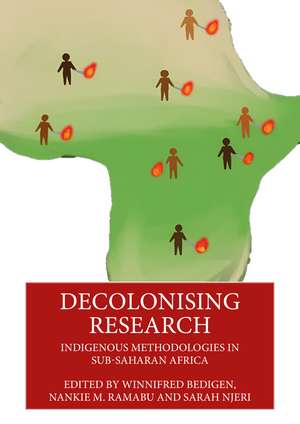
Decolonising Research: Indigenous Methodologies in Sub-Saharan Africa
Editat de Winnifred Bedigen, Nankie M. Ramabu, Sarah Njerien Limba Engleză Paperback – 30 mar 2026
Evoluția recentă a științelor sociale marchează o tranziție imperativă de la modelele de cercetare eurocentrice către cadre epistemologice care respectă și integrează specificul local. Decolonising Research reflectă această schimbare fundamentală, propunând o alternativă riguroasă la metodologiile convenționale aplicate în Africa Subsahariană. Remarcăm efortul editorilor Winnifred Bedigen, Nankie M. Ramabu și Sarah Njeri de a transforma cercetarea dintr-un act de observație externă într-un proces participativ și colaborativ, ancorat în realitățile comunităților studiate.
Subliniem modul în care volumul chestionează eficacitatea metodelor indigene nu doar ca exercițiu teoretic, ci ca instrumente practice pentru rezolvarea problemelor naționale. Structura cărții ghidează cititorul prin studii de caz diverse, de la utilizarea filosofiei 'Botho' în Botswana ca fundament etic, până la analiza relațiilor de gen prin ritualurile de circumcizie în comunitatea Tachoni. Această progresie de la teorie la aplicații specifice (cum ar fi 'Fluid Ethnography' în Sudanul de Sud) demonstrează versatilitatea abordărilor propuse. Lucrarea acoperă o arie similară cu Research Methods for African Scholarship, dar cu o abordare mai aplicată pe dimensiunea decolonizării active și a justiției sociale, punând un accent sporit pe elementele non-verbale și ceremoniale.
În contextul operei editorului Winnifred Bedigen, această apariție completează temele explorate în Indigenous Peacebuilding in South Sudan. Dacă lucrarea anterioară se concentra pe culturile de pace ale grupurilor etnice, noul volum extinde perspectiva asupra metodologiei de cercetare în sine, oferind instrumentele necesare pentru a documenta corect aceste realități fără a le distorsiona prin lentile externe. Credem că această ediție publicată de Routledge devine o resursă esențială pentru recalibrarea eticii în cercetarea etnografică contemporană.
Preț: 431.09 lei
Carte disponibilă
Livrare economică 27 octombrie-10 noiembrie
Livrare express 13-17 octombrie pentru 32.71 lei
Specificații
ISBN-10: 1032744251
Pagini: 218
Ilustrații: 14
Dimensiuni: 174 x 246 mm
Greutate: 0.4 kg
Ediția:1
Editura: Taylor & Francis
Colecția Routledge
Locul publicării:Oxford, United Kingdom
Public țintă
Postgraduate and Undergraduate AdvancedDe ce să citești această carte
Este o lectură esențială pentru studenții de la postuniversitar și cercetătorii care doresc să depășească barierele metodologice tradiționale în context african. Cititorul câștigă o înțelegere profundă a modului în care tradițiile locale, de la oralitate la ritualuri, pot deveni instrumente științifice valide. Este recomandată celor care activează în agenții internaționale sau politici publice și au nevoie de un cadru de cercetare etic și participativ.
Despre autor
Editorii acestui volum sunt experți emergenți în domeniul studiilor africane și al metodologiilor de cercetare indigene. Winnifred Bedigen este cunoscută pentru cercetările sale asupra culturilor de pace în Sudanul de Sud, concentrându-se pe grupurile etnice Dinka și Nuer. Nankie M. Ramabu aduce o expertiză valoroasă în metode de cercetare mixte și etică aplicată, cu un accent deosebit pe filosofia Botho. Împreună cu Sarah Njeri, aceștia coordonează o echipă de cadre didactice care redefinesc standardele academice în Africa Subsahariană, promovând o perspectivă decolonizată asupra științelor sociale.
Descriere scurtă
Considering theories of empowerment and social justice, researching Indigenous communities requires participatory and collaborative methodologies. This book fills research methodological gaps and offers a Sub-Saharan African lens to the research of South Sudan, Northern Uganda, Kenya/Somalia, Somaliland, Botswana, Nigeria and Ghana. It does this by identifying and discussing the “How,” “What,” and “Why” of these methodologies as they pertain to themes of indigeneity, silence, ethics, ceremony, botho, joking relationship, orality, divinations, and Sub-Saharan Africa.
This book includes contributions from early-career academics and academic practitioners who are all emerging as leading experts in their field. It will be of broader interest to postgraduate students, international agencies/personnel, governments, and policy-makers conducting ethnographic or contextual/participatory research and research implementation.
Cuprins
Acknowledgements
Chapter One: Introduction to the Book. Winnifred Bedigen and Nankie M. Ramabu
Chapter Two: Beyond the Insider/Outsider Binary in Fieldwork: Intersectionality as an Alternative Analysis of a Fieldwork Experience in Uganda. Eunice Akullo
Chapter Three: Fluid Ethnography: Ceremony Research Methodology (CRM) in Nilotic Societies of Southern South Sudan. Winnifred Bedigen
Chapter Four: Ceremonial Taboos for Uncovering Gendered Power Relations in the Tachoni Circumcision Ritual. Lucy K.L Mandillah
Chapter Five: Exploring Botho philosophy as a foundation for a culturally relevant and ethical participative research process: Considerations and reflections from a mixed method project in Botswana. Nankie M. Ramabu
Chapter Six: Orality and reflexivity in empirical research: Re-imagining the unwritten past in post-conflict northern Uganda. Betty Okot
Chapter Seven: The Ontological Significance of Silence in African Communities: Exploring How Silence Communicates in Botswana, and southern South Sudan. Nankie M. Ramabu and Winnifred Bedigen
Chapter Eight: Negotiating Power, Reflexivity and Positionality: Gender and the Joking Relationship in Researching Women in Rural Northern Ghana. Constance Awinpoka Akurugu
Chapter Nine: Decolonising Data: Indigenous Methodologies for Community-Driven Research in Sub-Saharan Africa. John Mary Kanyamurwa
Chapter Ten: Rethinking Governance Evaluation: Influencing Policy Outcomes through the African Peer Review Mechanism in Uganda. Martin Kizito
Chapter Eleven: Conclusion Winnifred Bedigen and Nankie M. Ramabu
Notă biografică
Nankie M. Ramabu is Associate Professor of Public Health at Boitekanelo College in Botswana, where she leads the Department of Public Health and Health Promotion. Her expertise lies in strengthening health systems and developing impactful community interventions to enhance health outcomes.
Sarah Njeri is a lecturer in Humanitarianism and Development at the Global Development Studies Department, SOAS, University of London. She is a peace and conflict scholar with degrees in conflict resolution and peace studies from the University of Bradford’s Peace Studies Department.