
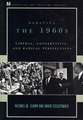
Debating the 1960s: Liberal, Conservative, and Radical Perspectives: Debating Twentieth-Century America
Autor Michael W. Flamm, David Steigerwalden Limba Engleză Hardback – 20 aug 2007
Debating the 1960s explores the decade through the arguments and controversies between radicals, liberals, and conservatives. The focus is on four main areas of contention: social welfare, civil rights, foreign relations, and social order. The book also examines the emergence of the New Left and the modern conservative movement. Finally, it assesses the enduring importance of the 1960s on contemporary American politics and society. Combining analytical essays and historical documents, the book highlights the polarization of the decade by focusing on the political, social, and cultural debates that divided the nation then and now.

Preț: 550.86 lei
Preț vechi: 778.64 lei
-29%
Puncte Express: 826
Carte tipărită la comandă
Livrare economică 08-22 decembrie
Livrare prin curier în România Termenul estimat este afișat lângă disponibilitate.
Transport gratuit pentru acest produs Plată online sau ramburs, în funcție de opțiunile comenzii.
Retur gratuit în 14 zile Comandă securizată și suport în română.
Specificații
ISBN-13: 9780742522121
ISBN-10: 0742522121
Pagini: 213
Dimensiuni: 158 x 232 x 20 mm
Greutate: 0.47 kg
Editura: Bloomsbury Publishing
Colecția Rowman & Littlefield
Seria Debating Twentieth-Century America
Locul publicării:New York, United States
ISBN-10: 0742522121
Pagini: 213
Dimensiuni: 158 x 232 x 20 mm
Greutate: 0.47 kg
Editura: Bloomsbury Publishing
Colecția Rowman & Littlefield
Seria Debating Twentieth-Century America
Locul publicării:New York, United States
V-ar putea interesa
-
 John F. KennedyRobert Dallek-20%Preț: 73.67 lei91.53 lei
 -
 -14%Preț: 227.47 lei264.64 lei
 -
 -21%Preț: 424.24 lei535.75 lei
 -
 Washington: Lessons in LeadershipGerald M. CarbonePreț: 107.53 lei
 -
 Moctezuma's Children: Aztec Royalty under Spanish Rule, 1520–1700Donald E. ChipmanPreț: 179.27 lei
 -
 Water and Ritual: The Rise and Fall of Classic Maya RulersLisa J. LuceroPreț: 201.94 lei
 -
 Fur, Fortune, and EmpireEric Jay DolinPreț: 123.18 lei
 -
 Dropping the TorchNicholas Evan SarantakesPreț: 295.84 lei
 -
 Boon IslandStephen A. ERICKSONPreț: 106.07 lei
 -
 Preț: 290.79 lei
 -
 Preț: 134.95 lei
 -
 Ravens in the StormCarl OglesbyPreț: 142.38 lei
Cuprins
Part I: The Liberal-Radical Debates of the 1960s
Chapter 1: Excerpts from "The Port Huron Statement"
Chapter 2: "Radio and Television Report on Civil Rights"
Chapter 3: "Remarks on Signing the Economic Opportunity Act"
Chapter 4: "An Interracial Movement of the Poor?"
Chapter 5: "Peace Without Conquest"
Chapter 6: "Name the System!"
Chapter 7: Excerpts from "Rights in the Conflict: Chicago's 7 Brutal Days"
Part II: The Liberal-Conservative Debates of the 1960s
Chapter 8: The Sharon Statement
Chapter 9: Principles of the John Birch Society
Chapter 10: Excerpts from John Kennedy's Commencement Address (American University)
Chapter 11: Excerpts from Lyndon Johnson's Commencement Address (University of Michigan)
Chapter 12: Excerpts from Barry Goldwater's Acceptance Speech (Republican Convention)
Chapter 13: Excerpts from Ronald Reagan's "A Time for Choosing"
Chapter 14: Excerpts from Richard Nixon's Acceptance Speech (Republican Convention)
Chapter 1: Excerpts from "The Port Huron Statement"
Chapter 2: "Radio and Television Report on Civil Rights"
Chapter 3: "Remarks on Signing the Economic Opportunity Act"
Chapter 4: "An Interracial Movement of the Poor?"
Chapter 5: "Peace Without Conquest"
Chapter 6: "Name the System!"
Chapter 7: Excerpts from "Rights in the Conflict: Chicago's 7 Brutal Days"
Part II: The Liberal-Conservative Debates of the 1960s
Chapter 8: The Sharon Statement
Chapter 9: Principles of the John Birch Society
Chapter 10: Excerpts from John Kennedy's Commencement Address (American University)
Chapter 11: Excerpts from Lyndon Johnson's Commencement Address (University of Michigan)
Chapter 12: Excerpts from Barry Goldwater's Acceptance Speech (Republican Convention)
Chapter 13: Excerpts from Ronald Reagan's "A Time for Choosing"
Chapter 14: Excerpts from Richard Nixon's Acceptance Speech (Republican Convention)
Recenzii
This is a splendid survey of the three-cornered conflict that still shapes American politics and culture. It should be required reading in classrooms around the nation.
This is, in fact, an excellent tool for the undergraduate classroom. . . . The two essays are useful and clear. And the documents are important to the discussion of the period.
Michael Flamm and David Steigerwald, two of the best historians of the Sixties era, have created a smart, provocative book that is perfect for the classroom. Combining state-of-the-art overviews with a rich selection of documents, Debating the 1960s pushes past the standard narrative of the 1960s and asks students to analyze the contesting forces of radicalism, liberalism and conservatism during that turbulent period.
This is, in fact, an excellent tool for the undergraduate classroom. . . . The two essays are useful and clear. And the documents are important to the discussion of the period.
Michael Flamm and David Steigerwald, two of the best historians of the Sixties era, have created a smart, provocative book that is perfect for the classroom. Combining state-of-the-art overviews with a rich selection of documents, Debating the 1960s pushes past the standard narrative of the 1960s and asks students to analyze the contesting forces of radicalism, liberalism and conservatism during that turbulent period.