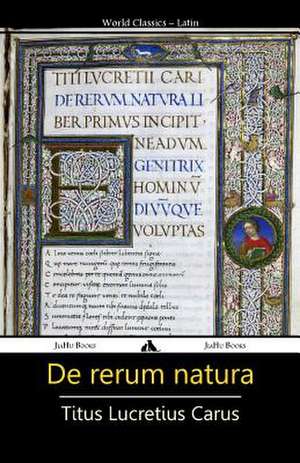
de Rerum Natura
Autor Titus Lucretius CarusPaperback
Preț: 78.80 lei
Puncte Express: 118
Carte tipărită la comandă
Livrare economică 01-15 ianuarie 27
Livrare prin curier în România Termenul estimat este afișat lângă disponibilitate.
Transport gratuit de la 400.00 lei Plată online sau ramburs, în funcție de opțiunile comenzii.
Retur gratuit în 14 zile Comandă securizată și suport în română.
Specificații
ISBN-13: 9781909669970
ISBN-10: 1909669970
Pagini: 212
Dimensiuni: 140 x 216 x 12 mm
Greutate: 0.27 kg
Editura: Jiahu Books
ISBN-10: 1909669970
Pagini: 212
Dimensiuni: 140 x 216 x 12 mm
Greutate: 0.27 kg
Editura: Jiahu Books
Notă biografică
Titus Lucretius Carus turned philosophy into poetry, revealing the hidden workings of the universe through vivid verse. Little is known about his life, but he lived during the final years of the Roman Republic and drew deeply from Epicurean thought. A philosophy centered on reason, nature, and freedom from fear shaped his vision, especially the belief that understanding the world brings peace.Clarity and wonder define the heart of his work. In works such as The Nature of Things, he presents a cohesive and fluid exploration of atoms, the universe, and the human mind. Thoughtful poetry reveals how natural laws, rather than divine intervention, govern existence, encouraging freedom from superstition and anxiety.Enduring influence has made him a vital link between ancient philosophy and later scientific thought. Scholars and thinkers across centuries have drawn inspiration from his ideas about nature and reason. Today, his work remains widely read, valued for its beauty, insight, and lasting contribution to philosophy and science.