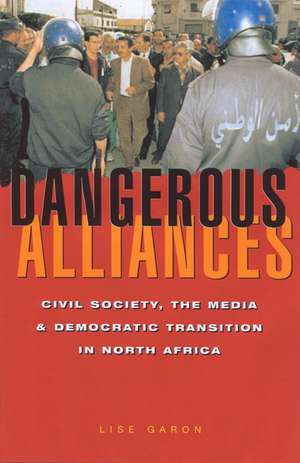
Dangerous Alliances: Civil Society, the Media and Democratic Transition in North Africa
Autor Lise Garonen Limba Engleză Paperback – iun 2003
It is an illuminating study of the complex and very diverse encounters between civil society and the authorities in Tunisia, Algeria and Morocco, as opposition has built up in each society and those in power have confronted the pressures for democratization.
The author provides a significant contribution to political sociology's understanding - via the development of a dynamic systems model that incorporates the existence of fundamental conflict - of how democratic institutions can become institutionalized, and of the constant possibility of any democratic transition being reversed.
Preț: 243.22 lei
Preț vechi: 294.35 lei
-17%
Puncte Express: 365
Carte tipărită la comandă
Livrare economică 23 noiembrie-07 decembrie
Livrare prin curier în România Termenul estimat este afișat lângă disponibilitate.
Transport gratuit de la 400.00 lei Plată online sau ramburs, în funcție de opțiunile comenzii.
Retur gratuit în 14 zile Comandă securizată și suport în română.
Specificații
ISBN-13: 9781842771617
ISBN-10: 1842771612
Pagini: 226
Dimensiuni: 140 x 216 x 13 mm
Greutate: 0.3 kg
Editura: Bloomsbury Publishing
Colecția Zed Books
Locul publicării:London, United Kingdom
ISBN-10: 1842771612
Pagini: 226
Dimensiuni: 140 x 216 x 13 mm
Greutate: 0.3 kg
Editura: Bloomsbury Publishing
Colecția Zed Books
Locul publicării:London, United Kingdom
V-ar putea interesa
-
 On LibertyShami Chakrabarti-20%Preț: 61.55 lei77.30 lei
 -
 -19%Preț: 336.76 lei417.15 lei
 -
 -31%Preț: 709.46 lei1030.22 lei
 -
 -39%Preț: 17.03 lei27.96 lei
 -
 -19%Preț: 64.40 lei79.15 lei
 -
 In Order to LiveYeonmi Park-26%Preț: 63.03 lei84.99 lei
 -
 The Sociology of Human RightsMark FrezzoPreț: 195.46 lei
 -
 The Human Rights EnterpriseWilliam T. ArmalinePreț: 195.04 lei
 -
 Running for FreedomSteven F. LawsonPreț: 425.60 lei
 -
 Theatre and Human Rights After 1945Mary Luckhurst-18%Preț: 734.42 lei895.64 lei
 -
 Cultural Transformation and Human Rights in AfricaAbdullahi An-Na'im-15%Preț: 262.30 lei309.93 lei
 -
 -17%Preț: 243.50 lei294.48 lei
 -
 -16%Preț: 261.33 lei309.40 lei
 -
 -18%Preț: 204.72 lei249.20 lei
 -
 Doing the Dirty Work?: The Global Politics of Domestic LabourBridget Anderson-17%Preț: 217.19 lei260.55 lei
 -
 SJWs Always LieVox DayPreț: 132.62 lei
Cuprins
Acknowledgements
Preface by Clovis Demers
Introduction
Part I: The Public Arena in the Maghreb: Convergences and Divergences
1. Setting the Stage
2. Tunisia: The Domination of Plato's Cave
3. The Tunisian Transition to Democracy Did Not Take Place
4. 'I am the State'
5. A Police State
6. A Legal System in Captivity
7. Alternation in Office Impossible
8. Tunisia: The Submission to Plato's Cave
9. Tunisian Civil Society before Its Collapse
10. The Fatal Alliance
11. The Destruction of Al-Nahdha
12. The Undermining of the Tunisian League for Human Rights
13. Tunisia: Locking Up Plato's Cave
14. Disadvantaged Media
15. How the Tunisian Media Were Neutralized
16. Survival Strategies
17. The Happy Agenda
18. Relations with the Foreign Press
19. Banning International Human Rights Monitoring
20. Algeria: The Children of Jocasta
21. The Birth of Civil Society
22. The Oedipus Temptation
23. The Unfinished Business of Remaking the Public Arena
24. The Press and Its Role in Political Developments
25. Between Open Dissidence and 'Moderate' Opposition: Prospects for a Rebirth
26. Morocco: The Slow Ascent of Sisyphus
27. The Amaoui Affair
28. A Long Pluralistic Tradition
29. A Moroccan Model for the Construction of a Civil Society
30. Facilitating Factors and Obstacles
31. Conclusion: The Public Political Arena in the Maghreb
Part II: The Aftermath of Dangerous Alliances: Transformations and Continuities in the Political Arena
32. Between Cries and Whispers
33. Happy Tunisia: The Authorized Account
34. A Dream for Tourists and Foreign Investors
35. The Security Mania
36. The Show Democracy: Arguments and Techniques of Stage-Setting
37. The Quest for International Approval
38. Propaganda Achievements
39. The International Press and the Algerian Guardians of Democracy
40. The Rhetoric of Objectivity
41. How the International Press Took Sides in the Algerian Conflict
42. The Rebuilding of a Pluralistic Public Forum by the International Press
43. Tunisian Dissident Information Networks
44. Unarmed Prophets
45. In European Circles
46. Internal Dissidence
47. Discrediting Dissidents
48. The State of Tunisian Dissidence
49. Islam: Dismantling a Clich,
Propositions:
Religion is a Marginal Theme in the Press
Islam is Not the Explanation for Everything
Culturally, Islam is also a Product of Maghreb's Political Systems
Freedom or Tyranny? Perspectives in the Maghreb
Algeria
Tunisia
Toward a Sociology of Citizenship in a Globalizing World
A Political Systems Model
The Classical Democratic Model
A Dynamic Conflictual Model of Democracy
Democratic Transitions are Reversible
The International Media's Connivance with Dictatorships
Reversing the Spiral of Silence
Bibliography
Index
Preface by Clovis Demers
Introduction
Part I: The Public Arena in the Maghreb: Convergences and Divergences
1. Setting the Stage
2. Tunisia: The Domination of Plato's Cave
3. The Tunisian Transition to Democracy Did Not Take Place
4. 'I am the State'
5. A Police State
6. A Legal System in Captivity
7. Alternation in Office Impossible
8. Tunisia: The Submission to Plato's Cave
9. Tunisian Civil Society before Its Collapse
10. The Fatal Alliance
11. The Destruction of Al-Nahdha
12. The Undermining of the Tunisian League for Human Rights
13. Tunisia: Locking Up Plato's Cave
14. Disadvantaged Media
15. How the Tunisian Media Were Neutralized
16. Survival Strategies
17. The Happy Agenda
18. Relations with the Foreign Press
19. Banning International Human Rights Monitoring
20. Algeria: The Children of Jocasta
21. The Birth of Civil Society
22. The Oedipus Temptation
23. The Unfinished Business of Remaking the Public Arena
24. The Press and Its Role in Political Developments
25. Between Open Dissidence and 'Moderate' Opposition: Prospects for a Rebirth
26. Morocco: The Slow Ascent of Sisyphus
27. The Amaoui Affair
28. A Long Pluralistic Tradition
29. A Moroccan Model for the Construction of a Civil Society
30. Facilitating Factors and Obstacles
31. Conclusion: The Public Political Arena in the Maghreb
Part II: The Aftermath of Dangerous Alliances: Transformations and Continuities in the Political Arena
32. Between Cries and Whispers
33. Happy Tunisia: The Authorized Account
34. A Dream for Tourists and Foreign Investors
35. The Security Mania
36. The Show Democracy: Arguments and Techniques of Stage-Setting
37. The Quest for International Approval
38. Propaganda Achievements
39. The International Press and the Algerian Guardians of Democracy
40. The Rhetoric of Objectivity
41. How the International Press Took Sides in the Algerian Conflict
42. The Rebuilding of a Pluralistic Public Forum by the International Press
43. Tunisian Dissident Information Networks
44. Unarmed Prophets
45. In European Circles
46. Internal Dissidence
47. Discrediting Dissidents
48. The State of Tunisian Dissidence
49. Islam: Dismantling a Clich,
Propositions:
Religion is a Marginal Theme in the Press
Islam is Not the Explanation for Everything
Culturally, Islam is also a Product of Maghreb's Political Systems
Freedom or Tyranny? Perspectives in the Maghreb
Algeria
Tunisia
Toward a Sociology of Citizenship in a Globalizing World
A Political Systems Model
The Classical Democratic Model
A Dynamic Conflictual Model of Democracy
Democratic Transitions are Reversible
The International Media's Connivance with Dictatorships
Reversing the Spiral of Silence
Bibliography
Index
Recenzii
The painstaking research, rigorous analysis and clearly defined conclusions make this book an excellent teaching tool, widely relevant beyond Tunisia and the Maghreb.
Analyses the web of concealment, distortion, and misinformation which anaesthetizes citizens' awareness not just in the Third World, but also and especially in the West.
One of the best investigations ever offered on the three countries that make up the Maghreb: Algeria, Morocco and Tunisia.
Analyses the web of concealment, distortion, and misinformation which anaesthetizes citizens' awareness not just in the Third World, but also and especially in the West.
One of the best investigations ever offered on the three countries that make up the Maghreb: Algeria, Morocco and Tunisia.