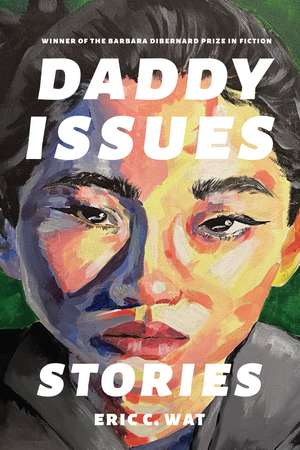
Daddy Issues: Stories: Zero Street Fiction
Autor Eric C. Waten Limba Engleză Paperback – sep 2025
Daddy Issues is a collection of moving and complex—yet simply and directly told—stories of queer Asian American experiences in Los Angeles. In many of these stories, the protagonists are artists and writers and other creative thinkers living on the fringe of survival, attempting to align a life of the imagination with the practical considerations of career, income, and family: a gay father who hasn’t come out to his young son; a social worker, numbed by the destitution of his clients, who finds himself lost in self-destruction; a trans man who returns home to a father with dementia to help his family pack as they are pushed out by gentrification; a husband who can only stand aside as his wife heals from a miscarriage; and a broke writer who learns to love his stories again.
The stories in Daddy Issues offer different contemplations on solitude—the good and the bad of it. Ultimately, this collection by Eric C. Wat is full of hope, and it shows how we can find the connections we need once we allow ourselves to become vulnerable.


Preț: 119.31 lei
Puncte Express: 179
Carte disponibilă
Livrare economică 09-23 noiembrie
Livrare express 24-30 octombrie pentru 41.47 lei
Livrare prin curier în România Termenul estimat este afișat lângă disponibilitate.
Transport gratuit de la 400.00 lei Plată online sau ramburs, în funcție de opțiunile comenzii.
Retur gratuit în 14 zile Comandă securizată și suport în română.
Specificații
ISBN-13: 9781496243584
ISBN-10: 1496243587
Pagini: 156
Dimensiuni: 152 x 229 x 10 mm
Greutate: 0.24 kg
Editura: Nebraska
Colecția University of Nebraska Press
Seria Zero Street Fiction
Locul publicării:United States
ISBN-10: 1496243587
Pagini: 156
Dimensiuni: 152 x 229 x 10 mm
Greutate: 0.24 kg
Editura: Nebraska
Colecția University of Nebraska Press
Seria Zero Street Fiction
Locul publicării:United States
Notă biografică
Eric C. Wat is the author of Love Your Asian Body: AIDS Activism in Los Angeles, winner of the 2023 Outstanding Achievement in History Award from the Association of Asian American Studies; the novel SWIM, a Los Angeles Times bestseller; and The Making of a Gay Asian Community: An Oral History of Pre-AIDS Los Angeles. He works as an independent consultant for nonprofit organizations and philanthropic foundations.
Extras
This Business of Death
Because it was Sunday dim sum rush hour, the restaurant put our post-funeral
luncheon in the small room upstairs that was usually reserved for
the bridal party at a wedding banquet. From the tail end, I saw our people
snake through the crowd and din of the dining hall to reach the loft above:
generations of noises, waiters hustling with sauces and clean plates, cart
ladies hawking their steaming tins on any table where you could still see
glass on the lazy Susan. Despite our somber look, we had to stand in wait
for these cart ladies to complete their transactions. Finally, we passed the
last waiter’s station and then, one after the other, filed up the narrow staircase
to our room. At the corner of the room was a bar without any liquor.
The couch was pushed against the wall, along with the movable closet
where the bride would hang her many changes of clothes. Empty hangers
dangled from it. Carton boxes anchored it below. This had been my aunt’s
favorite Chinese restaurant in all of San Gabriel Valley when she was alive.
They’d managed to arrange five tables in this loft; she would’ve considered
it a good showing.
The cart ladies wouldn’t come up. They didn’t have to. On behalf of
my cousins, I’d ordered the same set of dishes, eight in all, for every table
ahead of time. By the time the soup came, the room was as rowdy as the
scene below us. The rest of the dishes came fast and furious, and the eaters
devoured them in the same fashion. In another ten minutes, the salt-and-
pepper pork chops was just a plate of bones. After dessert (a watered-down
red bean paste, pretty much a soup), some guests began to stand up and
visit with each other. The waiters brought a stack of Styrofoam boxes to
each table for the leftovers.
The host table included the three surviving children, my cousins Ben,
Clark, and Eliza (in that birth order); Clark’s wife, Zara, and their two
teenage children, twins; and our two uncles, bachelors who had outlived
the last woman in their generation. There had been some debate, and in
the end Eliza’s boyfriend, Xander, was also invited to that table. When it
looked like people wanted to leave, Clark stood up. Eliza followed, and then
Ben. They lined up by the door to say thanks and goodbye. I was pretty
sure you only did that at weddings. This might be the most matrimonial
vestige in the room.
Eliza was collecting envelopes from the departing guests. The way she
was clutching them, I could tell she was feeling their heft. My eight-year-
old
son Jeremy looked up between levels of Angry Birds on his iPad and
asked me what was in those envelopes. I only had him every other weekend.
This was not supposed to be my weekend, but the ex made a rare
exception for funerals.
I said it was money.
“Like birthdays?” Jeremy asked.
“Kind of.”
When I had told him about his great-aunt’s death, he took it matter-of-
factly, as far as I could tell over the phone. I had a feeling that my ex had
already talked to him about it, not trusting me to handle a delicate subject
like death with a boy his age. She had a knack about talking to children
like they were adults. I was loath to admit that the philosophy came in
handy this time. I was off the hook. My vague answer about the envelopes
puzzled him more, though not enough to keep him from his game. I let
this one go, too, thinking this was not the kind of tradition he would have
to worry about.
I looked up at Clark and saw that my aunt’s mahjong friends began to
queue up. In the spectrum of guests, I was an in-between,
closer to the hosts than other guests but not enough to sit at the head table. I couldn’t
leave before other guests, but I wasn’t expected to stay behind to settle the
check. While I waited, Clark’s wife, Zara, came to my table and scooted
next to me.
“Hey, Jer,” Zara said to my son on my other side.
From his iPad, Jeremy looked up at her to confirm the voice’s identity.
He did this a lot, at least with people on my side. Sometimes I thought
he could tell his mother’s friends by their voices without looking up. He
looked at her for three full seconds before he finally said, “Hi, Aunt Zara.”
Because it was Sunday dim sum rush hour, the restaurant put our post-funeral
luncheon in the small room upstairs that was usually reserved for
the bridal party at a wedding banquet. From the tail end, I saw our people
snake through the crowd and din of the dining hall to reach the loft above:
generations of noises, waiters hustling with sauces and clean plates, cart
ladies hawking their steaming tins on any table where you could still see
glass on the lazy Susan. Despite our somber look, we had to stand in wait
for these cart ladies to complete their transactions. Finally, we passed the
last waiter’s station and then, one after the other, filed up the narrow staircase
to our room. At the corner of the room was a bar without any liquor.
The couch was pushed against the wall, along with the movable closet
where the bride would hang her many changes of clothes. Empty hangers
dangled from it. Carton boxes anchored it below. This had been my aunt’s
favorite Chinese restaurant in all of San Gabriel Valley when she was alive.
They’d managed to arrange five tables in this loft; she would’ve considered
it a good showing.
The cart ladies wouldn’t come up. They didn’t have to. On behalf of
my cousins, I’d ordered the same set of dishes, eight in all, for every table
ahead of time. By the time the soup came, the room was as rowdy as the
scene below us. The rest of the dishes came fast and furious, and the eaters
devoured them in the same fashion. In another ten minutes, the salt-and-
pepper pork chops was just a plate of bones. After dessert (a watered-down
red bean paste, pretty much a soup), some guests began to stand up and
visit with each other. The waiters brought a stack of Styrofoam boxes to
each table for the leftovers.
The host table included the three surviving children, my cousins Ben,
Clark, and Eliza (in that birth order); Clark’s wife, Zara, and their two
teenage children, twins; and our two uncles, bachelors who had outlived
the last woman in their generation. There had been some debate, and in
the end Eliza’s boyfriend, Xander, was also invited to that table. When it
looked like people wanted to leave, Clark stood up. Eliza followed, and then
Ben. They lined up by the door to say thanks and goodbye. I was pretty
sure you only did that at weddings. This might be the most matrimonial
vestige in the room.
Eliza was collecting envelopes from the departing guests. The way she
was clutching them, I could tell she was feeling their heft. My eight-year-
old
son Jeremy looked up between levels of Angry Birds on his iPad and
asked me what was in those envelopes. I only had him every other weekend.
This was not supposed to be my weekend, but the ex made a rare
exception for funerals.
I said it was money.
“Like birthdays?” Jeremy asked.
“Kind of.”
When I had told him about his great-aunt’s death, he took it matter-of-
factly, as far as I could tell over the phone. I had a feeling that my ex had
already talked to him about it, not trusting me to handle a delicate subject
like death with a boy his age. She had a knack about talking to children
like they were adults. I was loath to admit that the philosophy came in
handy this time. I was off the hook. My vague answer about the envelopes
puzzled him more, though not enough to keep him from his game. I let
this one go, too, thinking this was not the kind of tradition he would have
to worry about.
I looked up at Clark and saw that my aunt’s mahjong friends began to
queue up. In the spectrum of guests, I was an in-between,
closer to the hosts than other guests but not enough to sit at the head table. I couldn’t
leave before other guests, but I wasn’t expected to stay behind to settle the
check. While I waited, Clark’s wife, Zara, came to my table and scooted
next to me.
“Hey, Jer,” Zara said to my son on my other side.
From his iPad, Jeremy looked up at her to confirm the voice’s identity.
He did this a lot, at least with people on my side. Sometimes I thought
he could tell his mother’s friends by their voices without looking up. He
looked at her for three full seconds before he finally said, “Hi, Aunt Zara.”
Cuprins
Acknowledgments
This Business of Death
Sober (wtf)
Duffel Bag
Ramparts
Natural Law
The Lady in the Moon
Twelve Steps
A Boy Named Sue
Daddy Issues
This Business of Death
Sober (wtf)
Duffel Bag
Ramparts
Natural Law
The Lady in the Moon
Twelve Steps
A Boy Named Sue
Daddy Issues
Recenzii
“Unstinting and deep, Daddy Issues roils the mirror surfaces of our days with cutting candor and intense, unexpected compassion. Eric Wat’s characters body forth revelatory insight as they emerge from marginalization into hard fought light.”—Sesshu Foster, author of Atomik Aztex
“In Daddy Issues Eric C. Wat has written a collection of short stories as profound as they are humorous. In doing so, he deftly challenges conventions while illuminating the resilience of the human spirit. Wat’s intricate storytelling and vivid prose offers us an unvarnished examination of love, loss, longing, and the ties that bind us to one another. An absolutely essential addition to contemporary literature.”—Alex Espinoza, author of The Sons of El Rey
“These stories capture, with insight, humor, and tenderness, what it feels like to have issues of various kinds, to look at oneself squarely and change. There are no heroes here (though perhaps an antihero or two). One walks into an Eric C. Wat story as if into a room where everyone is trying to stay alive, a room filled with quotidian surfaces and charged, transformational depths. Wat’s multigenerational, cross-cultural stories explore the often-tangled perils and pleasures of trust, vulnerability, silence, sacrifice, and love.”—Jennifer Tseng, author of Mayumi and the Sea of Happiness and Thanks for Letting Us Know You Are Alive
“Set against the vibrant yet gritty backdrop of Los Angeles, these stories bring to life the inner worlds of characters who seek—and sometimes stumble upon—meaningful connections. Artists, writers, and everyday Angelenos alike face the thrilling, precarious dance of closeness and longing, each choice reverberating with humor, heartbreak, and revelation. Intelligent without pretense, Daddy Issues captures a nuanced portrait of LA’s mosaic of lives on the edge of change, for anyone who has known the precarious business of intimacy.”—Steven Reigns, author of A Quilt for David and Inheritance
Descriere
Daddy Issues is a collection of moving stories of queer Asian American experience. In these contemplations on solitude and hope, many of the characters find the connections they need once they allow themselves to become vulnerable.