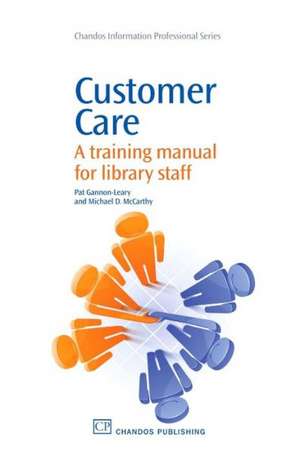
Customer Care: A Training Manual for Library Staff: Chandos Information Professional Series
Autor Pat Gannon-Leary, Michael McCarthyen Limba Engleză Paperback – 15 mar 2010
- Dual use – reference work and/or training manual
- Potential as a text book
- Applicable to a wider context than LIS – could be used for a whole HEI institutional approach to customer care or in local authorities/public services
Din seria Chandos Information Professional Series
- 35%
 Preț: 360.73 lei
 - 8%
 Preț: 390.82 lei
 -
 Preț: 442.30 lei
 - 19%
 Preț: 426.24 lei
 - 25%
 Preț: 358.22 lei
 - 25%
 Preț: 417.79 lei
 - 30%
 Preț: 396.50 lei
 - 8%
 Preț: 364.72 lei
 - 30%
 Preț: 402.99 lei
 - 25%
 Preț: 352.00 lei
 - 34%
 Preț: 463.76 lei
 - 25%
 Preț: 404.25 lei
 - 8%
 Preț: 401.89 lei
 - 31%
 Preț: 386.71 lei
 - 8%
 Preț: 357.02 lei
 - 30%
 Preț: 399.80 lei
 - 30%
 Preț: 398.10 lei
 - 8%
 Preț: 354.69 lei
 - 8%
 Preț: 396.13 lei
 - 19%
 Preț: 396.71 lei
 -
 Preț: 424.55 lei
 - 25%
 Preț: 355.24 lei
 - 25%
 Preț: 403.02 lei
 - 8%
 Preț: 340.71 lei
 - 24%
 Preț: 394.26 lei
 - 25%
 Preț: 413.33 lei
 - 30%
 Preț: 370.37 lei
 - 30%
 Preț: 359.70 lei
 - 30%
 Preț: 394.26 lei
 - 41%
 Preț: 384.38 lei
 - 24%
 Preț: 364.48 lei
 - 30%
 Preț: 398.96 lei
 - 8%
 Preț: 357.04 lei
 - 30%
 Preț: 474.67 lei
 - 35%
 Preț: 336.75 lei
 - 30%
 Preț: 390.82 lei
 - 8%
 Preț: 353.72 lei
 - 25%
 Preț: 396.13 lei
 -
 Preț: 379.86 lei
 - 8%
 Preț: 396.50 lei
 - 8%
 Preț: 358.00 lei
 - 31%
 Preț: 516.85 lei
 - 19%
 Preț: 426.11 lei
 - 8%
 Preț: 354.20 lei
 - 8%
 Preț: 335.61 lei
 - 8%
 Preț: 354.69 lei
 - 8%
 Preț: 352.79 lei
 - 8%
 Preț: 358.30 lei
 - 25%
 Preț: 404.72 lei
Preț: 425.76 lei
Preț vechi: 525.63 lei
-19%
Puncte Express: 639
Carte tipărită la comandă
Livrare economică 21 noiembrie-05 decembrie
Livrare prin curier în România Termenul estimat este afișat lângă disponibilitate.
Transport gratuit pentru acest produs Plată online sau ramburs, în funcție de opțiunile comenzii.
Retur gratuit în 14 zile Comandă securizată și suport în română.
Specificații
ISBN-13: 9781843345701
ISBN-10: 1843345706
Pagini: 262
Dimensiuni: 156 x 234 x 15 mm
Greutate: 0.38 kg
Editura: ELSEVIER SCIENCE
Seria Chandos Information Professional Series
ISBN-10: 1843345706
Pagini: 262
Dimensiuni: 156 x 234 x 15 mm
Greutate: 0.38 kg
Editura: ELSEVIER SCIENCE
Seria Chandos Information Professional Series


Cuprins
List of figures and tables
About the authors
Acknowledgments
Preface
Chapter 1: Preparation
Your role as a facilitator
Notes on venue and facilities
Chapter 2: The introduction
Aims
Background
Aim 1: Introductions
Aim 2: Expressing concerns and creating a climate for learning
Aim 3: Understanding the aims of the course
Aim 4: Establishing the ground rules
Aim 5: Clarifying the role of the facilitator
Chapter 3: What is customer service?
Aims
Background
Aim 1: Identifying the constituents of good/bad/excellent service in practice
Aim 2: Recognising the importance of customers’ expectations and feelings
Chapter 4: Who are our customers? The customer service chain
Aims
Background
Aim 1: To identify more clearly the different kinds of customer
Aim 2: To recognise the special needs of different customers
Aim 3: To recognise from whom we receive service in general
Aim 4: To recognise our internal customers
Chapter 5: Communication
Aims
Background
Aim 1: To recognise the barriers to communication
Aim 2: To recognise the importance of body language or NVC when dealing with customers face to face
Aim 3: To improve communications, whether face to face, over the telephone or in writing
Final comments
Chapter 6: Questioning and active listening
Aims
Background
Aim 1: To identify the different types of questions and their effect on communication
Aim 2: To use questions to communicate more effectively
Aim 3: To encourage more active and effective listening
Chapter 7: Handling complaints
Aims
Background
Aim 1: To identify the appropriate steps in handling customer complaints
Aim 2: To develop a positive proactive response to customers’ problems and complaints
Chapter 8: Dealing with challenging situations
Aims
Background
Aim 1: To identify behaviours that create positive relationships with customers
Aim 2: To recognise signs of aggression in a person
Aim 3: To identify appropriate strategies for dealing with challenging situations
Chapter 9: Life positions and the OK Corral: being more confident and assertive
Aims
Background
Aim 1: To recognise aggressive, assertive, adaptive and apathetic styles of behaviour
Aim 2: To use assertive language in response to customer and staff statements
Chapter 10: Suggestions for improvement
Aims
Background
Aim 1: To identify how participants can help improve the effectiveness of their section
Aim 2: To identify how managers can help participants make improvements
Chapter 11: Teambuilding
Aims
Background
Aim 1: To foster team spirit
Aim 2: To help understand how we work in groups
Chapter 12: What are we good at, and what is our future? Action planning
Aims
Background
Aim 1: To celebrate success and take pride in achievements
Aim 2: To actively share information about team successes
Aim 3: To make a commitment to improving customer service skills
Chapter 13: Wrapping it up
Concluding remarks
Feedback
Chapter 14: Conclusion
Plenary
Some final words…
Index
About the authors
Acknowledgments
Preface
Chapter 1: Preparation
Your role as a facilitator
Notes on venue and facilities
Chapter 2: The introduction
Aims
Background
Aim 1: Introductions
Aim 2: Expressing concerns and creating a climate for learning
Aim 3: Understanding the aims of the course
Aim 4: Establishing the ground rules
Aim 5: Clarifying the role of the facilitator
Chapter 3: What is customer service?
Aims
Background
Aim 1: Identifying the constituents of good/bad/excellent service in practice
Aim 2: Recognising the importance of customers’ expectations and feelings
Chapter 4: Who are our customers? The customer service chain
Aims
Background
Aim 1: To identify more clearly the different kinds of customer
Aim 2: To recognise the special needs of different customers
Aim 3: To recognise from whom we receive service in general
Aim 4: To recognise our internal customers
Chapter 5: Communication
Aims
Background
Aim 1: To recognise the barriers to communication
Aim 2: To recognise the importance of body language or NVC when dealing with customers face to face
Aim 3: To improve communications, whether face to face, over the telephone or in writing
Final comments
Chapter 6: Questioning and active listening
Aims
Background
Aim 1: To identify the different types of questions and their effect on communication
Aim 2: To use questions to communicate more effectively
Aim 3: To encourage more active and effective listening
Chapter 7: Handling complaints
Aims
Background
Aim 1: To identify the appropriate steps in handling customer complaints
Aim 2: To develop a positive proactive response to customers’ problems and complaints
Chapter 8: Dealing with challenging situations
Aims
Background
Aim 1: To identify behaviours that create positive relationships with customers
Aim 2: To recognise signs of aggression in a person
Aim 3: To identify appropriate strategies for dealing with challenging situations
Chapter 9: Life positions and the OK Corral: being more confident and assertive
Aims
Background
Aim 1: To recognise aggressive, assertive, adaptive and apathetic styles of behaviour
Aim 2: To use assertive language in response to customer and staff statements
Chapter 10: Suggestions for improvement
Aims
Background
Aim 1: To identify how participants can help improve the effectiveness of their section
Aim 2: To identify how managers can help participants make improvements
Chapter 11: Teambuilding
Aims
Background
Aim 1: To foster team spirit
Aim 2: To help understand how we work in groups
Chapter 12: What are we good at, and what is our future? Action planning
Aims
Background
Aim 1: To celebrate success and take pride in achievements
Aim 2: To actively share information about team successes
Aim 3: To make a commitment to improving customer service skills
Chapter 13: Wrapping it up
Concluding remarks
Feedback
Chapter 14: Conclusion
Plenary
Some final words…
Index
Recenzii
"This title is recommended for library administrators and courses in library and information science programs on public services management and improvement." --Reference and User Services Quarterly