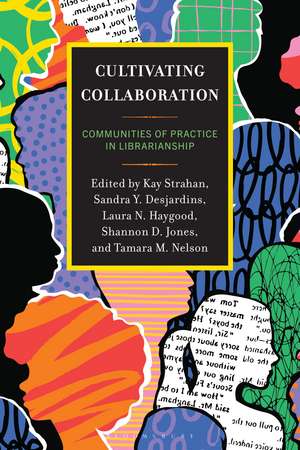
Cultivating Collaboration: Communities of Practice in Librarianship
Editat de Kay Strahan, Sandra Yvette Desjardins, Laura N. Haygood, Shannon D. Jones, Tamara M. Nelsonen Limba Engleză Paperback – 4 ian 2027
While rooted in the diverse world of librarianship, this book provides a scalable framework for any field where collective knowledge and mutual support are the engines of innovation. This volume explores how CoPs empower professionals by:
· Offering practical strategies for establishing and nurturing CoPs within complex organizational settings
· Presenting real-world stories that demonstrate the profound impact of collaborative learning across varied institutional landscapes.
· Sharing insights on navigating the benefits and challenges of sustaining professional communities in an ever-changing professional climate.
By fostering a sense of belonging and mutual support, CoPs strengthen the workforce, making workers more resilient and adaptive to changing needs and opportunities. Cultivating Collaboration: Communities of Practice in Librarianship is aimed at professionals who wish to acquire the knowledge and tools needed to establish and nurture their communities of practice.
The first half of the book provides a robust theoretical and practical framework for the formation and sustainability of CoPs. The second half features case studies that bring these theories to life. For new professionals, CoPs offer a supportive environment to learn from experienced peers, build confidence, and integrate into the professional community. Professionals of color can find CoPs particularly valuable for networking, mentorship, and advocacy, helping to address challenges related to diversity and inclusion in their field. Leaders seeking to connect with others doing similar work and encountering comparable challenges also find CoPs valuable for identifying thought partners, collaborators, confidants, and advisors. Stories shared in Cultivating Collaboration: Communities of Practice in Librarianship demonstrate how these communities play a crucial role in library science by providing a structured yet flexible approach for professionals to share knowledge, solve problems, and develop innovative solutions.
Preț: 343.29 lei
Preț vechi: 359.55 lei
-5% Precomandă
Puncte Express: 515
Carte nepublicată încă
Livrare prin curier în România Precomanda se expediază când titlul devine disponibil.
Transport gratuit de la 400.00 lei Plată online sau ramburs, în funcție de opțiunile comenzii.
Retur gratuit în 14 zile Comandă securizată și suport în română.
Doresc să fiu notificat când acest titlu va fi disponibil:
Se trimite...
Specificații
ISBN-13: 9798881808686
Pagini: 200
Dimensiuni: 156 x 235 mm
Editura: Bloomsbury Publishing
Colecția Bloomsbury Libraries Unlimited
Locul publicării:New York, United States
Pagini: 200
Dimensiuni: 156 x 235 mm
Editura: Bloomsbury Publishing
Colecția Bloomsbury Libraries Unlimited
Locul publicării:New York, United States
Cuprins
Table of Contents
Preface
Acknowledgments
Part 1. Framework
1. Introduction to Communities of Practice in Librarianship Sandra Yvette Desjardins
2. From Framework to Theory. Recentering Communities of Practice Christine Rickabaugh, Megan York, and Cody W. Hackett
3. Practical Tips for Communities of Practice Kay Strahan and Laura Haygood
4. Building and Sustaining Communities of Practice Kathryn Vela, Jeff Slagell, and Jennifer Wann
5. Challenges and Solutions in Community Building Berlin Loa and Pamela Nett Kruger
6. Communities of Practice for School Librarians. Building Collaborative and Inclusive Learning Cultures Brittany Nicole Fleming and Hina Sardar
7. Integrating Communities of Practice into Professional Development Jennifer Holland, Carolina Hernandez, Erica R. Lopez, Ariana Santiago, Casey Phillips, Tracy Ashby, and Sandra Yvette Desjardins
8. Foresight Communities of Practice. Future Thinking for Academic Librarians HD McKay, Brenna Bierman, Stephanie Morgan, and Ramona V. Romero
Part 2. Case Studies
9. Team Olive, an Enduring Community of Practice Mary Snyder Broussard
10. AAMLA Caucus. Building Community and Shaping Leaders in Medical Librarianship Kelsa Bartley, Tara Douglas-Williams, Shannon D. Jones, and Tamara M. Nelson
11. Building Connections, Sharing Practices. A Case Study of a Teaching Community of Practice in Libraries Emily Bush
12. Beyond Borders. A Virtual Community of Practice for East Asian Studies Librarians Veronica Fu
13. An Online Distributed Information Literacy Community of Practice for Academic Librarians Helen Power and Carol A. Leibiger
14. Jamming Out Together. Developing a Community of Practice for Revitalizing Information Literacy Instruction Brittany O'Neill
15. Shared Insights, Shared Growth. Building a Community of Practice for Reflective Library Instructors Amanda Crego-Emley, Alicia G. Vaandering, and Chris Cassaday
16. Library UX Chicago. A Case of Iterative and Active Collaboration Elizabeth Edwards, Jason Kruse, Ashley McMullin, Devin Savage and Katie Ediger
17. Creating Community for Health Sciences Collection Development Librarians. Bridging Lonely Islands with a Collaboratively Written eBook and Interactive Group Forums Sarah McClung, Karen Gau, and Iris Kovar-Gough
18. From Margins to Mainstream. Asian Americans in Librarianship Sunny Chung
19. We're Not a Regular CoP; We're a Cool CoP. How Joy and Equity Transform Outreach Innovation Stefani Baldivia, Ginny Barnes, Ariana Varela, Catherine Paolillo, Isabel Guzman-Tepper, and Melanie Smith
20. Stories from Librarians in a Research Community of Practice Thomas C. Weeks, Courtney E. Berge, Rod Bustos, Jennifer Davis, Tonya Dority, Emily C. Harris, Aspasia Luster, Erin Prentiss, and Shafer G. Tharrington
21. Up the Creek Without a Paddle Karen Burton, Sally K. D. Smith, Lindsey Baird, Shelby Carroll, Annabelle Holt, and Amanda McLeod
22. Early Career Movers and Shakers. Exceeding Expectations in Community Building and Education Laura Haygood and Laura Wright
23. Writing Together, Growing Together. Lessons from Year One of a Library Writing Circle Hannah King, Kariah Brust, Anna Clymer, and Kelsey Molseed
24. But You Gotta Have Friends. A Case Study of One Hyperlocal Library Association Clara Davis, Kay Strahan, and Shawna Thorup
25. All Together Now. Intentional Inclusivity within USF Libraries' Instruction Community of Practice (ICoP) Jessica N. Szempruch, Emily Z. Mann, Andrew D. Beman-Cavallaro, Emily Norton, Carl O. DiNardo, and Susan A. Ariew
26. Tweets to Channels. The Migration of Health Sciences Librarians to Discord Jennifer Monnin, Peter Johnson, and Tracy Shields
Index
About the Editors and Contributors
Abbreviations Guide
Preface
Acknowledgments
Part 1. Framework
1. Introduction to Communities of Practice in Librarianship Sandra Yvette Desjardins
2. From Framework to Theory. Recentering Communities of Practice Christine Rickabaugh, Megan York, and Cody W. Hackett
3. Practical Tips for Communities of Practice Kay Strahan and Laura Haygood
4. Building and Sustaining Communities of Practice Kathryn Vela, Jeff Slagell, and Jennifer Wann
5. Challenges and Solutions in Community Building Berlin Loa and Pamela Nett Kruger
6. Communities of Practice for School Librarians. Building Collaborative and Inclusive Learning Cultures Brittany Nicole Fleming and Hina Sardar
7. Integrating Communities of Practice into Professional Development Jennifer Holland, Carolina Hernandez, Erica R. Lopez, Ariana Santiago, Casey Phillips, Tracy Ashby, and Sandra Yvette Desjardins
8. Foresight Communities of Practice. Future Thinking for Academic Librarians HD McKay, Brenna Bierman, Stephanie Morgan, and Ramona V. Romero
Part 2. Case Studies
9. Team Olive, an Enduring Community of Practice Mary Snyder Broussard
10. AAMLA Caucus. Building Community and Shaping Leaders in Medical Librarianship Kelsa Bartley, Tara Douglas-Williams, Shannon D. Jones, and Tamara M. Nelson
11. Building Connections, Sharing Practices. A Case Study of a Teaching Community of Practice in Libraries Emily Bush
12. Beyond Borders. A Virtual Community of Practice for East Asian Studies Librarians Veronica Fu
13. An Online Distributed Information Literacy Community of Practice for Academic Librarians Helen Power and Carol A. Leibiger
14. Jamming Out Together. Developing a Community of Practice for Revitalizing Information Literacy Instruction Brittany O'Neill
15. Shared Insights, Shared Growth. Building a Community of Practice for Reflective Library Instructors Amanda Crego-Emley, Alicia G. Vaandering, and Chris Cassaday
16. Library UX Chicago. A Case of Iterative and Active Collaboration Elizabeth Edwards, Jason Kruse, Ashley McMullin, Devin Savage and Katie Ediger
17. Creating Community for Health Sciences Collection Development Librarians. Bridging Lonely Islands with a Collaboratively Written eBook and Interactive Group Forums Sarah McClung, Karen Gau, and Iris Kovar-Gough
18. From Margins to Mainstream. Asian Americans in Librarianship Sunny Chung
19. We're Not a Regular CoP; We're a Cool CoP. How Joy and Equity Transform Outreach Innovation Stefani Baldivia, Ginny Barnes, Ariana Varela, Catherine Paolillo, Isabel Guzman-Tepper, and Melanie Smith
20. Stories from Librarians in a Research Community of Practice Thomas C. Weeks, Courtney E. Berge, Rod Bustos, Jennifer Davis, Tonya Dority, Emily C. Harris, Aspasia Luster, Erin Prentiss, and Shafer G. Tharrington
21. Up the Creek Without a Paddle Karen Burton, Sally K. D. Smith, Lindsey Baird, Shelby Carroll, Annabelle Holt, and Amanda McLeod
22. Early Career Movers and Shakers. Exceeding Expectations in Community Building and Education Laura Haygood and Laura Wright
23. Writing Together, Growing Together. Lessons from Year One of a Library Writing Circle Hannah King, Kariah Brust, Anna Clymer, and Kelsey Molseed
24. But You Gotta Have Friends. A Case Study of One Hyperlocal Library Association Clara Davis, Kay Strahan, and Shawna Thorup
25. All Together Now. Intentional Inclusivity within USF Libraries' Instruction Community of Practice (ICoP) Jessica N. Szempruch, Emily Z. Mann, Andrew D. Beman-Cavallaro, Emily Norton, Carl O. DiNardo, and Susan A. Ariew
26. Tweets to Channels. The Migration of Health Sciences Librarians to Discord Jennifer Monnin, Peter Johnson, and Tracy Shields
Index
About the Editors and Contributors
Abbreviations Guide
Recenzii
Cultivating Collaboration brings together outstanding authors for an in-depth examination of communities of practice in librarianship. This is a must-read for librarians searching for community and space to learn. From historical and theoretical ideas that support communities of practice, to eighteen case studies, the entire book provides examples and ideas for librarians at every career level and library type to be inspired by communities of practice.
The use of case studies in Cultivating Collaboration: Communities of Practice in Librarianship allows readers to see first-hand the benefits of communities of practice across a wide range of library settings, as well as the many ways collaboration can occur, from in-person gatherings to online spaces such as Discord. The breadth of perspectives represented provides valuable insights for information professionals at all stages of their careers and across diverse areas of librarianship. Written in an approachable and engaging style, this book invites both new librarians and seasoned professionals to think creatively about fostering connections that support and strengthen their work. Practical guidance is woven throughout, including recommended readings and sample schedules for developing a community of practice. Personal stories illustrating how collaboration has shaped individual career paths enrich the text and encourage readers to consider how cultivating collaboration can enhance their own professional experiences.
At their core, communities of practice are about support, and this book captures that perfectly. Cultivating Collaborations starts with a deep dive into what COPs are and why they are culturally, socially, and professionally important. It starts with frameworks for understanding a COP's purpose and offers clear, logistical guidance on forming and sustaining COPs. This book covers all kinds of COPs, whether they are online, in-person, driven by a desire to learn, or focused on mutual support among colleagues. Readers can find guidance on starting a COP from scratch or revitalizing and maintaining an existing group.
This book offers insight into the myriad ways a community can come together to learn and support one another. The first half provides a sound structural understanding of COPs, while the case studies show how those practices play out in real life. I appreciated the variety of examples and case studies. No two were alike. It was easy to picture how those lessons could apply to my work and the communities I'm part of. Whatever form or purpose a COP takes, this book drives home how impactful they can be at uplifting your colleagues and developing your own skills. Whether you are already a part of a COP or thinking about starting one, this book will help members get the most out of their experience.
My first acquaintance with the concept of Communities of Practice (CoP) came during an association board of directors meeting. I was by then senior in the profession but still, the phrase was new to me. As a librarian with lots of experience in instruction, it made sense as a form of social learning. Now nearly 20 years later I find myself astonished after reading Cultivating Collaboration: Communities of Practice in Librarianship to learn how much more there is to CoP's above and beyond my earlier, frankly glib, understanding.
The editors, in part one, include eight tightly focused chapters establishing a foundation for understanding how CoP's work - the theoretical framing, prerequisites for, potentials for, challenges of, and the many diverse uses for CoP's across the profession. They make a point of highlighting the nuances of CoP's as professional practice, and don't shy away from practical and potentially problematic considerations when establishing and sustaining CoP's, such as leadership succession. I was particularly struck by how effective CoP's can be in helping new and entry-level librarians establish their professional identities within safe, low-stakes, equitable CoP environments.
The editors follow in part two with 18 case studies wherein contributing authors from all walks of professional librarian life describe their lived experiences with CoP's in highly personal, approachable, and engaging prose. The authors represent a diversity of individual, group, and institutional approaches to librarianship - the diversity of perspectives is an asset to the volume. Among the case studies are examples from health sciences libraries, the experiences of librarians from traditionally underrepresented communities within the profession, and practitioners in specialist areas such as collection development. There are descriptions of how CoP's have been used to support the research enterprise, to foster writing and engagement in the tenure process, to provide professional development especially for funding-beleaguered libraries, and to foster community building, leadership, and support. Because CoP's area form of social learning, ample attention is also given to those librarians responsible for teaching. I am retired now but in the latter years of my career I had responsibility for departments where teaching/learning was the primary focus, and I wish I had had Cultivating Collaboration available to me then. The ideas I might have tried!
Readers would be well-served to read Cultivating Collaboration cover to cover. Casual readers would also benefit by "dropping in" on one (or more) of the foundational chapters or the case studies as might be of particular interest. The editors have made sure that core concepts behind CoP's are featured in each of the chapters and case studies so that neophytes and more experienced readers won't miss key concepts.
Cultivating Collaboration: Communities of Practice in Librarianship is a handy and approachable addition to the literature highlighting a very useful approach to social learning within the profession, whatever the end goal. Reading the book, I thought of all the ways I might have, and still may, use CoP's in support of my own and others' learning.
The use of case studies in Cultivating Collaboration: Communities of Practice in Librarianship allows readers to see first-hand the benefits of communities of practice across a wide range of library settings, as well as the many ways collaboration can occur, from in-person gatherings to online spaces such as Discord. The breadth of perspectives represented provides valuable insights for information professionals at all stages of their careers and across diverse areas of librarianship. Written in an approachable and engaging style, this book invites both new librarians and seasoned professionals to think creatively about fostering connections that support and strengthen their work. Practical guidance is woven throughout, including recommended readings and sample schedules for developing a community of practice. Personal stories illustrating how collaboration has shaped individual career paths enrich the text and encourage readers to consider how cultivating collaboration can enhance their own professional experiences.
At their core, communities of practice are about support, and this book captures that perfectly. Cultivating Collaborations starts with a deep dive into what COPs are and why they are culturally, socially, and professionally important. It starts with frameworks for understanding a COP's purpose and offers clear, logistical guidance on forming and sustaining COPs. This book covers all kinds of COPs, whether they are online, in-person, driven by a desire to learn, or focused on mutual support among colleagues. Readers can find guidance on starting a COP from scratch or revitalizing and maintaining an existing group.
This book offers insight into the myriad ways a community can come together to learn and support one another. The first half provides a sound structural understanding of COPs, while the case studies show how those practices play out in real life. I appreciated the variety of examples and case studies. No two were alike. It was easy to picture how those lessons could apply to my work and the communities I'm part of. Whatever form or purpose a COP takes, this book drives home how impactful they can be at uplifting your colleagues and developing your own skills. Whether you are already a part of a COP or thinking about starting one, this book will help members get the most out of their experience.
My first acquaintance with the concept of Communities of Practice (CoP) came during an association board of directors meeting. I was by then senior in the profession but still, the phrase was new to me. As a librarian with lots of experience in instruction, it made sense as a form of social learning. Now nearly 20 years later I find myself astonished after reading Cultivating Collaboration: Communities of Practice in Librarianship to learn how much more there is to CoP's above and beyond my earlier, frankly glib, understanding.
The editors, in part one, include eight tightly focused chapters establishing a foundation for understanding how CoP's work - the theoretical framing, prerequisites for, potentials for, challenges of, and the many diverse uses for CoP's across the profession. They make a point of highlighting the nuances of CoP's as professional practice, and don't shy away from practical and potentially problematic considerations when establishing and sustaining CoP's, such as leadership succession. I was particularly struck by how effective CoP's can be in helping new and entry-level librarians establish their professional identities within safe, low-stakes, equitable CoP environments.
The editors follow in part two with 18 case studies wherein contributing authors from all walks of professional librarian life describe their lived experiences with CoP's in highly personal, approachable, and engaging prose. The authors represent a diversity of individual, group, and institutional approaches to librarianship - the diversity of perspectives is an asset to the volume. Among the case studies are examples from health sciences libraries, the experiences of librarians from traditionally underrepresented communities within the profession, and practitioners in specialist areas such as collection development. There are descriptions of how CoP's have been used to support the research enterprise, to foster writing and engagement in the tenure process, to provide professional development especially for funding-beleaguered libraries, and to foster community building, leadership, and support. Because CoP's area form of social learning, ample attention is also given to those librarians responsible for teaching. I am retired now but in the latter years of my career I had responsibility for departments where teaching/learning was the primary focus, and I wish I had had Cultivating Collaboration available to me then. The ideas I might have tried!
Readers would be well-served to read Cultivating Collaboration cover to cover. Casual readers would also benefit by "dropping in" on one (or more) of the foundational chapters or the case studies as might be of particular interest. The editors have made sure that core concepts behind CoP's are featured in each of the chapters and case studies so that neophytes and more experienced readers won't miss key concepts.
Cultivating Collaboration: Communities of Practice in Librarianship is a handy and approachable addition to the literature highlighting a very useful approach to social learning within the profession, whatever the end goal. Reading the book, I thought of all the ways I might have, and still may, use CoP's in support of my own and others' learning.