
Critical Kinship Studies: Rowman and Littlefield International – Intersections
Editat de Charlotte Kroløkke, Lene Myong, Stine Willum Adrian, Tine Tjørnhøj-Thomsenen Limba Engleză Paperback – 11 dec 2015
Critical Kinship Studies brings together theoretical and disciplinary perspectives and analytically sensitive perspectives aiming to explore the manifold versions of kinship and the ways in which kinship norms are enforced or challenged.
The Rowman and Littlefield International - Intersections series presents an overview of the latest research and emerging trends in some of the most dynamic areas of research in the Humanities and Social Sciences today. Critical Kinship Studies should be of particular interest to students and scholars in Anthropology, Sociology, Cultural Studies, Medical Humanities, Politics, Gender and Queer Studies and Globalization.
Preț: 338.34 lei
Preț vechi: 449.15 lei
-25%
Puncte Express: 508
Carte tipărită la comandă
Livrare economică 06-20 iunie
Specificații
ISBN-13: 9781783484171
ISBN-10: 1783484179
Pagini: 336
Ilustrații: 3 b/w illustrations
Dimensiuni: 151 x 230 x 24 mm
Greutate: 0.51 kg
Editura: Bloomsbury Publishing
Colecția Rowman & Littlefield
Seria Rowman and Littlefield International – Intersections
Locul publicării:New York, United States
ISBN-10: 1783484179
Pagini: 336
Ilustrații: 3 b/w illustrations
Dimensiuni: 151 x 230 x 24 mm
Greutate: 0.51 kg
Editura: Bloomsbury Publishing
Colecția Rowman & Littlefield
Seria Rowman and Littlefield International – Intersections
Locul publicării:New York, United States
V-ar putea interesa
-
 Preț: 70.09 lei
 -
 -15%Preț: 613.15 lei721.36 lei
 -
 Playing on the Edge – Sadomasochism, Risk, and IntimacyStaci NewmahrPreț: 149.74 lei
 -
 Jane Campion – Authorship and Personal CinemaAlistair FoxPreț: 172.52 lei
 -
 Transnational Marriage: New Perspectives from Europe and BeyondKatharine Charsley-18%Preț: 1197.62 lei1460.52 lei
 -
 Families and Family TherapySalvador Minuchin-15%Preț: 436.41 lei513.42 lei
 -
 Policing SexPaul Johnson-15%Preț: 399.62 lei470.14 lei
 -
 Preț: 461.30 lei
 -
 Sex Panic and the Punitive StateRoger LancasterPreț: 229.90 lei
 -
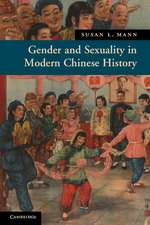 Gender and Sexuality in Modern Chinese HistorySusan L. MannPreț: 207.61 lei
 -
 Stranger to My SelfJeffrey AbugelPreț: 160.74 lei
 -
 Get Your Balls BackBrigitte SumnerPreț: 50.96 lei
 -
 Preț: 308.99 lei
 -
 Power GenesMaggie CraddockPreț: 142.06 lei
 -
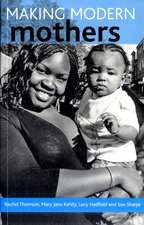 Making modern mothersRachel ThomsonPreț: 177.06 lei
 -
 Preț: 101.50 lei
Cuprins
Acknowledgements / Introduction: Critical Kinship Studies: Kinship (Trans)Formed , Charlotte Kroløkke, Lene Myong, Stine W. Adrian, and Tine Tjørnhøj-Thomsen /Part I: Kinship as Substance / 1. The Milk of Human Kinship: Donated Breast Milk in Neonatal Intensive Care, Katherine Carroll / 2. Mattering Kinship: Inheritance, Biology and Egg Donation, Between Genetics and Epigenetics, Jenny Gunnarsson Payne / 3. Keeping up Appearances: Resemblance Talk amongst Permanent and Foster Carers in Australia, Damien W. Riggs / 4."It's Not My Eggs, It Is Not My Husband's Sperm, It Is Not My Child": Surrogacy and "Not Doing Kinship" in Ghana, Trudie Gerrits / Part II: Kinship as Consumption / 5. Migrant Care and the Production of Fictive Kin, Antía Pérez-Caramés and Raquel Martínez-Buján / 6. Feminist Global Motherhood: Representations of Single Mother Adoption in Swedish Media, Johanna Gondouin / 7. Documentaries on Transnational Surrogacy in India: Questions of Privilege, Respectability and Kinship, Karen Hvidtfeldt / 8. Family Re-imagined: Assisted Reproduction and Parenthood in Mozambique, Inês Faria / 9. ART in the Sun. Assembling Fertility Tourism in the Caribbean, Charlotte Kroløkke / Part III: Kinship as Political Economy / 10. Towards a Political Economy of Egg Cell Donations: "Doing it the Israeli Way", Sigrid Vertommen / 11. Subversive Practices of Sperm Donation: Globalising Danish Sperm, Stine Willum Adrian / 12. The Risk of Relatedness: Governing Kinship in Swedish Transnational Adoption Policy, Malinda Andersson / 13.Real Versus Fictive Kinship: Legitimating the Adoptive Family, Kimberly McKee / Part IV: Kinship (Re)Imagined / 14. Re-imag(in)ing Life-Making, or Queering the Somatechnics of Reproductive Futurity, Nikki Sullivanand Sara Davidmann / 15. When Medicalisation is (Not) Needed. Single Women and Lesbian Couples' Choices of Transnational Donor Conception, Giulia Zanini / 16. I Never Knew: Adoptee Remigration to South Korea, Lene Myong / 17. Kinning Animals. Animals as Kin, Tine Tjørnhøj-Thomsen / Index
Recenzii
This interdisciplinary and impressive collection of works represents a refreshing contribution to critical kinship studies, and is in all respects up-to-date with our time's diverse ways of creating and sustaining kinship on both a national and transnational level and whether it is about various ART techniques, adoption or surrogacy.
In a series of well-crafted case studies based on empirical research throughout the Eastern hemisphere, this edited collection brilliantly demonstrates that reproductive technologies and adoption are integral to today's political and economic inequality and the biopolitics of migration. The volume leaves us in no doubt of the urgent need for the critical kinship studies for which the editors call.
By the mid-1980s, kinship studies in anthropology looked as dated and irrelevant as totemism. But by 2001, they had been reinvented and rejuvenated in such works as Sarah Franklin and Susan McKinnon's edited collection, Relative Values (CH, Nov'02, 40-1635), and Maurice Godelier's The Metamorphoses of Kinship (CH, Sep'12, 50-0366). Classic topics such as patrilineal clans disappeared, and research on migration, immigrant communities, and transnationalism demonstrated the significance of kinship. New research on gender, adoption, reproductive technology, new family forms, and same-sex marriage burgeoned. These innovations are linked to the turn of anthropologists toward research into their own societies. This collection carries innovation further. It emphasizes interdisciplinary research and what the editors call "mobility": transnational movement of people, reproductive substances, and kinship understandings as well as international communication through new media. The contributions show how global economic and political inequalities are linked to mobility. The 18 essays are organized into four sections: kinship as substance, as consumption, as political economy, and reimagined. They are all based on field research around the globe and cover such topics as surrogacy, transnational adoption, transnational egg and sperm donation, creation of fictive kinship, and cultural notions of animals as kin. Summing Up: Highly recommended. All college and university libraries.
In a series of well-crafted case studies based on empirical research throughout the Eastern hemisphere, this edited collection brilliantly demonstrates that reproductive technologies and adoption are integral to today's political and economic inequality and the biopolitics of migration. The volume leaves us in no doubt of the urgent need for the critical kinship studies for which the editors call.
By the mid-1980s, kinship studies in anthropology looked as dated and irrelevant as totemism. But by 2001, they had been reinvented and rejuvenated in such works as Sarah Franklin and Susan McKinnon's edited collection, Relative Values (CH, Nov'02, 40-1635), and Maurice Godelier's The Metamorphoses of Kinship (CH, Sep'12, 50-0366). Classic topics such as patrilineal clans disappeared, and research on migration, immigrant communities, and transnationalism demonstrated the significance of kinship. New research on gender, adoption, reproductive technology, new family forms, and same-sex marriage burgeoned. These innovations are linked to the turn of anthropologists toward research into their own societies. This collection carries innovation further. It emphasizes interdisciplinary research and what the editors call "mobility": transnational movement of people, reproductive substances, and kinship understandings as well as international communication through new media. The contributions show how global economic and political inequalities are linked to mobility. The 18 essays are organized into four sections: kinship as substance, as consumption, as political economy, and reimagined. They are all based on field research around the globe and cover such topics as surrogacy, transnational adoption, transnational egg and sperm donation, creation of fictive kinship, and cultural notions of animals as kin. Summing Up: Highly recommended. All college and university libraries.