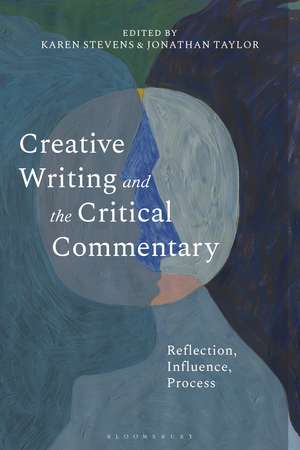
Creative Writing and the Critical Commentary: Reflection, Influence, Process
Editat de Dr Karen Stevens, Dr Jonathan Tayloren Limba Engleză Paperback – 25 iun 2026
As illuminating for aspiring writers as it is for students reflecting on their research and process as part of writing courses, Creative Writing and the Critical Commentary will change the way writers talk about and engage with other texts.
Preț: 156.69 lei
Preț vechi: 176.72 lei
-11%
Puncte Express: 235
Carte disponibilă
Livrare economică 30 octombrie-13 noiembrie
Livrare express 15-21 octombrie pentru 41.58 lei
Livrare prin curier în România Termenul estimat este afișat lângă disponibilitate.
Transport gratuit de la 400.00 lei Plată online sau ramburs, în funcție de opțiunile comenzii.
Retur gratuit în 14 zile Comandă securizată și suport în română.
Specificații
ISBN-13: 9781350439894
ISBN-10: 1350439894
Pagini: 224
Dimensiuni: 152 x 232 x 18 mm
Greutate: 0.25 kg
Editura: Bloomsbury Publishing
Colecția Bloomsbury Academic
Locul publicării:London, United Kingdom
ISBN-10: 1350439894
Pagini: 224
Dimensiuni: 152 x 232 x 18 mm
Greutate: 0.25 kg
Editura: Bloomsbury Publishing
Colecția Bloomsbury Academic
Locul publicării:London, United Kingdom
V-ar putea interesa
-
 Let Me Tell You What I MeanJoan DidionPreț: 77.49 lei
 -
 Preț: 179.79 lei
 -
 Why Writing MattersNicholas DelbancoPreț: 92.66 lei
 -
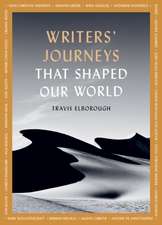 Writers' Journeys That Shaped Our WorldTravis Elborough-16%Preț: 91.50 lei109.48 lei
 -
 -29%Preț: 65.35 lei92.65 lei
 -
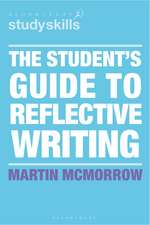 The Student's Guide to Reflective WritingMartin McMorrow-16%Preț: 124.46 lei147.63 lei
 -
 -17%Preț: 160.26 lei191.97 lei
 -
 -17%Preț: 128.28 lei154.91 lei
 -
 -11%Preț: 121.26 lei136.66 lei
 -
 -26%Preț: 206.94 lei279.61 leiNou
 -
 -10%Preț: 112.21 lei124.60 lei
 -
 -45%Preț: 91.14 lei166.74 lei
 -
 -17%Preț: 66.48 lei80.55 leiRecomandat
 -
 -40%Preț: 84.13 lei140.12 lei
 -
 The Essays Only You Can WriteIrene Papoulis-22%Preț: 224.30 lei288.88 lei
 -
 Dear WriterMaggie SmithPreț: 134.79 lei
 -
 Writing Creativity and SoulSue Monk KiddPreț: 122.10 lei
 -
 Inspiring Writing in Art and DesignPat FrancisPreț: 233.68 lei
Cuprins
Part One: Introductory
1. Preface
2. On Reflection in Creative Writing
3. On Influence in Creative Writing
Part Two: Sample Critical Commentaries
4. The Personal Is Always Political, by Karen Stevens, University of Chichester, UK
5. The Art of Persuasion, by Jo Nadin, University of Bristol, UK
6. On the Genealogy of Memoirs, by Jonathan Taylor, University of Leicester, UK
7. 'The Community of Sorrow,' by David Swann, Royal Literary Fund Fellow at the University of Cumbria, UK
8. The End is Never Where You Think, by Dan Powell, Independent Scholar
9. The Age of Influence in the Age of Authenticity, by Jemma Kennedy, Independent Scholar
10. Go Outside, by Shaindel Beers, Blue Mountain Community College, Oregon, US
11. Jesus, Fairy Tales and Flash Fiction, by Kit de Waal, Jean Humphreys Writer in Residence, Leicester University, UK
12. Alternate Truths and Fake News, by Anietie Isong, Independent Scholar
13. Memoir and Main Character Syndrome, by Jenn Ashworth, Lancaster University, UK
14. Experimental Poetic Autography, by Lila Matsumoto, University of Nottingham, UK
15. Digital Narratives, Technology and the Domestic Gothic, by Kate Pullinger, Bath Spa University, UK
Part Three: Postscripts
16. Further Reading: Selected Bibliography
17. About the Contributors
Bibliography
Index
1. Preface
2. On Reflection in Creative Writing
3. On Influence in Creative Writing
Part Two: Sample Critical Commentaries
4. The Personal Is Always Political, by Karen Stevens, University of Chichester, UK
5. The Art of Persuasion, by Jo Nadin, University of Bristol, UK
6. On the Genealogy of Memoirs, by Jonathan Taylor, University of Leicester, UK
7. 'The Community of Sorrow,' by David Swann, Royal Literary Fund Fellow at the University of Cumbria, UK
8. The End is Never Where You Think, by Dan Powell, Independent Scholar
9. The Age of Influence in the Age of Authenticity, by Jemma Kennedy, Independent Scholar
10. Go Outside, by Shaindel Beers, Blue Mountain Community College, Oregon, US
11. Jesus, Fairy Tales and Flash Fiction, by Kit de Waal, Jean Humphreys Writer in Residence, Leicester University, UK
12. Alternate Truths and Fake News, by Anietie Isong, Independent Scholar
13. Memoir and Main Character Syndrome, by Jenn Ashworth, Lancaster University, UK
14. Experimental Poetic Autography, by Lila Matsumoto, University of Nottingham, UK
15. Digital Narratives, Technology and the Domestic Gothic, by Kate Pullinger, Bath Spa University, UK
Part Three: Postscripts
16. Further Reading: Selected Bibliography
17. About the Contributors
Bibliography
Index
Recenzii
This book opens the door to the mirror-world of Creative Writing and reveals the art behind the art. Clear-sighted, rigorous and genuinely illuminating, it shows students and writers how reflective practice can sharpen craft, deepen self-knowledge and turn process into insight. Drawing together incisive theory, practical guidance and exemplary commentaries by leading author-academics, it addresses a long-neglected gap in Creative Writing pedagogy. It is essential reading for anyone who wants to understand not only how to write, but how to think as a writer.
This book will, I am sure, soon be on the reading list for most Creative Writing courses in the UK and beyond . These are, in effect, masterclasses. Without doubt the book will be extremely useful to those tasked with writing critical commentaries, but it has much to offer all writers and indeed to many readers. Stevens and Taylor make a bold claim for critical commentary: If approached with the same thoughtfulness as the creative work, they are not only profoundly helpful to an author, they might also stand as works of art in themselves. This book provides the evidence to support that claim.
This book will, I am sure, soon be on the reading list for most Creative Writing courses in the UK and beyond . These are, in effect, masterclasses. Without doubt the book will be extremely useful to those tasked with writing critical commentaries, but it has much to offer all writers and indeed to many readers. Stevens and Taylor make a bold claim for critical commentary: If approached with the same thoughtfulness as the creative work, they are not only profoundly helpful to an author, they might also stand as works of art in themselves. This book provides the evidence to support that claim.