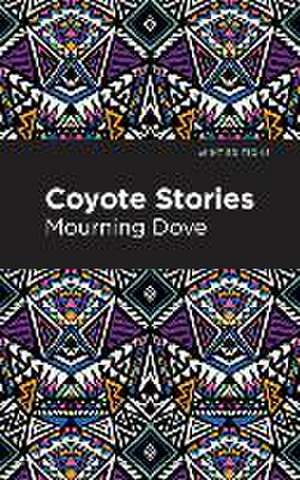
Coyote Stories: Mint Editions (Native Stories, Indigenous Voices)
Autor Mourning Doveen Limba Engleză Hardback – 10 oct 2023
Din seria Mint Editions (Native Stories, Indigenous Voices)
-
 Preț: 86.62 lei
 -
 Preț: 107.83 lei
 -
 Preț: 103.37 lei
 -
 Preț: 73.30 lei
 -
 Preț: 78.82 lei
 -
 Preț: 52.39 lei
 -
 Preț: 52.48 lei
 -
 Preț: 52.38 lei
 -
 Preț: 62.72 lei
 -
 Preț: 32.88 lei
 -
 Preț: 52.06 lei
 -
 Preț: 32.47 lei
 -
 Preț: 98.25 lei
 -
 Preț: 33.48 lei
 -
 Preț: 46.43 lei
 -
 Preț: 45.53 lei
 -
 Preț: 45.44 lei
 -
 Preț: 46.33 lei
 -
 Preț: 74.34 lei
 -
 Preț: 27.66 lei
 -
 Preț: 34.12 lei
Preț: 156.48 lei
Puncte Express: 235
Carte disponibilă
Livrare economică 06-20 noiembrie
Livrare prin curier în România Termenul estimat este afișat lângă disponibilitate.
Transport gratuit de la 400.00 lei Plată online sau ramburs, în funcție de opțiunile comenzii.
Retur gratuit în 14 zile Comandă securizată și suport în română.
Specificații
ISBN-13: 9798888970799
Pagini: 102
Dimensiuni: 132 x 209 x 9 mm
Greutate: 0.21 kg
Editura: Mint Editions
Colecția Mint Editions (Native Stories, Indigenous Voices)
Seria Mint Editions (Native Stories, Indigenous Voices)
Pagini: 102
Dimensiuni: 132 x 209 x 9 mm
Greutate: 0.21 kg
Editura: Mint Editions
Colecția Mint Editions (Native Stories, Indigenous Voices)
Seria Mint Editions (Native Stories, Indigenous Voices)
V-ar putea interesa
-
 Blood of ElvesAndrzej SapkowskiPreț: 53.85 lei
 -
 Son of the Gamblin' Man: The Youth of an ArtistMari SandozPreț: 100.48 lei
 -
 Mother MasonBess Streeter AldrichPreț: 92.57 lei
 -
 The ImpostorGeorges BernanosPreț: 112.45 lei
 -
 An Empty HouseCarlos CerdaPreț: 118.99 lei
 -
 Preț: 175.41 lei
 -
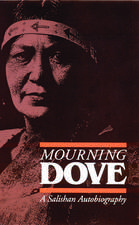 Mourning Dove: A Salishan AutobiographyJay MillerPreț: 105.41 lei
 -
 Plains Song: For Female VoicesWright MorrisPreț: 99.00 lei
 -
 Second GrowthWallace StegnerPreț: 90.49 lei
 -
 Preț: 86.69 lei
 -
 Speaking to the Rose: Writings, 1912-1932Robert WalserPreț: 93.02 lei
 -
 After YouJojo Moyes-18%Preț: 59.52 lei72.37 lei
 -
 Tomie: Complete Deluxe EditionJunji Ito-20%Preț: 178.04 lei223.83 lei
 -
 Behind Closed DoorsB. A. Paris-22%Preț: 56.92 lei72.53 lei
 -
 A Girl on the ShoreInio AsanoPreț: 112.47 lei
Notă biografică
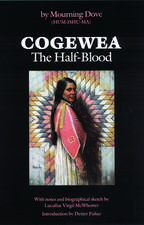
Christine Quintasket (Hum-ishu-ma), better known by her pen name, Mourning Dove (1884 - 1936) was a Native American author. Born in a canoe on the Kootenai River, Quintasket was the daughter of a Sinixt Chief and a mixed-raced Okanagan. Quintasket would learn the art of storytelling from her maternal grandmother and be inspired to become a writer due to her education at the Sacred Heart School of Goodwin Mission. Forced to give up her language and being exposed to derogatory representations of Indigenous people in books, Quintasket desired to combat racist stereotypes through the written word. Like Sophia Alice Callahan¿s Wynema: A Child of the Forest, Quintasket¿s 1927 novel Cogewea the Half Bood was one of the earliest novels written by a Native American women and published in the United States as well as one of the earliest novels by a Native American author to feature a female protagonist. Six years after this, she would go on to publish Coyote Stories which collects over two dozen legends that she heard from her grandmother and tribal elders. Quintasket would marry twice before her death in 1936 and remains an important figure in Native American literary history.