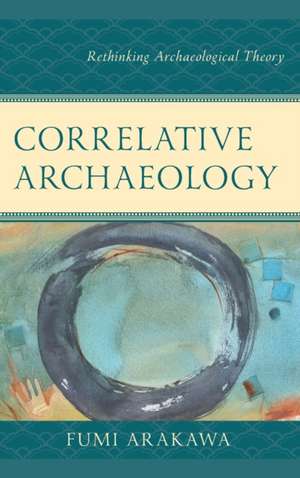
Correlative Archaeology: Rethinking Archaeological Theory: Issues in Southwest Archaeology
Autor Fumi Arakawa Contribuţii de Jim Enote, Octavius Seowtewaen Limba Engleză Hardback – 2 iun 2022
| Toate formatele și edițiile | Preț | Express |
|---|---|---|
| Paperback (1) | 208.29 lei 6-8 săpt. | |
| Bloomsbury Publishing – 29 ian 2025 | 208.29 lei 6-8 săpt. | |
| Hardback (1) | 499.67 lei 6-8 săpt. | |
| Bloomsbury Publishing – 2 iun 2022 | 499.67 lei 6-8 săpt. |



Preț: 499.67 lei
Preț vechi: 790.52 lei
-37%
Puncte Express: 750
Preț estimativ în valută:
88.33€ • 105.94$ • 76.79£
88.33€ • 105.94$ • 76.79£
Carte tipărită la comandă
Livrare economică 13-27 martie
Specificații
ISBN-13: 9781793643780
ISBN-10: 1793643784
Pagini: 180
Ilustrații: 22 colour illustrations; 3 tables;
Dimensiuni: 160 x 228 x 20 mm
Greutate: 0.44 kg
Editura: Bloomsbury Publishing
Colecția Lexington Books
Seria Issues in Southwest Archaeology
Locul publicării:New York, United States
ISBN-10: 1793643784
Pagini: 180
Ilustrații: 22 colour illustrations; 3 tables;
Dimensiuni: 160 x 228 x 20 mm
Greutate: 0.44 kg
Editura: Bloomsbury Publishing
Colecția Lexington Books
Seria Issues in Southwest Archaeology
Locul publicării:New York, United States
Cuprins
Chapter 1 Rethinking Archaeological Theory
Chapter 2 The Development of the Culture History Paradigm: A Case Study from the Mimbres Region
Chapter 3 Processual Archaeology
Chapter 4 Post-Processual Archaeology
Chapter 5 Multivocality
Chapter 6 Native Science
Jim Enote and Octavius Seowtewa
Chapter 7 Correlative Archaeology
Chapter 2 The Development of the Culture History Paradigm: A Case Study from the Mimbres Region
Chapter 3 Processual Archaeology
Chapter 4 Post-Processual Archaeology
Chapter 5 Multivocality
Chapter 6 Native Science
Jim Enote and Octavius Seowtewa
Chapter 7 Correlative Archaeology
Recenzii
Heartfelt. Draws on the wisdom of Eastern philosophy to give extensive voice to Native perspectives on Mimbres pottery and landscapes.
It's rare in archaeology for researchers to explicitly try to understand how their personal histories might impact their research. It's even more rare for them to use their introspection to set up a collaborative project at the intersection of three ontologies. This book does just that and is sure to be a foundational archaeological text.
It's rare in archaeology for researchers to explicitly try to understand how their personal histories might impact their research. It's even more rare for them to use their introspection to set up a collaborative project at the intersection of three ontologies. This book does just that and is sure to be a foundational archaeological text.