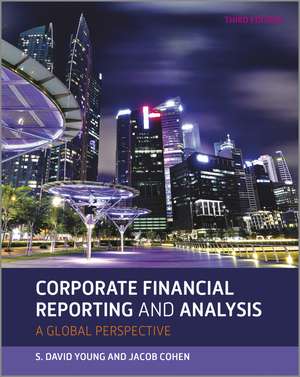
Corporate Financial Reporting and Analysis
Autor David Young, Jacob Cohenen Limba Engleză Paperback – 14 mar 2013
Recomandăm Corporate Financial Reporting and Analysis pentru rigoarea cu care structurează procesul de decizie financiară, fiind organizată metodic pentru a acoperi parcursul de la înțelegerea mecanismelor de bază până la interpretarea nuanțată a datelor. David Young și Jacob Cohen propun o analiză aprofundată a celor trei situații financiare fundamentale, integrând teme complexe precum recunoașterea veniturilor, contabilitatea stocurilor, activele pe termen lung și raportarea fuziunilor sau achizițiilor. Structura este concepută special pentru a servi modulelor de MBA, oferind instrumente practice pentru identificarea zonelor de risc în raportările corporative.
Ne-a atras atenția modul fluid în care autorii tratează diferențele dintre standardele U.S. GAAP și IFRS. În loc să le prezinte separat, textul le abordează simultan, oferind o perspectivă globală aplicabilă indiferent de regiunea geografică a cititorului. Abordarea diferă de Financial Statement Analysis de Peter J Walton prin faptul că este mai puțin axată pe contextul instituțional larg și mai mult orientată spre aplicabilitatea imediată în managementul executiv. În timp ce Walton examinează mediul de afaceri extins, Young și Cohen se concentrează pe marja de manevră a managerilor în raportarea performanței, oferind cititorului un set de competențe critice pentru detectarea anomaliilor contabile. Această ediție a treia, publicată de Wiley, beneficiază de experiența pedagogică acumulată la instituții de elită precum INSEAD și MIT Sloan, garantând un echilibru între teoria academică și realitatea dură a piețelor financiare.
Preț: 1296.49 lei
Preț vechi: 1683.75 lei
-23%
Carte tipărită la comandă
Livrare economică 05-11 iunie
Specificații
ISBN-10: 1118470559
Pagini: 480
Dimensiuni: 188 x 233 x 30 mm
Greutate: 0.82 kg
Ediția:3rd Edition
Editura: Wiley
Locul publicării:Chichester, United Kingdom
V-ar putea interesa
-
 Financial Accounting, Reporting, and AnalysisJennifer Maynard-20%Preț: 458.05 lei572.46 lei
 -
 -27%Preț: 1381.85 lei1905.58 lei
 -
 -8%Preț: 492.16 lei534.96 lei
 -
 -19%Preț: 394.31 lei486.80 lei
 -
 Corporate FinancePierre Vernimmen-19%Preț: 433.03 lei534.61 lei
 -
 -13%Preț: 519.64 lei597.28 lei
 -
 -13%Preț: 474.61 lei545.53 lei
 -
 Accounting and Finance for Non-Accounting StudentsEllie Franklin-13%Preț: 462.78 lei531.93 lei
 -
 Financial Accounting and ReportingJamie Elliott-13%Preț: 506.26 lei581.91 lei
 -
 How to Read a Financial Report WorkbookTage C TracyPreț: 140.27 lei
 -
 How to Read a Financial ReportTage C. TracyPreț: 174.69 lei
 -
 Financial Accounting For Dummies - UKMaire LoughranPreț: 166.11 lei
 -
 Global Financial Accounting and ReportingPeter Walton-26%Preț: 397.07 lei535.73 lei
 -
 International Financial Reporting and AnalysisAnn Jorissen-25%Preț: 416.58 lei552.27 lei
 -
 Financial Accounting and ReportingHerve Stolowy-25%Preț: 381.55 lei506.68 lei
 -
 -27%Preț: 379.19 lei522.42 lei
 -
 F1 FINANCIAL REPORTING AND TAXATION - EXAM PRACTICE KITKaplan PublishingPreț: 64.07 lei
 -
 Preț: 388.80 lei
 -
 Preț: 209.87 lei
 -
 Preț: 117.14 lei
Public țintă
Written for the MBA module that focuses specifically on financial accounting/reportingDe ce să citești această carte
Această carte se adresează profesioniștilor care doresc să stăpânească limbajul financiar global. Veți câștiga capacitatea de a citi printre rândurile bilanțurilor contabile, identificând zonele unde flexibilitatea raportării poate masca riscuri. Este un instrument esențial pentru oricine ocupă o funcție de conducere și are nevoie să navigheze cu încredere între standardele IFRS și GAAP, transformând datele brute în decizii strategice fundamentate.