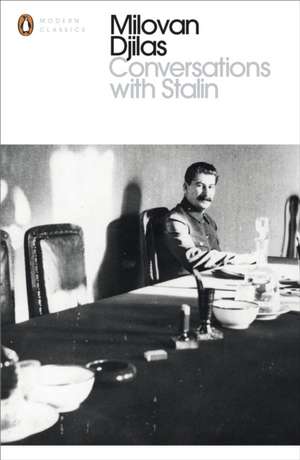
Conversations With Stalin: Penguin Modern Classics
Autor Milovan Djilasen Limba Engleză Paperback – 2 ian 2014
Prezentat sub formă de monografie memorialistică, Conversations With Stalin reprezintă unul dintre cele mai intime și tulburătoare documente politice ale secolului XX. Scrisă de Milovan Djilas, fost lider comunist iugoslav și ulterior cel mai cunoscut dizident al blocului estic, lucrarea reconstituie cronologic cele trei vizite oficiale la Moscova ale autorului. Apreciem aici capacitatea rară a lui Djilas de a trece dincolo de protocolul diplomatic pentru a surprinde psihologia unui tiran în momentele sale de relaxare brutală, la cinele lungi unde se decideau destinele Europei de Est. Spre deosebire de lucrările de sinteză istorică, acest volum oferă o perspectivă de tip „insider”. Descoperim un Stalin viclean și crud, dar înzestrat cu un talent politic enorm, capabil să-i hipnotizeze chiar și pe cei care îi cunoșteau natura nemiloasă. Comparabil cu Stalin de Simon Sebag Montefiore în rigurozitatea portretizării anturajului dictatorial, volumul lui Djilas se distinge prin faptul că nu este o reconstrucție din arhive, ci o mărturie directă, viscerală. Dacă Simon Sebag Montefiore analizează mecanismul puterii prin prisma cercetării istorice, Djilas îl descrie ca participant direct la procesul de consolidare a influenței sovietice. În contextul operei autorului, această carte completează analiza din New Class:analysis Of Communist System. Dacă în acea lucrare Djilas teoretiza eșecul ideologic, în Conversations With Stalin el oferă fundamentul uman și anecdotic al acelei deziluzii. Ediția de față, publicată în colecția Penguin Modern Classics, beneficiază de contextul oferit de Anne Applebaum, transformând textul într-un instrument esențial pentru înțelegerea tranziției de la entuziasmul revoluționar la realitatea sumbră a stalinismului.
Din seria Penguin Modern Classics
-
 Preț: 57.35 lei
 -
 Preț: 80.02 lei
 -
 Preț: 62.95 lei
 -
 Preț: 59.42 lei
 - 18%
 Preț: 88.47 lei
 -
 Preț: 107.89 lei
 - 27%
 Preț: 56.92 lei
 - 27%
 Preț: 57.22 lei
 - 26%
 Preț: 57.58 lei
 - 26%
 Preț: 53.47 lei
 - 33%
 Preț: 64.11 lei
 - 25%
 Preț: 59.39 lei
 - 28%
 Preț: 51.26 lei
 - 28%
 Preț: 50.90 lei
 - 26%
 Preț: 58.75 lei
 - 30%
 Preț: 66.18 lei
 - 20%
 Preț: 56.42 lei
 - 25%
 Preț: 59.19 lei
 - 24%
 Preț: 61.06 lei
 - 27%
 Preț: 57.17 lei
 - 27%
 Preț: 57.17 lei
 - 27%
 Preț: 51.50 lei
 - 20%
 Preț: 50.90 lei
 - 26%
 Preț: 53.60 lei
 - 25%
 Preț: 59.09 lei
 - 25%
 Preț: 54.09 lei
 - 26%
 Preț: 52.82 lei
 - 33%
 Preț: 65.20 lei
 - 28%
 Preț: 50.94 lei
 - 26%
 Preț: 53.57 lei
 - 20%
 Preț: 55.59 lei
 - 25%
 Preț: 59.29 lei
 - 25%
 Preț: 59.70 lei
 - 26%
 Preț: 57.93 lei
 - 25%
 Preț: 59.03 lei
 - 27%
 Preț: 56.90 lei
 - 27%
 Preț: 56.99 lei
 - 26%
 Preț: 58.06 lei
 - 26%
 Preț: 58.70 lei
 - 26%
 Preț: 57.63 lei
 - 29%
 Preț: 49.73 lei
 - 36%
 Preț: 60.43 lei
 - 26%
 Preț: 58.40 lei
 - 26%
 Preț: 58.53 lei
 - 27%
 Preț: 57.19 lei
 - 28%
 Preț: 49.96 lei
 - 28%
 Preț: 46.51 lei
 - 28%
 Preț: 45.82 lei
 - 26%
 Preț: 57.69 lei
 - 18%
 Preț: 76.38 lei
Preț: 78.03 lei
Carte disponibilă
Livrare economică 10-24 noiembrie
Livrare express 24-30 octombrie pentru 16.32 lei
Specificații
ISBN-10: 0141393092
Pagini: 176
Dimensiuni: 128 x 195 x 15 mm
Greutate: 0.14 kg
Editura: Penguin Books
Colecția Penguin Modern Classics
Seria Penguin Modern Classics
Locul publicării:London, United Kingdom
V-ar putea interesa
-
 GulagAnne Applebaum-26%Preț: 91.13 lei123.77 lei
 -
 Iron CurtainAnne Applebaum-26%Preț: 102.25 lei138.04 lei
 -
 World War TwoNorman Stone-32%Preț: 62.46 lei91.24 lei
 -
 Eastern ApproachesFitzroy MacLeanPreț: 95.33 lei
 -
 Between East and WestAnne Applebaum-19%Preț: 75.81 lei93.37 lei
 -
 Rise And FallMilovan DjilasPreț: 194.28 lei
 -
 Deaths MenDenis WinterPreț: 113.70 lei
 -
 Gulag Voices: An AnthologyAnne ApplebaumPreț: 111.87 lei
De ce să citești această carte
Recomandăm această carte oricărui cititor pasionat de istoria politică și de mecanismele totalitarismului. Conversations With Stalin nu este doar o cronică diplomatică, ci un studiu psihologic de o onestitate brutală. Cititorul câștigă acces în „bârlogul dictatorului”, înțelegând cum personalitatea lui Stalin a modelat arhitectura puterii în Europa de Est. Este o lectură esențială pentru a descifra rădăcinile rupturii dintre Iugoslavia lui Tito și URSS.
Despre autor
Milovan Djilas (1911–1995) a fost un politician, teoretician și scriitor muntenegrean, figură centrală a Partidului Comunist din Iugoslavia. După ce a luptat în rezistența partizană și a urcat în cele mai înalte eșaloane ale puterii alături de Iosif Broz Tito, Djilas a devenit unul dintre cei mai vocali critici ai sistemului pe care a ajutat să-l construiască. Lucrările sale, precum New Class:analysis Of Communist System și Rise And Fall, i-au adus recunoașterea internațională ca dizident, dar și ani grei de închisoare în propria țară. Experiența sa de ideolog transformat în critic îi conferă o autoritate unică în analiza fenomenului totalitar.
Notă biografică
Descriere scurtă
This extraordinarily vivid and unnerving book three meetings held with Stalin during and after the Second World War. Djilas brilliantly describes the dictator in his lair - cunning, cruel, enormously talented. Few books give as clear a sense of what made Stalin such a compelling figure and how he was able to hypnotise and terrify those around him. Djilas also describes the key members of Stalin's court: Beria, Malenkov, Zhukov, Molotov and Khruschchev. The result is a gripping account of the ruler at the height of his fame and power.