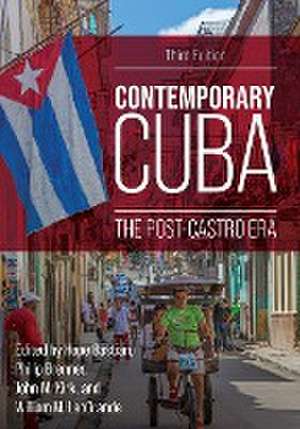
Contemporary Cuba: The Post-Castro Era
Editat de Hope Bastian, Philip Brenner, Dr. or Prof. John M. Kirk, William M. LeoGrandeen Limba Engleză Paperback – 15 aug 2023
Contributions by: Fulton T. Armstrong, Mervyn J. Bain, Michael J. Bustamante, Susan Eckstein, H. Michael Erisman, Julio Antonio Fernández Estrada, Julio César Guanche, Katrin Hansing, Vilma Hidalgo López-Chávez, Bert Hoffmann, Arturo Lopez-Levy, Armando Nova González, Leonardo Padura Fuentes, Louis A. Pérez, Jr., Kirenia Pérez Criado, C. Maelia Esther Pérez Silveira, Jorge R. Piñón, Magela Romero Almodovar, Antonio F. Romero Gómez, Ricardo Torres Pérez, Ailynn Torres Santana, C. Juan Triana Cordoví, Dachelys Valdés Moreno, Helen Yaffe, María del Carmen Zabala Arguelles
Preț: 219.41 lei
Preț vechi: 289.10 lei
-24%
Puncte Express: 329
Carte tipărită la comandă
Livrare economică 08-22 iunie
Specificații
ISBN-13: 9781538177143
ISBN-10: 1538177145
Pagini: 388
Ilustrații: 5 b/w illustrations; 9 tables; 2 textboxes
Dimensiuni: 172 x 252 x 22 mm
Greutate: 0.72 kg
Ediția:Third Edition
Editura: Bloomsbury Publishing
Colecția Rowman & Littlefield
Locul publicării:New York, United States
ISBN-10: 1538177145
Pagini: 388
Ilustrații: 5 b/w illustrations; 9 tables; 2 textboxes
Dimensiuni: 172 x 252 x 22 mm
Greutate: 0.72 kg
Ediția:Third Edition
Editura: Bloomsbury Publishing
Colecția Rowman & Littlefield
Locul publicării:New York, United States
Cuprins
Introduction: History as Prologue? Cuba Until 2018 by Philip Brenner
The Past is No Longer a Source of Inspiration: A Conversation with Louis A. Pérez, Jr.
Part I - Politics
Introduction, by William M. LeoGrande
1. The New State Structure in Cuba: From Central Power to Municipal Power by Julio Antonio Fernández Estrada.
2. "Martiano," "Fidelista," and Reformed? The Communist Party After the Generational Change, by Arturo Lopez-Levy.
3. Civil Society, Nation, and Conflict in Cuba, by Julio Cesar Guanche.
4. July11 Is Still Present in Cuba, by Ailynn Torres Santana.
5. 11J, "Patria y Vida," and the (Not so) New Cuban Culture Wars, by Michael Bustamante.
6. Cuba Today, Through the Eyes of a Novelist, by Leonardo Padura
Part II - Economics
Introduction, by Ricardo Torres
7. State Enterprise in a New Economic Context, by Juan Triana Cordoví.
8. The Economic Stakeholders in Cuba: Interactions and Alliances on the Economic Stage, by C. Maelia Esther Pérez Silveira.
9. Cuba: Economic Crisis, Foreign Investment, and the Challenges of Structural Transformation, by Antonio F. Romero Gómez.
10. Social Inequality and Challenges for Attention in Cuba Today, by María del Carmen Zabala Arguelles
11. The Food System and Food Production in Cuba, by Armando Nova González.
12. How the Cuban Military Became an Economic Powerhouse, by William M. LeoGrande.
13. Cuba's Energy Challenges, by Jorge R. Piñón
Part III - International Relations
Introduction by John M. Kirk
14. U.S.-Cuban Relations: The New Cold War in the Caribbean, by William M. LeoGrande.
15. Havana-Moscow Relations Following Fidel and Raúl Castro, by Mervyn Bain.
Cuba-China Relations: Solidarity and Pragmatism, by Fulton Armstrong.Cuba and a Changing Western Hemisphere, by Philip Brenner. Cuba's Medical Internationalism and "Soft Power," by John Kirk and H. Michael Erisman. 19. The Battle over Cuban Transnational Ties: Exiles versus the New Cubans, by Susan Eckstein.
Part IV - Society
Introduction, by Hope Bastian
20.The Comeback of Racial Inequalities: Assessing the Re-stratification of Cuban Society, by Katrin Hansing and Bert Hoffman
21. Infrastructures and Inequalities in Rural Cuba: Challenges for Families, by Vilma Hidalgo López-Chávez
22. Evangelical Christianity, the State, and New Political Alliances, by Kirenia Criado Pérez and Dachelys Valdés Moreno
23. Magela Romero Interview: Aging and Care in Cuba
24. Tarea Vida: Cuba's state plan to confront climate change, by Helen Yaffe.
25. COVID-19 and Health in Cuba, by Hope Bastian
Chronology, 2014 - 2022
Index
About the Contributors
The Past is No Longer a Source of Inspiration: A Conversation with Louis A. Pérez, Jr.
Part I - Politics
Introduction, by William M. LeoGrande
1. The New State Structure in Cuba: From Central Power to Municipal Power by Julio Antonio Fernández Estrada.
2. "Martiano," "Fidelista," and Reformed? The Communist Party After the Generational Change, by Arturo Lopez-Levy.
3. Civil Society, Nation, and Conflict in Cuba, by Julio Cesar Guanche.
4. July11 Is Still Present in Cuba, by Ailynn Torres Santana.
5. 11J, "Patria y Vida," and the (Not so) New Cuban Culture Wars, by Michael Bustamante.
6. Cuba Today, Through the Eyes of a Novelist, by Leonardo Padura
Part II - Economics
Introduction, by Ricardo Torres
7. State Enterprise in a New Economic Context, by Juan Triana Cordoví.
8. The Economic Stakeholders in Cuba: Interactions and Alliances on the Economic Stage, by C. Maelia Esther Pérez Silveira.
9. Cuba: Economic Crisis, Foreign Investment, and the Challenges of Structural Transformation, by Antonio F. Romero Gómez.
10. Social Inequality and Challenges for Attention in Cuba Today, by María del Carmen Zabala Arguelles
11. The Food System and Food Production in Cuba, by Armando Nova González.
12. How the Cuban Military Became an Economic Powerhouse, by William M. LeoGrande.
13. Cuba's Energy Challenges, by Jorge R. Piñón
Part III - International Relations
Introduction by John M. Kirk
14. U.S.-Cuban Relations: The New Cold War in the Caribbean, by William M. LeoGrande.
15. Havana-Moscow Relations Following Fidel and Raúl Castro, by Mervyn Bain.
Cuba-China Relations: Solidarity and Pragmatism, by Fulton Armstrong.Cuba and a Changing Western Hemisphere, by Philip Brenner. Cuba's Medical Internationalism and "Soft Power," by John Kirk and H. Michael Erisman. 19. The Battle over Cuban Transnational Ties: Exiles versus the New Cubans, by Susan Eckstein.
Part IV - Society
Introduction, by Hope Bastian
20.The Comeback of Racial Inequalities: Assessing the Re-stratification of Cuban Society, by Katrin Hansing and Bert Hoffman
21. Infrastructures and Inequalities in Rural Cuba: Challenges for Families, by Vilma Hidalgo López-Chávez
22. Evangelical Christianity, the State, and New Political Alliances, by Kirenia Criado Pérez and Dachelys Valdés Moreno
23. Magela Romero Interview: Aging and Care in Cuba
24. Tarea Vida: Cuba's state plan to confront climate change, by Helen Yaffe.
25. COVID-19 and Health in Cuba, by Hope Bastian
Chronology, 2014 - 2022
Index
About the Contributors
Recenzii
No other volume comes close to providing a better understanding of how much has changed in twenty-first century scholarship about Cuba and how much continues to change. What remains unchanged in this new edition is the remarkable breath of the 25 chapters, most authored by a "who's who" of Cuban scholarship, now joined by younger voices, and all careful to include historical context.
Composed of essays from widely recognized and admired authorities on and off the island, this collection provides an essential and unvarnished evaluation of Cuba and its social, cultural, and political evolution in the twenty-first century. Any scholar wishing to appraise themselves of where the revolution is at and where it is going could not do any better than consult this book.
This new edition provides another much needed update on an impressively wide range of topics in a Cuba now without the Castros and, more importantly, features a welcome range of scholarly views of the present reality on the island. Yet another boon for students of Cuba.
The contributors to this masterful book wrestle thoughtfully with 'the crisis of meaning' of Cuba's revolutionary process in the wake of the intense protests on the island in July 2021 and illuminate the severity and complexity of the challenges facing Cuba on a broad spectrum of fronts. This book is essential reading for anyone seeking to understand Cuba today.
Conversations about Cuba, especially in the English-speaking world, tend to be narrow in focus and polarized in tone. Contemporary Cuba is a welcome contrast-comprehensive and balanced-that moves our understandings of the island beyond stale Cold War stereotypes. The volume has remarkable breadth and depth and makes clear that Cubans are facing a challenging present. It also illuminates visions for the future that bring our understanding of Cuba out from the long shadow of the past.
Pounded mercilessly by U.S. sanctions and grappling with a contracting economy, severe shortages of food and fuel, and massive emigration, Cuban society is unraveling. In this indispensable compendium, 29 leading experts, including many young Cuban scholars, delve deeply into this precipitous disintegration.
Composed of essays from widely recognized and admired authorities on and off the island, this collection provides an essential and unvarnished evaluation of Cuba and its social, cultural, and political evolution in the twenty-first century. Any scholar wishing to appraise themselves of where the revolution is at and where it is going could not do any better than consult this book.
This new edition provides another much needed update on an impressively wide range of topics in a Cuba now without the Castros and, more importantly, features a welcome range of scholarly views of the present reality on the island. Yet another boon for students of Cuba.
The contributors to this masterful book wrestle thoughtfully with 'the crisis of meaning' of Cuba's revolutionary process in the wake of the intense protests on the island in July 2021 and illuminate the severity and complexity of the challenges facing Cuba on a broad spectrum of fronts. This book is essential reading for anyone seeking to understand Cuba today.
Conversations about Cuba, especially in the English-speaking world, tend to be narrow in focus and polarized in tone. Contemporary Cuba is a welcome contrast-comprehensive and balanced-that moves our understandings of the island beyond stale Cold War stereotypes. The volume has remarkable breadth and depth and makes clear that Cubans are facing a challenging present. It also illuminates visions for the future that bring our understanding of Cuba out from the long shadow of the past.
Pounded mercilessly by U.S. sanctions and grappling with a contracting economy, severe shortages of food and fuel, and massive emigration, Cuban society is unraveling. In this indispensable compendium, 29 leading experts, including many young Cuban scholars, delve deeply into this precipitous disintegration.