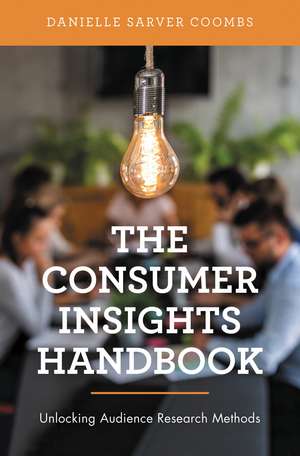
The Consumer Insights Handbook: Unlocking Audience Research Methods
Autor Danielle Sarver Coombsen Limba Engleză Paperback – 18 iun 2021
The Consumer Insights Handbook flips the typical model presented in mass communication research textbooks to emphasize that data should be used to understand people as thoughtful, deliberative audiences. As such, research should be done with the goal of better understanding target audiences in a meaningful way. With this orientation in mind, these insight-driven research projects allow media practitioners and strategic communication professionals to tap into audiences' wants, needs, and desires through messaging and products designed to resonate.
Guided by the author's own experience in the field as well as guidance from current practitioners on the client, boutique, and agency sides, this book offers an accessible, thorough, and compelling perspective on how to plan for and complete consumer insights research projects from the initial RFP to the final presentation of findings. Each chapter includes a guide for how to conduct in-class research, quotes and recommendations from experts in the field, and case studies and real-world examples.
| Toate formatele și edițiile | Preț | Express |
|---|---|---|
| Paperback (2) | 280.43 lei Precomandă | |
| Bloomsbury Publishing – 7 sep 2026 | 280.43 lei Precomandă | |
| Bloomsbury Publishing – 18 iun 2021 | 344.18 lei 6-8 săpt. | |
| Hardback (2) | 631.01 lei 6-8 săpt. | |
| Bloomsbury Publishing – 22 iun 2021 | 631.01 lei 6-8 săpt. | |
| BLOOMSBURY ACADEMIC – 7 sep 2026 | 794.54 lei Precomandă |
Preț: 344.18 lei
Preț vechi: 448.46 lei
-23%
Puncte Express: 516
Preț estimativ în valută:
60.84€ • 72.55$ • 52.77£
60.84€ • 72.55$ • 52.77£
Carte tipărită la comandă
Livrare economică 16-30 martie
Specificații
ISBN-13: 9781538145524
ISBN-10: 1538145529
Pagini: 248
Ilustrații: 22 b/w illustrations; 31 b/w photos; 5 tables
Dimensiuni: 172 x 250 x 16 mm
Greutate: 0.48 kg
Editura: Bloomsbury Publishing
Colecția Rowman & Littlefield
Locul publicării:New York, United States
ISBN-10: 1538145529
Pagini: 248
Ilustrații: 22 b/w illustrations; 31 b/w photos; 5 tables
Dimensiuni: 172 x 250 x 16 mm
Greutate: 0.48 kg
Editura: Bloomsbury Publishing
Colecția Rowman & Littlefield
Locul publicării:New York, United States
V-ar putea interesa
-
 Business Research MethodsEmma Bell-21%Preț: 419.07 lei528.04 lei
 -
 The Craft of Research, Fifth EditionWayne C. BoothPreț: 104.03 lei
 -
 Financial Times Essential Guide to Making Business Presentations, ThePhilip Khan-PanniPreț: 142.10 lei
 -
 Preț: 434.90 lei
 -
 Preț: 434.49 lei
 -
 The Practice of Market ResearchYvonne McGivern-10%Preț: 488.19 lei542.43 lei
 -
 Research Methods for Business StudentsMark Saunders-19%Preț: 573.04 lei707.45 lei
 -
 Preț: 407.76 lei
 -
 Marketing Research: Delivering Customer InsightAlan Wilson-32%Preț: 396.77 lei586.08 lei
 -
 Research MethodsBob Matthews-13%Preț: 476.55 lei547.75 lei
 -
 -29%Preț: 81.30 lei114.79 lei
 -
 -15%Preț: 415.05 lei488.30 lei
 -
 Market Research In A Week: Market Research In Seven Simple StepsJudy Bartkowiak-29%Preț: 43.08 lei60.78 lei
 -
 Product Research RulesC. Todd Lombardo-20%Preț: 250.16 lei312.70 lei
 -
 Visual Methods for Digital ResearchSabine NiedererPreț: 134.28 lei
 -
 Preț: 234.27 lei
 -
 Preț: 305.31 lei
 -
 The Trend Forecaster's Handbook: Second EditionMartin Raymond-27%Preț: 196.00 lei268.29 lei
 -
 Research Methods in InformationAlison Jane Pickard-19%Preț: 519.12 lei640.89 lei
 -
 -22%Preț: 154.38 lei196.93 lei
Cuprins
Table of Contents
PART I: PREPARATION
Chapter 1: Introduction and Overview
What is Research?How We See the WorldPlanning for Research DesignWorking on TeamsHow to Use this BookKey TermsChapter 2: Working with Clients
General Best PracticesLooking Good (And by "Good," I Mean Professional)Confidence is Key. So is Humility.Getting Work StartedResponding to RFPsPitching New BusinessUnderstanding and Assessing NeedsBusiness Objectives and Research ObjectivesDeveloping Actionable Research QuestionsEstablishing and Working with BudgetsBest Practices & Key Take-AwaysKey TermsChapter 3: Secondary Research and Analysis
Conducting Secondary ResearchSecondary Research SourcesNon-Public SourcesPublic SourcesBest Practices & Key Take-AwaysKey TermsChapter 4: Applied Research Ethics
Why This MattersKey Ethical PrinciplesApplied Research EthicsGaining ConsentAnonymity versus ConfidentialityPrivacy Laws and Legal ImplicationsConducting Research OnlineAccurate Representation of Ideas, or How to Avoid PlagiarismBest Practices & Key Take-AwaysKey TermsPART II: QUALITATIVE RESEARCH
Chapter 5: Qualitative Research Design and Considerations
Why Do Qualitative Research?BenefitsLimitationsQualitative MethodsInterviewsEthnographiesParticipant ObservationFocus GroupsOnline CommunitiesEnsuring RigorWays to Ensure RigorBest Practices & Key Take-AwaysKey TermsChapter 6: Qualitative Data Collection
Writing an Effective InstrumentGuide StructureTips for WritingGeneral Best PracticesRecord, Record, RecordData Collection: In the FieldConducting InterviewsConducting EthnographiesConducting Focus GroupsConducting Qualitative Research OnlineBest Practices & Key Take-AwaysChapter 7: Using Creative Exercises for Deeper Insights
General Best PracticesGenerating Good DataTypes of Creative ExercisesCollageDrawings and StorytellingBring Brands to LifeFill-In-The-Blank"Magic Wand"Creating Lists and Organizing DataCard SortsMarketing ExecBest Practices & Key Take-AwaysKey TermsChapter 8: Qualitative Data Analysis and Reporting
General Best Practices: During FieldingGeneral Best Practices: Post-Collection Data AnalysisIn the DebriefTopline Research ReportBest Practices & Key Take-AwaysPART III: QUANTITATIVE RESEARCH
Chapter 9: Quantitative Research Design and Best Practices
Why Do Quantitative Research?BenefitsLimitationsBasic Principles and CharacteristicsCorrelation is Not CausationStandardizationHypotheses versus Research QuestionsSampling and SamplesProbability SamplingNonprobability SamplingError, Margin of Error, and Confidence LevelQuantitative Research for AcademicsBest Practices & Key Take-AwaysKey TermsChapter 10: Quantitative Data Collection
General Best PracticesPreparing to Write Your SurveyStructuring Your SurveyScreenerThe BodyDemographicsEditing Your SurveyWriting Good QuestionsDifferent Types of QuestionsBasic Rules for Writing QuestionsWriting Good ResponsesTrend StudiesBest Practices & Key Take-AwaysKey TermsChapter 11: Quantitative Data Analysis and Reporting
Good Preparation, Good DataEnsuring Data AccuracyDescriptive StatisticsWeightingChecking on What Happens in the "Black Box"Statistical Models for the Non-StatisticiansConjoint AnalysisMaximum-Difference Scaling (MaxDiff)Discrete Choice ModelingFactor AnalysisCluster AnalysisData Reports and BannersDebriefing and Data AnalysisPreparing for your DebriefDebriefingReporting Quantitative ResearchBest Practices & Key Take-AwaysKey TermsPART IV: REPORTING FINDINGS
Chapter 12: Writing Your Report
Goal and PurposeDevelop Your "Elevator Pitch"Organizing Your ThoughtsPreparing your OutlineIntegrate and Synthesize Insights into ThemesPlan your SignpostingBake in TransitionsFlesh out your RecommendationsAlways Come Back to your StoryTelling a StoryKeep the Story MovingShare Data StrategicallyFocus on your FlowStay FocusedReport SectionsReport FormatsBest Practices & Key Take-AwaysKey TermsChapter 13: Developing (and Designing) Your Deliverable
Designing your DeliverableMake Sure your Story is ClearMake Signposts ClearMetaphors MatterDeliverable FormatsDesign Basics (Very, Very Basics)Designing your DeliverableHierarchyConsistencyEffective Use of Color and ContrastPresenting DataForms of Data PresentationGuidelines for Presenting DataBest Practices & Key Take-AwaysKey TermsChapter 14: The Client Presentation
Goal and PurposePreparationKnow your AudienceKnow your MaterialInternalizingDuring the PresentationWrapping Up the ProjectBack in the OfficeBest Practices & Key Take-AwaysFinal Thoughts
PART I: PREPARATION
Chapter 1: Introduction and Overview
What is Research?How We See the WorldPlanning for Research DesignWorking on TeamsHow to Use this BookKey TermsChapter 2: Working with Clients
General Best PracticesLooking Good (And by "Good," I Mean Professional)Confidence is Key. So is Humility.Getting Work StartedResponding to RFPsPitching New BusinessUnderstanding and Assessing NeedsBusiness Objectives and Research ObjectivesDeveloping Actionable Research QuestionsEstablishing and Working with BudgetsBest Practices & Key Take-AwaysKey TermsChapter 3: Secondary Research and Analysis
Conducting Secondary ResearchSecondary Research SourcesNon-Public SourcesPublic SourcesBest Practices & Key Take-AwaysKey TermsChapter 4: Applied Research Ethics
Why This MattersKey Ethical PrinciplesApplied Research EthicsGaining ConsentAnonymity versus ConfidentialityPrivacy Laws and Legal ImplicationsConducting Research OnlineAccurate Representation of Ideas, or How to Avoid PlagiarismBest Practices & Key Take-AwaysKey TermsPART II: QUALITATIVE RESEARCH
Chapter 5: Qualitative Research Design and Considerations
Why Do Qualitative Research?BenefitsLimitationsQualitative MethodsInterviewsEthnographiesParticipant ObservationFocus GroupsOnline CommunitiesEnsuring RigorWays to Ensure RigorBest Practices & Key Take-AwaysKey TermsChapter 6: Qualitative Data Collection
Writing an Effective InstrumentGuide StructureTips for WritingGeneral Best PracticesRecord, Record, RecordData Collection: In the FieldConducting InterviewsConducting EthnographiesConducting Focus GroupsConducting Qualitative Research OnlineBest Practices & Key Take-AwaysChapter 7: Using Creative Exercises for Deeper Insights
General Best PracticesGenerating Good DataTypes of Creative ExercisesCollageDrawings and StorytellingBring Brands to LifeFill-In-The-Blank"Magic Wand"Creating Lists and Organizing DataCard SortsMarketing ExecBest Practices & Key Take-AwaysKey TermsChapter 8: Qualitative Data Analysis and Reporting
General Best Practices: During FieldingGeneral Best Practices: Post-Collection Data AnalysisIn the DebriefTopline Research ReportBest Practices & Key Take-AwaysPART III: QUANTITATIVE RESEARCH
Chapter 9: Quantitative Research Design and Best Practices
Why Do Quantitative Research?BenefitsLimitationsBasic Principles and CharacteristicsCorrelation is Not CausationStandardizationHypotheses versus Research QuestionsSampling and SamplesProbability SamplingNonprobability SamplingError, Margin of Error, and Confidence LevelQuantitative Research for AcademicsBest Practices & Key Take-AwaysKey TermsChapter 10: Quantitative Data Collection
General Best PracticesPreparing to Write Your SurveyStructuring Your SurveyScreenerThe BodyDemographicsEditing Your SurveyWriting Good QuestionsDifferent Types of QuestionsBasic Rules for Writing QuestionsWriting Good ResponsesTrend StudiesBest Practices & Key Take-AwaysKey TermsChapter 11: Quantitative Data Analysis and Reporting
Good Preparation, Good DataEnsuring Data AccuracyDescriptive StatisticsWeightingChecking on What Happens in the "Black Box"Statistical Models for the Non-StatisticiansConjoint AnalysisMaximum-Difference Scaling (MaxDiff)Discrete Choice ModelingFactor AnalysisCluster AnalysisData Reports and BannersDebriefing and Data AnalysisPreparing for your DebriefDebriefingReporting Quantitative ResearchBest Practices & Key Take-AwaysKey TermsPART IV: REPORTING FINDINGS
Chapter 12: Writing Your Report
Goal and PurposeDevelop Your "Elevator Pitch"Organizing Your ThoughtsPreparing your OutlineIntegrate and Synthesize Insights into ThemesPlan your SignpostingBake in TransitionsFlesh out your RecommendationsAlways Come Back to your StoryTelling a StoryKeep the Story MovingShare Data StrategicallyFocus on your FlowStay FocusedReport SectionsReport FormatsBest Practices & Key Take-AwaysKey TermsChapter 13: Developing (and Designing) Your Deliverable
Designing your DeliverableMake Sure your Story is ClearMake Signposts ClearMetaphors MatterDeliverable FormatsDesign Basics (Very, Very Basics)Designing your DeliverableHierarchyConsistencyEffective Use of Color and ContrastPresenting DataForms of Data PresentationGuidelines for Presenting DataBest Practices & Key Take-AwaysKey TermsChapter 14: The Client Presentation
Goal and PurposePreparationKnow your AudienceKnow your MaterialInternalizingDuring the PresentationWrapping Up the ProjectBack in the OfficeBest Practices & Key Take-AwaysFinal Thoughts
Recenzii
Danielle Coombs has done a wonderful job writing about research techniques that students can actually use, both as student researchers and eventual professionals. Students will enjoy reading this book.
The Consumer Insights Handbook is a much needed textbook for our discipline. Before now, we have never had a book dedicated solely to teaching our aspiring advertising and public relations practitioners the importance of research from an industry standpoint. Danielle Coombs has provided an accessible text for our students that's comprehensive, yet easy to read. Every research methods and insights course in our field should be using this book.
The Consumer Insights Handbook is a much needed textbook for our discipline. Before now, we have never had a book dedicated solely to teaching our aspiring advertising and public relations practitioners the importance of research from an industry standpoint. Danielle Coombs has provided an accessible text for our students that's comprehensive, yet easy to read. Every research methods and insights course in our field should be using this book.