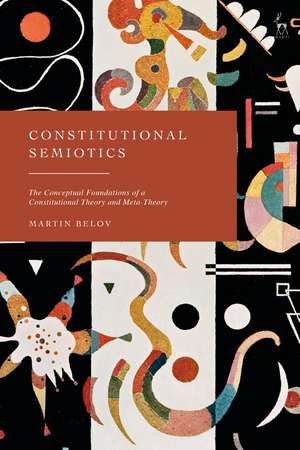
Constitutional Semiotics: The Conceptual Foundations of a Constitutional Theory and Meta-Theory
Autor Dr Martin Beloven Limba Engleză Paperback – 28 dec 2023
The book puts forward innovative incentives for constitutional analysis based on constitutional semiotics as a paradigm for representation of meaning in rational, textual, symbolic-imaginary and visual constitutionalism. The book focuses on the textual, imaginative, and visual discourse of constitutionalism, which is built upon collective constitutional imaginaries and on the peculiar normativity of constitutional geometry and constitutional mythology as borderline phenomena entrenched in rational, textual, symbolic-imaginary and visual constitutionalism.
The book analyses concepts such as: constitutional text and texture, authoritative constitutional narratives and authoritative constitutional narrators, constitutional semiotic community, constitutional utopia, constitutional taboo, normative ideology and normative ideas, constitutional myth and mythology, constitutional symbolism, constitutional code and constitutional geometric form. It explores the textual entrenchment of constitutionalism and its repercussions for representation and signification of meaning.
Preț: 333.41 lei
Preț vechi: 428.54 lei
-22%
Puncte Express: 500
Carte tipărită la comandă
Livrare economică 26 noiembrie-02 decembrie
Livrare prin curier în România Termenul estimat este afișat lângă disponibilitate.
Transport gratuit de la 400.00 lei Plată online sau ramburs, în funcție de opțiunile comenzii.
Retur gratuit în 14 zile Comandă securizată și suport în română.
Specificații
ISBN-13: 9781509960897
ISBN-10: 1509960899
Pagini: 360
Dimensiuni: 154 x 232 x 22 mm
Greutate: 0.54 kg
Editura: Bloomsbury Publishing
Colecția Hart Publishing
Locul publicării:London, United Kingdom
ISBN-10: 1509960899
Pagini: 360
Dimensiuni: 154 x 232 x 22 mm
Greutate: 0.54 kg
Editura: Bloomsbury Publishing
Colecția Hart Publishing
Locul publicării:London, United Kingdom
V-ar putea interesa
-
 Territory and Power in Constitutional TransitionsGeorge Anderson-31%Preț: 716.15 lei1035.39 lei
 -
 -25%Preț: 256.13 lei340.84 lei
 -
 -24%Preț: 292.58 lei386.59 lei
 -
 Der Whistleblower im BeamtenrechtJonathan NiermannPreț: 533.90 lei
 -
 Subjektives öffentliches Recht auf PlanungLisa Eva Maria Steppat-23%Preț: 449.65 lei583.96 lei
 -
 Abstandsflächen im Bauordnungsrecht Nordrhein-WestfalenMarita RadeisenPreț: 273.81 lei
 -
 Eigenbetriebsrecht HessenGerhard BennemannPreț: 366.66 lei
Cuprins
PART I
THE CONSTITUTIONAL SIGNIFICATION OF MEANING: BETWEEN RATIONAL ENTRENCHMENT, SIGNIFICATION POTENTIAL AND CONSTITUTIONAL IMAGINATION
1. Constitutional Semiotics as a System of Theories and Meta-theories
2. Quantum Constitutionalism as a Trigger of Paradigmatic Turn and the Role of Constitutional Semiotics for its Proper Understanding
3. The Rationalist Entrapment of Constitutional Modernity
4. The Concept of Rational Constitutionalism and the Need to Turn to 'Shadow Constitutionalisms' on the Basis of the Semiotic Approach
5. The Structure of Constitutional Semiotics: Signifiers, Signifieds and the Signification of Constitutional and Constitutionally Relevant Meaning
PART II
TEXTUAL CONSTITUTIONALISM AND ITS ROLE IN CONSTITUTIONAL SEMIOTICS
1. The Concept of Textual Constitutionalism
2. Constitutional Communication Perceived through the Semiotic Perspective of Textual Constitutionalism
3. The Constitution as a Discursive Semiotic Project: Constitutional Narratives, Constitutional Narrators and the Constitutional Semiotic Community
4. Constitutional Text and Constitutional Texture from a Semiotic Perspective: The Role of Open Texture for Constitutional Semiotics
5. The Concept of Authoritative Constitutional Text and its Functions for Constitutional Semiotics
PART III
SYMBOLIC-IMAGINARY CONSTITUTIONALISM
1. The Concept of Symbolic-Imaginary Constitutionalism
2. Constitutional Semiosis via Symbolic-Imaginary Constitutionalism at the Crossroads between the Collective Conscious, Subconscious and Unconscious
3. Constitutional Semiotic Landscapes: The Teleology and Functionality of Symbolic-Imaginary Constitutionalism as a 'Game of Constitutional Semiotic Imaginaries'
4. Constitutional Codes
5. Normative Ideologies and Ideas
6. Constitutional Myths and Mythologies
7. Constitutional Utopias
PART IV
VISUAL CONSTITUTIONALISM
1. Visual Constitutionalism as a Post-modern Semiotic Concept
2. Official Visual Constitutional Semiotics: The Constitutional Embeddedness and Constitutional Relevance of Official Public Visuals
3. Visual Constitutionalism and Digital Constitutional Semiotics: 'Iconisation', 'Emojification' and 'Memefication' as Forms
of the Signification of Constitutionally Relevant Meaning
4. Visual Constitutionalism as a Proper Form of Constitutionalism Embedded in Semiotic and Socio-legal Approaches
5. Visual Constitutionalism in Pop Culture and Pop Art
6. Visual Constitutionalism in Architecture
PART V
CONSTITUTIONAL GEOMETRY AND CONSTITUTIONAL ALGEBRA AS SEMIOTIC PARADIGMS FOR ORDERING AND EXPLAINING THE CONSTITUTION, CONSTITUTIONALISM AND CONSTITUTIONAL LAW
1. Ordering and Explaining Constitutional Order through Mathematic Metaphors: An Introduction to the Semiotic Theory of Constitutional Geometry and Constitutional Algebra
2. Inspiration, Imagination and Signification through Rationalisation: The Concept of Constitutional Algebra
3. The Concept of Constitutional Geometry: Imagining, Signifying, Understanding and Ordering the Constitutional Order through Geometric Metaphors
4. The Semiotic Role of Structured Constitutional Imaginaries
5. Constitutional Geometry as an Explanatory and Ordering Paradigm of Constitutionalism
6. Theoretical Constitutional Geometry
7. Imaginative Constitutional Geometry and the Concept of Cloud Constitutionalism
8. Westphalian, Post-Westphalian and Neo-Westphalian Constitutional Geometry
THE CONSTITUTIONAL SIGNIFICATION OF MEANING: BETWEEN RATIONAL ENTRENCHMENT, SIGNIFICATION POTENTIAL AND CONSTITUTIONAL IMAGINATION
1. Constitutional Semiotics as a System of Theories and Meta-theories
2. Quantum Constitutionalism as a Trigger of Paradigmatic Turn and the Role of Constitutional Semiotics for its Proper Understanding
3. The Rationalist Entrapment of Constitutional Modernity
4. The Concept of Rational Constitutionalism and the Need to Turn to 'Shadow Constitutionalisms' on the Basis of the Semiotic Approach
5. The Structure of Constitutional Semiotics: Signifiers, Signifieds and the Signification of Constitutional and Constitutionally Relevant Meaning
PART II
TEXTUAL CONSTITUTIONALISM AND ITS ROLE IN CONSTITUTIONAL SEMIOTICS
1. The Concept of Textual Constitutionalism
2. Constitutional Communication Perceived through the Semiotic Perspective of Textual Constitutionalism
3. The Constitution as a Discursive Semiotic Project: Constitutional Narratives, Constitutional Narrators and the Constitutional Semiotic Community
4. Constitutional Text and Constitutional Texture from a Semiotic Perspective: The Role of Open Texture for Constitutional Semiotics
5. The Concept of Authoritative Constitutional Text and its Functions for Constitutional Semiotics
PART III
SYMBOLIC-IMAGINARY CONSTITUTIONALISM
1. The Concept of Symbolic-Imaginary Constitutionalism
2. Constitutional Semiosis via Symbolic-Imaginary Constitutionalism at the Crossroads between the Collective Conscious, Subconscious and Unconscious
3. Constitutional Semiotic Landscapes: The Teleology and Functionality of Symbolic-Imaginary Constitutionalism as a 'Game of Constitutional Semiotic Imaginaries'
4. Constitutional Codes
5. Normative Ideologies and Ideas
6. Constitutional Myths and Mythologies
7. Constitutional Utopias
PART IV
VISUAL CONSTITUTIONALISM
1. Visual Constitutionalism as a Post-modern Semiotic Concept
2. Official Visual Constitutional Semiotics: The Constitutional Embeddedness and Constitutional Relevance of Official Public Visuals
3. Visual Constitutionalism and Digital Constitutional Semiotics: 'Iconisation', 'Emojification' and 'Memefication' as Forms
of the Signification of Constitutionally Relevant Meaning
4. Visual Constitutionalism as a Proper Form of Constitutionalism Embedded in Semiotic and Socio-legal Approaches
5. Visual Constitutionalism in Pop Culture and Pop Art
6. Visual Constitutionalism in Architecture
PART V
CONSTITUTIONAL GEOMETRY AND CONSTITUTIONAL ALGEBRA AS SEMIOTIC PARADIGMS FOR ORDERING AND EXPLAINING THE CONSTITUTION, CONSTITUTIONALISM AND CONSTITUTIONAL LAW
1. Ordering and Explaining Constitutional Order through Mathematic Metaphors: An Introduction to the Semiotic Theory of Constitutional Geometry and Constitutional Algebra
2. Inspiration, Imagination and Signification through Rationalisation: The Concept of Constitutional Algebra
3. The Concept of Constitutional Geometry: Imagining, Signifying, Understanding and Ordering the Constitutional Order through Geometric Metaphors
4. The Semiotic Role of Structured Constitutional Imaginaries
5. Constitutional Geometry as an Explanatory and Ordering Paradigm of Constitutionalism
6. Theoretical Constitutional Geometry
7. Imaginative Constitutional Geometry and the Concept of Cloud Constitutionalism
8. Westphalian, Post-Westphalian and Neo-Westphalian Constitutional Geometry
Recenzii
Like other cultural phenomena, legal constitutions communicate a social meaning through a complex web of signs and symbols. In his timely book, Martin Belov explores this web and offers a synthesising study of 'shadow constitutionalisms' in their textual, symbolic, imaginary and visual forms challenging a simplistic identification of constitutionalism and legality with modern rationalism. The intentional meaning of legal arguments and theoretical conceptualisations is contrasted to the spontaneous undercurrents of societal and cultural constitutionalisations which are subsequently analysed by a meta-theoretical approach of constitutional semiotics.
For the most part, most debates in contemporary constitutional theory still presuppose the validity of the dichotomies between ancient and modern, absolute and relative, or formal and material constitutions. In moving beyond the textual paradigm of modern constitutionalism which such dichotomies take for granted, Belov's path-breaking monograph draws much-needed attention to the sources of constitutional meaning which inhere in visual representations, material artefacts, and symbolically charged performances. As a pioneering contribution to the nascent field of constitutional semantics, it will also be of direct interest to anyone interested in the role of imagination in the practice of constitutional theory.
For the most part, most debates in contemporary constitutional theory still presuppose the validity of the dichotomies between ancient and modern, absolute and relative, or formal and material constitutions. In moving beyond the textual paradigm of modern constitutionalism which such dichotomies take for granted, Belov's path-breaking monograph draws much-needed attention to the sources of constitutional meaning which inhere in visual representations, material artefacts, and symbolically charged performances. As a pioneering contribution to the nascent field of constitutional semantics, it will also be of direct interest to anyone interested in the role of imagination in the practice of constitutional theory.