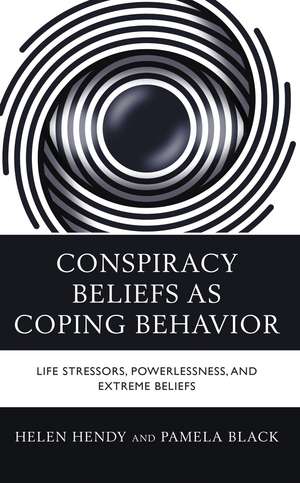
Conspiracy Beliefs as Coping Behavior: Life Stressors, Powerlessness, and Extreme Beliefs
Autor Helen M. Hendy, Pamela Blacken Limba Engleză Paperback – 20 mar 2024
Preț: 219.66 lei
Preț vechi: 306.34 lei
-28%
Puncte Express: 329
Carte tipărită la comandă
Livrare economică 24 noiembrie-08 decembrie
Livrare prin curier în România Termenul estimat este afișat lângă disponibilitate.
Transport gratuit de la 400.00 lei Plată online sau ramburs, în funcție de opțiunile comenzii.
Retur gratuit în 14 zile Comandă securizată și suport în română.
Specificații
ISBN-13: 9781666904055
ISBN-10: 1666904058
Pagini: 190
Ilustrații: 25 b/w illustrations; 12 tables
Dimensiuni: 152 x 228 x 11 mm
Greutate: 0.29 kg
Editura: Bloomsbury Publishing
Colecția Lexington Books
Locul publicării:New York, United States
ISBN-10: 1666904058
Pagini: 190
Ilustrații: 25 b/w illustrations; 12 tables
Dimensiuni: 152 x 228 x 11 mm
Greutate: 0.29 kg
Editura: Bloomsbury Publishing
Colecția Lexington Books
Locul publicării:New York, United States
Cuprins
Contents
List of Tables and Figures
Acknowledgments
Introduction
Part 1. Foundations
Chapter 1. Theoretical Perspectives on Conspiracy Theory Ideation
Chapter 2. Past Research on WHO? and WHY? People Adopt Conspiracy Beliefs
Part 2. Conspiracy Theories Past and Present
Chapter 3. Conspiracy Theories in an Historical Context
Chapter 4. Contemporary Conspiracy Theories
Chapter 5. The Present Study
Part 3. Research Methodology
Chapter 6. Study Participants
Chapter 7. Survey Procedures
Chapter 8. Measurement of Study Variables
Part 4. Data Analysis and Results
Chapter 9. Demographics and Three Life Stressors
Chapter 10. Demographics and PTSD (Powerlessness)
Chapter 11. Demographics and Extreme Beliefs
Chapter 12. Life Stressors and PTSD (Powerlessness)
Chapter 13. Life Stressors and Extreme Beliefs
Chapter 14. Five Conspiracy Beliefs and Violent Ideation
Chapter 15. Does PTSD Mediate between Life Stressors and Extreme Beliefs?
Chapter 16. Do Demographics Moderate the Three-Variable Mediations?
Part 5. Summary and Conclusions
Chapter 17. Summary of Study Results
Chapter 18. Interpretation and Application of Study Results
Chapter 19. Study Limitations and Directions for Future Research
References
About the Authors
List of Tables and Figures
Acknowledgments
Introduction
Part 1. Foundations
Chapter 1. Theoretical Perspectives on Conspiracy Theory Ideation
Chapter 2. Past Research on WHO? and WHY? People Adopt Conspiracy Beliefs
Part 2. Conspiracy Theories Past and Present
Chapter 3. Conspiracy Theories in an Historical Context
Chapter 4. Contemporary Conspiracy Theories
Chapter 5. The Present Study
Part 3. Research Methodology
Chapter 6. Study Participants
Chapter 7. Survey Procedures
Chapter 8. Measurement of Study Variables
Part 4. Data Analysis and Results
Chapter 9. Demographics and Three Life Stressors
Chapter 10. Demographics and PTSD (Powerlessness)
Chapter 11. Demographics and Extreme Beliefs
Chapter 12. Life Stressors and PTSD (Powerlessness)
Chapter 13. Life Stressors and Extreme Beliefs
Chapter 14. Five Conspiracy Beliefs and Violent Ideation
Chapter 15. Does PTSD Mediate between Life Stressors and Extreme Beliefs?
Chapter 16. Do Demographics Moderate the Three-Variable Mediations?
Part 5. Summary and Conclusions
Chapter 17. Summary of Study Results
Chapter 18. Interpretation and Application of Study Results
Chapter 19. Study Limitations and Directions for Future Research
References
About the Authors
Recenzii
Since the January 6, 2021 storming of the US capital by insurrectionists who believed the rigged-election conspiracy theory, it has become evident that conspiracism has risen from the margins of culture to the highest levels of society. Understanding why people believe conspiracy theories is now one of the most important problems to solve in social science, and in their new book, Helen M. Hendy and Pamela Black offer new research to explain who tends to adopt extreme beliefs and the psychological reasons why they do so. This important work is a must read for anyone interested in this existential threat to our democracy.
Conspiracy Beliefs as Coping Behavior: Life Stressors, Powerlessness, and Extreme Beliefs by Helen M. Hendy and Pamela Black is a must read for any scholar of conspiracy theories, misinformation, and fake news. The authors cover new ground by linking understudied psychological traits and experiences to extreme beliefs and violence; I strongly recommend for anyone concerned about our current state of political rancor.
Conspiracy Beliefs as Coping Behavior: Life Stressors, Powerlessness, and Extreme Beliefs by Helen M. Hendy and Pamela Black is a must read for any scholar of conspiracy theories, misinformation, and fake news. The authors cover new ground by linking understudied psychological traits and experiences to extreme beliefs and violence; I strongly recommend for anyone concerned about our current state of political rancor.