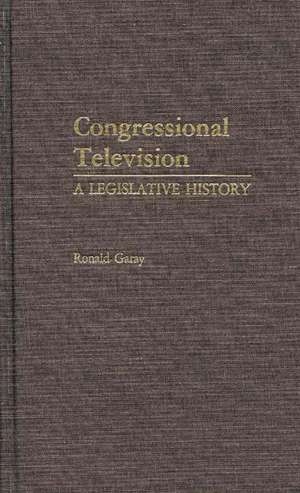
Congressional Television
Autor Ronald Garayen Limba Engleză Hardback – 15 iun 1984
Preț: 385.48 lei
Preț vechi: 631.08 lei
-39%
Puncte Express: 578
Carte tipărită la comandă
Livrare economică 25 decembrie 26 - 08 ianuarie 27
Livrare prin curier în România Termenul estimat este afișat lângă disponibilitate.
Transport gratuit de la 400.00 lei Plată online sau ramburs, în funcție de opțiunile comenzii.
Retur gratuit în 14 zile Comandă securizată și suport în română.
Specificații
ISBN-13: 9780313237072
ISBN-10: 0313237077
Pagini: 208
Dimensiuni: 145 x 222 x 16 mm
Greutate: 0.37 kg
Editura: Praeger
ISBN-10: 0313237077
Pagini: 208
Dimensiuni: 145 x 222 x 16 mm
Greutate: 0.37 kg
Editura: Praeger
V-ar putea interesa
-
 The Politics of PresenceAnne Phillips-31%Preț: 536.49 lei773.21 lei
-
 Advertising: A Very Short IntroductionWinston Fletcher-19%Preț: 57.85 lei71.12 lei
-
 The Oxford Handbook of the American CongressEric Schickler-16%Preț: 335.40 lei401.02 lei
-
 Preț: 139.38 lei
-
 -15%Preț: 483.87 lei569.26 lei
-
 Political MarketingRobert P. Ormrod-18%Preț: 695.89 lei848.65 lei
-
 The Apartisan AmericanRussell J. Dalton-15%Preț: 443.67 lei521.96 lei
-
 Lobbying and AdvocacyDeanna GelakPreț: 407.58 lei
-
 The SAGE Handbook of Political CommunicationHolli A Semetko-18%Preț: 1294.30 lei1578.42 lei
-
 How to be A Spin DoctorPaul RichardsPreț: 92.29 lei
Descriere
Using a format closely resembling a legislative history, Ronald Garay traces the progress of congressional television from its inception in 1922, when the first resolution seeking approval to broadcast House floor proceedings was introduced, to 1979, when legislation allowing that coverage was finally passed. Garay presents the major arguments that have been voiced, both inside and outside Congress, in support of or in opposition to televising congressional proceedings. He places the controversial congressional hearings of the 1950s, the Senate Watergate hearings, House Judiciary Committee debates on presidential impeachment, and other major events in the context of the overall legislative history of congressional television. Garay probes the motivations that prompted Congress, congressmen, and senators to pursue such legislation and also provides insights into the impact television has had on member conduct, legislative proceedings in the House and Senate, and on the congressional television audience.