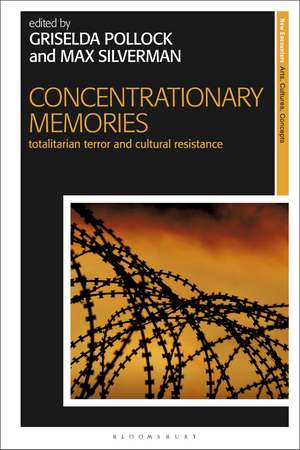
Concentrationary Memories: Totalitarian Terror and Cultural Resistance: New Encounters: Arts, Cultures, Concepts
Editat de Griselda Pollock, Max Silvermanen Limba Engleză Hardback – 20 dec 2012
Considerăm că volumul Concentrationary Memories reprezintă o etapă avansată în studiul memoriei traumatice, propunând o tranziție metodologică de la memoria singulară a lagărului la o multiplicitate de „memorii concentraționare”. Progresul academic al cititorului pornește de la înțelegerea Holocaustului ca eveniment istoric delimitat și ajunge la conceptualizarea acestuia ca o prezență permanentă, o „ciumă” care umbrește modernitatea. Subliniem faptul că acest demers nu este doar istoric, ci profund teoretic, utilizând viziunea lui Alain Resnais din filmul „Noapte și ceață” pentru a citi semnele terorii în cultura contemporană.
Ca și Memory and Representation in Contemporary Europe, acest volum se sprijină pe filozofia politică a lui Hannah Arendt, dar se diferențiază printr-o metodologie interdisciplinară ce prioritizează analiza vizuală și estetică. Structura este riguros organizată în trei părți: teoretizarea spațiului politic, medierea memoriei prin imagine (cu studii de caz pe procesul Eichmann sau filmul lui Resnais) și analize literare ale rezistenței, precum scrierile lui Charlotte Delbo. Reținem că această lucrare continuă cercetările editorilor Griselda Pollock și Max Silverman din premiatul Concentrationary Cinema, extinzând însă cadrul de la cinematografie la o sferă mai largă a practicilor culturale.
În contextul operei lui Griselda Pollock, cunoscută pentru Differencing the Canon, această carte aplică aceeași rigoare critică asupra modului în care arta poate funcționa ca formă de rezistență politică. Este un parcurs dens, care solicită cititorului o familiaritate cu terminologia studiilor culturale, oferind în schimb instrumente de descifrare a modului în care teroarea totalitară a deformat condiția umană și cum memoria poate contracara această deformare.
Din seria New Encounters: Arts, Cultures, Concepts
- 25%
 Preț: 189.08 lei
 - 38%
 Preț: 665.71 lei
 - 23%
 Preț: 202.31 lei
 - 24%
 Preț: 198.65 lei
 - 35%
 Preț: 604.99 lei
 - 24%
 Preț: 216.63 lei
 - 24%
 Preț: 202.29 lei
 - 19%
 Preț: 196.78 lei
 - 17%
 Preț: 208.30 lei
 - 16%
 Preț: 204.57 lei
 - 20%
 Preț: 210.70 lei
 - 28%
 Preț: 169.53 lei
 - 26%
 Preț: 180.51 lei
 - 26%
 Preț: 178.50 lei
 - 25%
 Preț: 182.93 lei
 - nou
 Preț: 214.33 lei
Preț: 862.69 lei
Preț vechi: 1268.69 lei
-32%
Carte tipărită la comandă
Livrare economică 07-21 decembrie
Specificații
ISBN-10: 1780768966
Pagini: 336
Ilustrații: 88 bw illus
Dimensiuni: 156 x 234 x 26 mm
Greutate: 0.84 kg
Editura: Bloomsbury Publishing
Colecția I.B.Tauris
Seria New Encounters: Arts, Cultures, Concepts
Locul publicării:London, United Kingdom
V-ar putea interesa
-
 Vision and Difference: Feminism, Femininity and Histories of ArtGriselda PollockPreț: 177.01 lei
 -
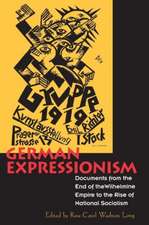 German ExpressionismRose-Carol Washton LongPreț: 291.76 lei
 -
 The Mustard Seed Garden Manual of PaintingMai-Mai SzePreț: 377.46 lei
 -
 Mahler and His WorldKaren PainterPreț: 351.56 lei
 -
 Museums After ModernismGriselda PollockPreț: 384.16 lei
 -
 Cultural Passions: Fans, Aesthetes and Tarot ReadersElizabeth Wilson-26%Preț: 176.48 lei239.80 lei
 -
 -19%Preț: 196.78 lei244.06 lei
 -
 Monstrosity: The Human Monster in Visual CultureAlexa Wright-25%Preț: 182.67 lei242.72 lei
 -
 Bakhtin Reframed: Interpreting Key Thinkers for the ArtsDeborah J. Haynes-20%Preț: 139.23 lei174.37 lei
 -
 -33%Preț: 851.37 lei1264.12 lei
 -
 Material Inventions: Applying Creative Arts ResearchEstelle Barrett-33%Preț: 838.04 lei1244.18 lei
 -
 Adorno Reframed: Interpreting Key Thinkers for the ArtsDr Geoff Boucher-21%Preț: 136.74 lei174.10 lei
De ce să citești această carte
Recomandăm această carte studenților și cercetătorilor din domeniul științelor politice, istoriei artei și studiilor culturale. Cititorul câștigă o înțelegere profundă a modului în care arta, de la Auschwitz la dictaturile din Argentina, servește ca mecanism de rezistență împotriva dezumanizării. Este o resursă esențială pentru cei care doresc să exploreze legătura dintre estetică și etică în analiza regimurilor totalitare.
Despre autor
Griselda Pollock este profesor de istorie critică și socială a artei la Universitatea din Leeds, fiind o figură centrală în teoria feministă și studiile vizuale contemporane. Max Silverman este profesor de studii franceze moderne la aceeași universitate, specializat în relația dintre Holocaust și colonialism. Împreună, au dezvoltat conceptul de „estetică concentraționară”, colaborarea lor fiind recunoscută internațional prin premiul Kraszna-Krausz pentru volumul Concentrationary Cinema. Expertiza lor combinată oferă o perspectivă unică asupra modului în care memoria traumatică este codificată în imagini și texte.
Descriere
Through working with political and cultural theory on readings of film, art, photographic and literary practices, Concentrationary Memories analyses different cultural responses to concentrationary terror in different sites in the post-war period, ranging from Auschwitz to Argentina. These readings show how those involved in the cultural production of memories of the horror of totalitarianism sought to find forms, languages and image systems which could make sense of and resist the post-war condition in which, as Hannah Arendt famously stated 'everything is possible' and 'human beings as human beings become superfluous.' Authors include Nicholas Chare, Isabelle de le Court, Thomas Elsaesser, Benjamin Hannavy Cousen, Matthew John, Claire Launchbury, Sylvie Lindeperg, Laura Malosetti Costa, Griselda Pollock, Max Silverman, Glenn Sujo, Annette Wieviorka and John Wolfe Ackerman.
Cuprins
Griselda Pollock & Max Silverman
Table of Contents
List of Illustrations
Acknowledgements
Introduction
The Politics of Memory: From Concentrationary Memory to Concentrationary Memories
Griselda Pollock & Max Silverman:
Part 1: Theorising the Political Space and Beyond
Chapter 1 The Memory of Politics: Hannah Arendt, Carl Schmitt and the Possibility of Encounter
John Wolfe Ackerman
Part 2: Mediations of Memory
Chapter 2 Migration and Motif: the (Parapractic) Memories of an Image
Thomas Elsaesser
Chapter 3 The Two Stages of the Eichmann Trial
Sylvie Lindeperg & Annette Wieviorka
Chapter 4 Brushing the Film Against the Grain: Locating Jean Cayrol's Lazarean Figure in Alain Resnais's Muriel ou le temps d'un retour
Matthew John
Part 3: Camp Visions
Chapter 5 Symbol Re-formation: Concentrationary Memory in Charlotte Delbo's Auschwitz and After
Nicholas Chare
Chapter 6 A New Visual Structure for the Unthinkable: The Surrealist Aesthetic and the Concentrationary Sublime in Lee Miller's Photographs of Buchenwald and Dachau
Isabelle de le Court
Chapter 7 Muselmann: a distilled image of the Lager?
Glenn Sujo
Chapter 8Nameless before the Concentrationary Void: Charlotte Salomon's Leben? oder Theater? 1941-42 after Gurs
Griselda Pollock
Part 4: Beyond the Limits
Chapter 9 Animated Memory: Ari Folman's Waltz with Bashir
Claire Launchbury
Chapter 10 Isn't this where.? Projections on Pink Floyd The Wall: Tracing the Concentrationary Image
Benjamin Hannavy Cousen
Chapter 11 Memory Work in Argentina 1976-2006
Laura Malosetti Costa
Notes on Contributors
Bibliography
Index