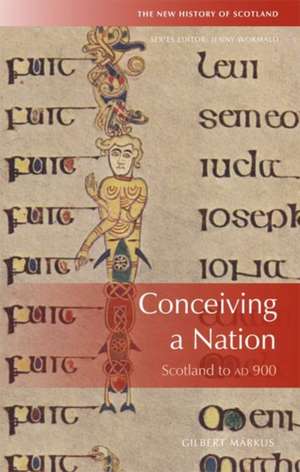
Conceiving a Nation: New History of Scotland
Autor Gilbert Márkusen Limba Engleză Hardback – 14 iul 2017
| Toate formatele și edițiile | Preț | Express |
|---|---|---|
| Paperback (1) | 164.86 lei 3-5 săpt. | |
| EDINBURGH UNIVERSITY PRESS – 26 iul 2017 | 164.86 lei 3-5 săpt. | |
| Hardback (1) | 524.63 lei 6-8 săpt. | |
| EDINBURGH UNIVERSITY PRESS – 14 iul 2017 | 524.63 lei 6-8 săpt. |

Preț: 524.63 lei
Preț vechi: 693.41 lei
-24%
Puncte Express: 787
Preț estimativ în valută:
92.85€ • 108.51$ • 80.61£
92.85€ • 108.51$ • 80.61£
Carte tipărită la comandă
Livrare economică 20 februarie-06 martie
Preluare comenzi: 021 569.72.76
Specificații
ISBN-13: 9780748678983
ISBN-10: 0748678980
Pagini: 312
Dimensiuni: 140 x 216 x 19 mm
Greutate: 0.51 kg
Editura: EDINBURGH UNIVERSITY PRESS
Seria New History of Scotland
ISBN-10: 0748678980
Pagini: 312
Dimensiuni: 140 x 216 x 19 mm
Greutate: 0.51 kg
Editura: EDINBURGH UNIVERSITY PRESS
Seria New History of Scotland
Descriere
Gilbert Markus brings a stimulating approach to studying this elusive period, analysing both its litter of physical evidence and literary sources, as a method of shedding light on the reality of the period. In doing so, he reforms our historical perceptions of what has often been dismissed as a `dark age .