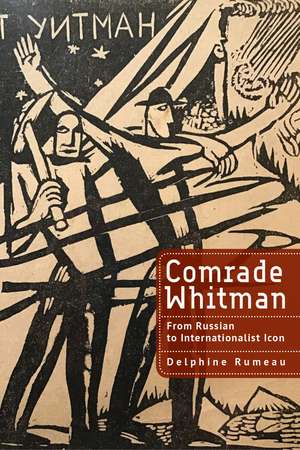
Comrade Whitman: From Russian to Internationalist Icon
Autor Delphine Rumeauen Limba Engleză Paperback – 18 iun 2024
Preț: 240.33 lei
Preț vechi: 304.00 lei
-21%
Puncte Express: 360
Carte disponibilă
Livrare economică 06-20 noiembrie
Livrare express 23-29 octombrie pentru 105.47 lei
Livrare prin curier în România Termenul estimat este afișat lângă disponibilitate.
Transport gratuit de la 400.00 lei Plată online sau ramburs, în funcție de opțiunile comenzii.
Retur gratuit în 14 zile Comandă securizată și suport în română.
Specificații
ISBN-13: 9798887194615
Pagini: 376
Ilustrații: 48
Dimensiuni: 156 x 234 x 20 mm
Greutate: 0.53 kg
Editura: Academic Studies Press
Colecția Academic Studies Press
Locul publicării:Boston, United States
Pagini: 376
Ilustrații: 48
Dimensiuni: 156 x 234 x 20 mm
Greutate: 0.53 kg
Editura: Academic Studies Press
Colecția Academic Studies Press
Locul publicării:Boston, United States
Cuprins
List of illustrations
Permissions
Note on transliteration, names and translations
Acknowledgements
Foreword
Introduction
Chapter 1. Whitman as a primitive (1880s–1910s)
1. A neo-wanderer
2. “Striking up for a New World”
The Adamic Whitman
The Greek Whitman
3. The barbarian
The Germanic Whitman
Against “Latin” sclerosis
4. Westward: another direction for the quest of the primitive in Russia
5. Appropriation and separation
Transatlantic barbarians: Whitman and Verhaeren
Volte-faces
Chapter 2. The Futurist poet (1910s–1920s)
1. The poetry of modern chaos
Poet of the metropolis
A rebel against hierarchy
2. A precursor of Futurism
A “propeller” of Western avant-gardes
Korney Chukovsky’s “first real Futurist”
3. Whitman and (post-) Russian Futurist poetry
Velimir Khlebnikov: from circumspection to kinship
Vladimir Mayakovsky: from anxiety of influence to anxiety of impotence
Post-imperial Whitman (the Baltic states and Ukraine)
Chapter 3. Whitman the prophet (1880s–1930s)
1. The prophet of the body
“I believe in the flesh and the appetites”: the anti-Victorian Whitman
The passion of the body (Konstantin Balmont)
Yiddish poets and the female body
2. The poet as “kosmos”
The prophet’s heart as a cosmos (Morris Rosenfeld)
Cosmic consciousness (Richard Maurice Bucke)
A “chronic mystical perception” (William James)
From the Milky Way to Russian iconostasis (Balmont and Grigoriev)
3. The seer and the guide
New American and British churches
The Russian prorok
The prophet of the Promised Land
Chapter 4. From democrat to socialist (1880s–1919)
Foreword: the impact of the British editions
1. “The institution of the dear love of comrades”
Whitman and British ethical socialism
The transatlantic socialist fellowship
Continental European Whitmanites
2. The Russian democrat
Selected poems, from Whitman and not from Whitman
The poetry of “struggle” versus the poetry of “future democracy”
3. War and peace
“An example of war poetry”
Whitman the wound-dresser
Love and reconciliation
Chapter 5. The extraordinary adventures of Walt Whitman in the land of the Bolsheviks (1918–1936)
1. A wide circulation
The 1920s: (re)-translating, (re)-publishing Whitman in Russian
The anthology of the revolution: highly selected poems
Korenizing Whitman
The 1930s: becoming a classic
2. Whitmanian agitprop
Celebrating the revolution with Whitman in 1918
The Proletkult shows: “the first experiments of poetic theatre”
The Whitman club: “to kiss, to work and to die Whitman’s way”
Whitman and Soviet film: from kino-eye to montage
Chapter 6. Between the wars: a transatlantic fellow traveler (1919–1938)
1. In Europe: the relative decline of the socialist Whitman
The 1919 celebrations
Foiled European revolutions
In the press: the Comintern of translators
Turning “Salut au Monde!” into a parody
2. In the US: Proletarian Whitman
Turning more partisan
Whitman for the workers
“Towards Proletarian Art”: Whitman among leftist intellectuals
In Yiddish: “Salut au Monde!” as a marching hymn
Whitman and the Great Depression
3. Supplementing Whitman’s America
“The other America”
Black Whitman, Red Whitman
Coda: Three American intermedial “Salut au Monde!”
Chapter 7. Pioneers and Pionery: political transfers (1886–1944)
1. Preamble: the British marches of the “Pioneers”
2. Russian and Soviet Pionery
Fake Pioneers
Avant-garde Pionery
From “frontline fighters” to pionery
3. In the US: “O New Pioneers”
Pionern: a velt fun marsh un arbet
The pioneers during the Great Depression
Chapter 8. Anti-fascist Whitman (1936–1945)
1. “Against war and fascism”
“Spain 1873–1874,” Spain 1936–1939
León Felipe: from “Song of Myself” to “Salut au Monde!”
2. World War II: The Whitman pact
A “wartime Whitman” in the US
Looking for Whitman on the White Sea
The honor of poets (the French Resistance)
1945: Singing the spring
Chapter 9. “Salut au Monde!” across the Iron Curtain (1946–1956)
1. “Salut au Monde!” a French comeback
2. Saludo al mundo: from Neruda to Mir
Pablo Neruda’s Let the Rail Splitter Awake
Rendering unto Whitman what belongs to Whitman
Pedro Mir’s Countersong to Walt Whitman
3. The centennial of Leaves of Grass in 1955
New Soviet translations, critics and responses
The World Peace Council and the 1955 celebrations
Yevtushenko and Neruda: watermelons and strawberries
Chapter 10. Back from the USSR (1955–1980s)
1. A Soviet classic
2. Pablo Neruda as Whitmanian go-between
Nerudean repercussions
A final companion
3. Whitman and the counterculture
Walter Lowenfels: American and Soviet dialogs
Lawrence Ferlinghetti: Goodbye, comrade?
Allen Ginsberg: Hello again, camerado!
4. From transatlantic to transmediterranean: new paths
Coda
Appendix
Bibliography
Index of Walt Whitman's Poems and Works
Index of Names
Permissions
Note on transliteration, names and translations
Acknowledgements
Foreword
Introduction
Chapter 1. Whitman as a primitive (1880s–1910s)
1. A neo-wanderer
2. “Striking up for a New World”
The Adamic Whitman
The Greek Whitman
3. The barbarian
The Germanic Whitman
Against “Latin” sclerosis
4. Westward: another direction for the quest of the primitive in Russia
5. Appropriation and separation
Transatlantic barbarians: Whitman and Verhaeren
Volte-faces
Chapter 2. The Futurist poet (1910s–1920s)
1. The poetry of modern chaos
Poet of the metropolis
A rebel against hierarchy
2. A precursor of Futurism
A “propeller” of Western avant-gardes
Korney Chukovsky’s “first real Futurist”
3. Whitman and (post-) Russian Futurist poetry
Velimir Khlebnikov: from circumspection to kinship
Vladimir Mayakovsky: from anxiety of influence to anxiety of impotence
Post-imperial Whitman (the Baltic states and Ukraine)
Chapter 3. Whitman the prophet (1880s–1930s)
1. The prophet of the body
“I believe in the flesh and the appetites”: the anti-Victorian Whitman
The passion of the body (Konstantin Balmont)
Yiddish poets and the female body
2. The poet as “kosmos”
The prophet’s heart as a cosmos (Morris Rosenfeld)
Cosmic consciousness (Richard Maurice Bucke)
A “chronic mystical perception” (William James)
From the Milky Way to Russian iconostasis (Balmont and Grigoriev)
3. The seer and the guide
New American and British churches
The Russian prorok
The prophet of the Promised Land
Chapter 4. From democrat to socialist (1880s–1919)
Foreword: the impact of the British editions
1. “The institution of the dear love of comrades”
Whitman and British ethical socialism
The transatlantic socialist fellowship
Continental European Whitmanites
2. The Russian democrat
Selected poems, from Whitman and not from Whitman
The poetry of “struggle” versus the poetry of “future democracy”
3. War and peace
“An example of war poetry”
Whitman the wound-dresser
Love and reconciliation
Chapter 5. The extraordinary adventures of Walt Whitman in the land of the Bolsheviks (1918–1936)
1. A wide circulation
The 1920s: (re)-translating, (re)-publishing Whitman in Russian
The anthology of the revolution: highly selected poems
Korenizing Whitman
The 1930s: becoming a classic
2. Whitmanian agitprop
Celebrating the revolution with Whitman in 1918
The Proletkult shows: “the first experiments of poetic theatre”
The Whitman club: “to kiss, to work and to die Whitman’s way”
Whitman and Soviet film: from kino-eye to montage
Chapter 6. Between the wars: a transatlantic fellow traveler (1919–1938)
1. In Europe: the relative decline of the socialist Whitman
The 1919 celebrations
Foiled European revolutions
In the press: the Comintern of translators
Turning “Salut au Monde!” into a parody
2. In the US: Proletarian Whitman
Turning more partisan
Whitman for the workers
“Towards Proletarian Art”: Whitman among leftist intellectuals
In Yiddish: “Salut au Monde!” as a marching hymn
Whitman and the Great Depression
3. Supplementing Whitman’s America
“The other America”
Black Whitman, Red Whitman
Coda: Three American intermedial “Salut au Monde!”
Chapter 7. Pioneers and Pionery: political transfers (1886–1944)
1. Preamble: the British marches of the “Pioneers”
2. Russian and Soviet Pionery
Fake Pioneers
Avant-garde Pionery
From “frontline fighters” to pionery
3. In the US: “O New Pioneers”
Pionern: a velt fun marsh un arbet
The pioneers during the Great Depression
Chapter 8. Anti-fascist Whitman (1936–1945)
1. “Against war and fascism”
“Spain 1873–1874,” Spain 1936–1939
León Felipe: from “Song of Myself” to “Salut au Monde!”
2. World War II: The Whitman pact
A “wartime Whitman” in the US
Looking for Whitman on the White Sea
The honor of poets (the French Resistance)
1945: Singing the spring
Chapter 9. “Salut au Monde!” across the Iron Curtain (1946–1956)
1. “Salut au Monde!” a French comeback
2. Saludo al mundo: from Neruda to Mir
Pablo Neruda’s Let the Rail Splitter Awake
Rendering unto Whitman what belongs to Whitman
Pedro Mir’s Countersong to Walt Whitman
3. The centennial of Leaves of Grass in 1955
New Soviet translations, critics and responses
The World Peace Council and the 1955 celebrations
Yevtushenko and Neruda: watermelons and strawberries
Chapter 10. Back from the USSR (1955–1980s)
1. A Soviet classic
2. Pablo Neruda as Whitmanian go-between
Nerudean repercussions
A final companion
3. Whitman and the counterculture
Walter Lowenfels: American and Soviet dialogs
Lawrence Ferlinghetti: Goodbye, comrade?
Allen Ginsberg: Hello again, camerado!
4. From transatlantic to transmediterranean: new paths
Coda
Appendix
Bibliography
Index of Walt Whitman's Poems and Works
Index of Names
Recenzii
“This commendable book is a well-informed cultural history of Walt Whitman reception in many countries. Delphine Rumeau and her assisting multilingual, informed researchers have done us all a great service.”
—Martin Bidney, Slavic Review
“The book deals with a “distant reading” of the fate of Whitman’s poetry after Whitman, embracing a large scope of authors (Russian, Ukrainian, Yiddish, German, French, Brazilian, and so on) and offering an encyclopedic view of the international Whitmania. Rumeau explains her method as the study of cultural transfers, with a focus on factual evidence and a historical perspective.”
—Nataliya Karageorgos, The Russian Review
“Rumeau’s informative, fruitful study adds to the ongoing critical discourse about the role of the poet and poetry, the link between the poetic and the political, and the inheritance that Whitman has left us (as we choose to interpret this legacy). In the ever-evolving field of Whitman’s reception, this book is a treat for scholars, and anyone who appreciates Whitman, anywhere in the world”.
—Dara Barnat, Walt Whitman Quarterly Review
“Rumeau weaves a rich tapestry of strands far beyond the Russian-Soviet image of Whitman. She displays a cast of Russian-American intermediaries who shaped a socialist Whitman in Yiddish translations and a nation-building Whitman for Israel in Hebrew. Though much more awaits, Rumeau references Whitman exports into the languages of the Russian and Soviet empires and she charts the path for transnational studies of Whitman world-wide. ‘Salut au Monde’, indeed!”
—Dale Peterson, The Slavonic and East European Review
“Delphine Rumeau’s Comrade Whitman is a powerful contribution to global literary studies. Her detailed, incisive account of Whitman’s Russian and Soviet reception not only transforms our knowledge of Whitman and his legacy, but it also gives a new account of literary internationalism itself.”
—Rebecca Beasley, University of Oxford
"Although the innovative focus on Whitman in Russia and the Soviet Union may suggest otherwise, this is the first study that establishes Whitman as a truly global poet. A landmark in Whitman research proving that some poetry can break all bounds."
—Walter Grünzweig, TU Dortmund University and Andrássy Universität Budapest; author of Constructing The German Walt Whitman
“Just as Walt Whitman’s poetry collection Leaves of Grass became a paradigmatic work of world literature, so, too, Delphine Rumeau’s study of its reception in Russia and among the international left over the century between the 1880s and the 1980s embodies the very best of contemporary world literature studies. Erudite and multilingual, profoundly historic and featuring excellent close readings, Comrade Whitman is a pleasure to read.”
—Rossen Djagalov, New York University; author of From Internationalism to Postcolonialism: Literature and Cinema between the Second and the Third World (2020)
“Whitman was a communist internationalist avant la lettre. His verse took the socialist world by storm at a time when the nascent Soviet Union was at the center of an internationalist utopian drive. In this superb book about translation, form, and the politics of the transnational left, Delphine Rumeau shows how the author of Leaves of Grass transforms the way that writers around the world, from Moscow to Madrid, thought about poetry.”
—Amelia Glaser, University of California San Diego
—Martin Bidney, Slavic Review
“The book deals with a “distant reading” of the fate of Whitman’s poetry after Whitman, embracing a large scope of authors (Russian, Ukrainian, Yiddish, German, French, Brazilian, and so on) and offering an encyclopedic view of the international Whitmania. Rumeau explains her method as the study of cultural transfers, with a focus on factual evidence and a historical perspective.”
—Nataliya Karageorgos, The Russian Review
“Rumeau’s informative, fruitful study adds to the ongoing critical discourse about the role of the poet and poetry, the link between the poetic and the political, and the inheritance that Whitman has left us (as we choose to interpret this legacy). In the ever-evolving field of Whitman’s reception, this book is a treat for scholars, and anyone who appreciates Whitman, anywhere in the world”.
—Dara Barnat, Walt Whitman Quarterly Review
“Rumeau weaves a rich tapestry of strands far beyond the Russian-Soviet image of Whitman. She displays a cast of Russian-American intermediaries who shaped a socialist Whitman in Yiddish translations and a nation-building Whitman for Israel in Hebrew. Though much more awaits, Rumeau references Whitman exports into the languages of the Russian and Soviet empires and she charts the path for transnational studies of Whitman world-wide. ‘Salut au Monde’, indeed!”
—Dale Peterson, The Slavonic and East European Review
“Delphine Rumeau’s Comrade Whitman is a powerful contribution to global literary studies. Her detailed, incisive account of Whitman’s Russian and Soviet reception not only transforms our knowledge of Whitman and his legacy, but it also gives a new account of literary internationalism itself.”
—Rebecca Beasley, University of Oxford
"Although the innovative focus on Whitman in Russia and the Soviet Union may suggest otherwise, this is the first study that establishes Whitman as a truly global poet. A landmark in Whitman research proving that some poetry can break all bounds."
—Walter Grünzweig, TU Dortmund University and Andrássy Universität Budapest; author of Constructing The German Walt Whitman
“Just as Walt Whitman’s poetry collection Leaves of Grass became a paradigmatic work of world literature, so, too, Delphine Rumeau’s study of its reception in Russia and among the international left over the century between the 1880s and the 1980s embodies the very best of contemporary world literature studies. Erudite and multilingual, profoundly historic and featuring excellent close readings, Comrade Whitman is a pleasure to read.”
—Rossen Djagalov, New York University; author of From Internationalism to Postcolonialism: Literature and Cinema between the Second and the Third World (2020)
“Whitman was a communist internationalist avant la lettre. His verse took the socialist world by storm at a time when the nascent Soviet Union was at the center of an internationalist utopian drive. In this superb book about translation, form, and the politics of the transnational left, Delphine Rumeau shows how the author of Leaves of Grass transforms the way that writers around the world, from Moscow to Madrid, thought about poetry.”
—Amelia Glaser, University of California San Diego