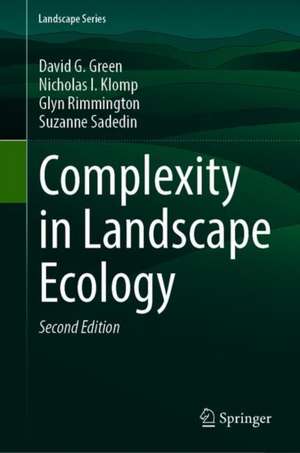
Complexity in Landscape Ecology: Landscape Series, cartea 22
Autor David G. Green, Nicholas I. Klomp, Glyn Rimmington, Suzanne Sadedinen Limba Engleză Hardback – 3 iul 2020
Recomandăm Complexity in Landscape Ecology studenților, cercetătorilor și practicienilor care au nevoie de un cadru teoretic riguros pentru a naviga prin provocările ecologice actuale, precum schimbările climatice și pierderea biodiversității. Această a doua ediție, publicată în Landscape Series, aduce o perspectivă proaspătă asupra modului în care ecotehnologia — de la big data la machine learning — revoluționează capacitatea noastră de a gestiona ecosistemele interconectate. Descoperim aici o abordare non-tehnică a unor concepte dificile, făcând volumul accesibil și pentru cititorul general interesat de sustenabilitate. Putem afirma că forța acestui volum rezidă în structura sa progresivă. Autorii ne ghidează de la unitatea de bază a individului în peisaj, trecând prin dinamica populațiilor și comunităților, până la o viziune globală integrată. Capitolele dedicate informaticii ecologice și lumilor virtuale demonstrează cum modelarea computațională devine indispensabilă în ecologia modernă. Cititorii familiarizați cu Learning Landscape Ecology de Sarah E. Gergel vor aprecia aici trecerea de la instrumentele de analiză spațială pură la o integrare profundă a teoriei sistemelor complexe și a feedback-ului auto-organizat. Lucrarea se înscrie natural în opera lui David G. Green. Dacă în Complex Systems autorul punea bazele teoretice ale haosului și dinamicii non-liniare, iar în Of Ants and Men analiza efectele secundare neintenționate ale activității umane, în acest volum el aplică aceste principii direct pe „mozaicul” peisajului natural. Față de abordarea lui Almo Farina din Principles and Methods in Landscape Ecology, care pune accent pe ecosemiotică, echipa condusă de Green se concentrează pe mecanismele de conectivitate și criticalitate care guvernează reziliența ecosistemelor noastre.
Din seria Landscape Series
- 24%
 Preț: 878.81 lei
 - 24%
 Preț: 993.85 lei
 - 24%
 Preț: 846.83 lei
 - 18%
 Preț: 807.13 lei
 - 23%
 Preț: 703.54 lei
 - 18%
 Preț: 920.35 lei
 - 24%
 Preț: 660.81 lei
 - 24%
 Preț: 969.92 lei
 - 15%
 Preț: 611.23 lei
 - 24%
 Preț: 1565.19 lei
 - 18%
 Preț: 1174.45 lei
 - 18%
 Preț: 902.55 lei
 - 24%
 Preț: 831.48 lei
 - 18%
 Preț: 904.36 lei
 - 18%
 Preț: 1020.91 lei
 - 18%
 Preț: 1333.51 lei
 - 15%
 Preț: 628.42 lei
 - 24%
 Preț: 837.71 lei
 -
 Preț: 494.46 lei
 - 19%
 Preț: 535.64 lei
 -
 Preț: 385.60 lei
 - 18%
 Preț: 1289.99 lei
 - 18%
 Preț: 901.00 lei
 - 18%
 Preț: 1174.28 lei
Preț: 1154.57 lei
Preț vechi: 1408.01 lei
-18%
Carte disponibilă
Livrare economică 06-20 noiembrie
Specificații
ISBN-10: 3030467724
Pagini: 268
Ilustrații: XI, 256 p. 91 illus., 90 illus. in color.
Dimensiuni: 160 x 241 x 20 mm
Greutate: 0.57 kg
Ediția:Second Edition 2020
Editura: Springer
Colecția Landscape Series
Seria Landscape Series
Locul publicării:Cham, Switzerland
De ce să citești această carte
Pentru ecologi și specialiști în conservare, această ediție oferă instrumentele necesare pentru a interpreta datele complexe rezultate din monitorizarea modernă. Cititorul câștigă o înțelegere clară a modului în care micile schimbări la nivel local pot declanșa transformări majore la scară globală. Este o resursă esențială pentru oricine dorește să înțeleagă fundamentele științifice ale sustenabilității într-o lume globalizată.
Despre autor
David G. Green este un cercetător recunoscut în domeniul sistemelor complexe, cu o carieră dedicată înțelegerii modului în care structurile auto-organizate apar în natură și societate. A publicat lucrări de referință precum Complex Systems și Dual Phase Evolution, explorând concepte de la fractali la evoluția computațională. Alături de co-autorii Nicholas I. Klomp, Glyn Rimmington și Suzanne Sadedin, Green integrează în acest volum experiența vastă în ecologie peisajeră și informatică, oferind o viziune multidisciplinară asupra mediului înconjurător.
Descriere scurtă
The updated edition explores innovations in ecotechnology, including automated monitoring, big data, simulation and machine learning, and shows how they are revolutionizing ecology by making it possible to deal more effectively with complexity. Addressing the topic in a progression of ideas from small to large, and from simple to sophisticated, the book examines the implications of complexity for major environmental issues of our time, particularly the urgencies of climate change and loss of biodiversity. Understanding ecological complexity is crucial in today’s globalized and interconnected world. Successful management of the world’s ecosystems must combine models of ecosystem complexity with biodiversity, environmental, geographic, and socioeconomic data. The book examines the impact of humans on landscapes and ecosystems, as well as efforts to embed sustainability, commerce and industrial development in the larger context of ecosystem services and ecological economics. Well-established as researchers in the field, the authors provide a new perspective on current and future understanding of complexity in landscape ecology.
The new edition offers a non-technical account of the topic, so it is both accessible and informative for general readers. For students of ecology, it provides a fresh approach to classical ideas.