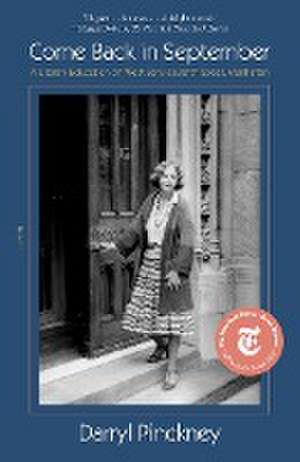
Come Back in September
Autor Darryl Pinckneyen Limba Engleză Paperback – 24 oct 2023
Darryl Pinckney arrived at Columbia University in New York City in the early 1970s and had the opportunity to enroll in Elizabeth Hardwick's creative writing class at Barnard. It changed his life. When the semester was over, he continued to visit her, and he became close to both Hardwick and Barbara Epstein, Hardwick's best friend and neighbor and a fellow founder of The New York Review of Books.
Pinckney was drawn into a New York literary world where he encountered some of the fascinating contributors to the Review, among them Susan Sontag, Robert Lowell, and Mary McCarthy. Yet the intellectual and artistic freedom that Pinckney observed on West Sixty-seventh Street could conflict with the demands of his politically minded family and their sense of the unavoidable lessons of black history. In addition, through his peers and former classmates-such as Felice Rosser, Jim Jarmusch, Jean-Michel Basquiat, Lucy Sante, Howard Brookner, and Nan Goldin-Pinckney witnessed the coming together of the New Wave scene in the East Village. He experienced the avant-garde life at the same time as he was discovering the sexual freedom brought by gay liberation. It was his time for hope.
In Come Back in September, through his memories of the city and of Hardwick, we see the emergence and evolution of Pinckney himself as a writer.
Preț: 114.22 lei
Puncte Express: 171
Carte disponibilă
Livrare economică 06-20 noiembrie
Livrare express 22-28 octombrie pentru 59.10 lei
Livrare prin curier în România Termenul estimat este afișat lângă disponibilitate.
Transport gratuit de la 400.00 lei Plată online sau ramburs, în funcție de opțiunile comenzii.
Retur gratuit în 14 zile Comandă securizată și suport în română.
Specificații
ISBN-13: 9781250893550
ISBN-10: 1250893550
Pagini: 448
Dimensiuni: 141 x 208 x 35 mm
Greutate: 0.45 kg
Editura: Pan Macmillan
ISBN-10: 1250893550
Pagini: 448
Dimensiuni: 141 x 208 x 35 mm
Greutate: 0.45 kg
Editura: Pan Macmillan
V-ar putea interesa
-
 WorkhorseCaroline Palmer-18%Preț: 86.95 lei105.95 lei
 -
 Franny and ZooeyJ. D. SalingerPreț: 63.66 lei
 -
 The Uptown Local: a memoir of Joy, Death, and Joan DidionCory LeadbeaterPreț: 91.14 lei
 -
 Taking ManhattanRussell ShortoPreț: 139.94 lei
 -
 Sleepless NightsElizabeth Hardwick-20%Preț: 56.89 lei71.08 lei
 -
 Bob Dylan Chronicles Volume 1Bob Dylan-19%Preț: 64.49 lei79.19 lei
 -
 -27%Preț: 66.72 lei91.80 lei
 -
 Preț: 134.73 lei
 -
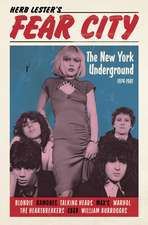 Fear City: The New York Underground, 1974-1981Gary Lachman-17%Preț: 58.03 lei69.84 lei
 -
 The Gods of New YorkJonathan MahlerPreț: 138.96 leiRecomandat
 -
 The New York Stories of Elizabeth HardwickElizabeth HardwickPreț: 104.77 lei
 -
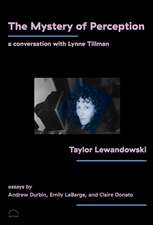 The Mystery of Perception: A Conversation with Lynne TillmanTaylor LewandowskiPreț: 91.94 lei
 -
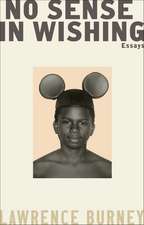 No Sense in Wishing: EssaysLawrence Burney-19%Preț: 115.34 lei142.92 leiRecomandat
 -
 The Collected Essays of Elizabeth HardwickDarryl PinckneyPreț: 145.57 lei
 -
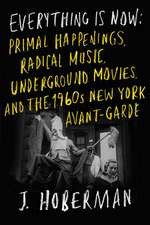 Everything Is NowJ. HobermanPreț: 207.27 lei
 -
 The Friday Afternoon ClubGriffin DunnePreț: 80.95 lei
 -
 GRATEFULLY & AFFECTIONATELYGrainne HurleyPreț: 171.14 lei
 -
 Literary Landscapes: New YorkAmy EvansPreț: 160.87 lei
 -
 An Absence of CousinsLore Segal-18%Preț: 58.50 lei71.51 lei
 -
 Dorothy Parker in HollywoodGail Crowther-18%Preț: 65.79 lei79.95 leiRecomandat
Notă biografică
Darryl Pinckney is the author of the novels Black Deutschland and High Cotton and the nonfiction works Busted in New York and Other Essays, Blackballed: The Black Vote and US Democracy, and Out There: Mavericks of Black Literature.
Descriere
Descriere de la o altă ediție sau format:
WINNER OF THE JAMES TAIT BLACK PRIZE FOR BIOGRAPHY 2023
A Times Best Literary Non-Fiction Book of the Year
Critic and writer Darryl Pinckney recalls his friendship and apprenticeship with Elizabeth Hardwick and Barbara Epstein and the introduction they offered him to the New York literary world.
At the start of the 1970s, Darryl Pinckney arrived in New York City and at Columbia University and enrolled in Elizabeth Hardwick's writing class at Barnard. After he graduated, he was welcomed into her home as a friend and mentee, and he became close with Hardwick and her best friend, neighbor, and fellow founder of The New York Review of Books, Barbara Epstein. Pinckney found himself at the heart of the New York literary world. He was surrounded by the great writers of the time, like Susan Sontag, Robert Lowell, and Mary McCarthy, as well as the overlapping cultural revolutions and communities that swept New York: the New Wave in film, rock, and writing; the art of Felice Rosser, Jean-Michel Basquiat, Lucy Sante, Howard Brookner, and Nan Goldin; the influence of feminism on American culture and literature; the black arts movement confronted by black feminism; and New Negro veterans experiencing the return of their youth as history. Pinckney filtered the avant-garde life he was exposed to downtown and the radical intellectual tradition of The Review through the moral values he inherited and adapted from abolitionist and Reconstruction black culture.
In Come Back in September, Pinckney recalls his introduction to New York and the writing life. The critic and novelist intimately captures this revolutionary, brilliant, and troubled period in American letters. Elizabeth Hardwick was not only the link to the intellectual heart of New York, but also a source of continual support and inspiration-the way she worked, her artistry, and the beauty of her voice. Through his memories of the city and of Hardwick, we see the emergence and evolution of Pinckney himself: as a young man, as a New Yorker, and as one of the essential intellectuals of our time.
WINNER OF THE JAMES TAIT BLACK PRIZE FOR BIOGRAPHY 2023
A Times Best Literary Non-Fiction Book of the Year
Critic and writer Darryl Pinckney recalls his friendship and apprenticeship with Elizabeth Hardwick and Barbara Epstein and the introduction they offered him to the New York literary world.
At the start of the 1970s, Darryl Pinckney arrived in New York City and at Columbia University and enrolled in Elizabeth Hardwick's writing class at Barnard. After he graduated, he was welcomed into her home as a friend and mentee, and he became close with Hardwick and her best friend, neighbor, and fellow founder of The New York Review of Books, Barbara Epstein. Pinckney found himself at the heart of the New York literary world. He was surrounded by the great writers of the time, like Susan Sontag, Robert Lowell, and Mary McCarthy, as well as the overlapping cultural revolutions and communities that swept New York: the New Wave in film, rock, and writing; the art of Felice Rosser, Jean-Michel Basquiat, Lucy Sante, Howard Brookner, and Nan Goldin; the influence of feminism on American culture and literature; the black arts movement confronted by black feminism; and New Negro veterans experiencing the return of their youth as history. Pinckney filtered the avant-garde life he was exposed to downtown and the radical intellectual tradition of The Review through the moral values he inherited and adapted from abolitionist and Reconstruction black culture.
In Come Back in September, Pinckney recalls his introduction to New York and the writing life. The critic and novelist intimately captures this revolutionary, brilliant, and troubled period in American letters. Elizabeth Hardwick was not only the link to the intellectual heart of New York, but also a source of continual support and inspiration-the way she worked, her artistry, and the beauty of her voice. Through his memories of the city and of Hardwick, we see the emergence and evolution of Pinckney himself: as a young man, as a New Yorker, and as one of the essential intellectuals of our time.
Recenzii
offers a tender and unvarnished glimpse of two cultural milieus
A wise, rueful reflection on a lost milieu but an ever more present and essential writer.
Dreamlike and gossipy, this beautifully written memoir of reading, writing and partying in 1970s New York is supremely smart and enjoyable.
An elegant, intriguing pleasure
It is the intelligent, elegant, gossipy book on Hardwick I have been waiting for since I read Pinckney's letters to the author.
Evocative... freewheeling... like being at a particularly fabulous literary party
[A] compelling paeon to a vital, if unlikely, friendship
[A]n intriguing glimpse into a generation of serious intellects
A wise, rueful reflection on a lost milieu but an ever more present and essential writer.
Dreamlike and gossipy, this beautifully written memoir of reading, writing and partying in 1970s New York is supremely smart and enjoyable.
An elegant, intriguing pleasure
It is the intelligent, elegant, gossipy book on Hardwick I have been waiting for since I read Pinckney's letters to the author.
Evocative... freewheeling... like being at a particularly fabulous literary party
[A] compelling paeon to a vital, if unlikely, friendship
[A]n intriguing glimpse into a generation of serious intellects