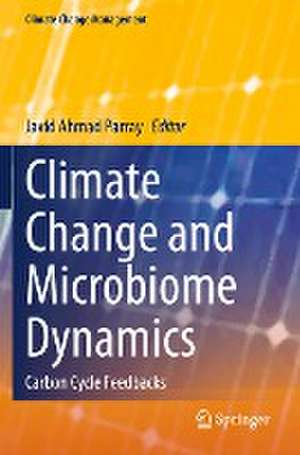
Climate Change and Microbiome Dynamics: Climate Change Management
Editat de Javid Ahmad Parrayen Limba Engleză Paperback – 3 ian 2024
Apărută în prima ediție în 2023, lucrarea Climate Change and Microbiome Dynamics aduce o perspectivă proaspătă și riguros științifică asupra rolului crucial pe care comunitățile microbiene îl joacă în reglarea fluxurilor de carbon la nivel global. Considerăm că noutatea absolută a acestui volum rezidă în abordarea experimentală multifactorială, care depășește simplele observații corelative pentru a investiga modul în care activitățile microbiene din sol se adaptează și pot chiar amplifica sau atenua feedback-ul climatic. Într-un context în care încălzirea globală afectează direct securitatea alimentară, editorul Javid Ahmad Parray propune o sinteză a mecanismelor prin care ecosistemele terestre și acvatice acționează ca rezervoare de carbon. Structura cărții este una progresivă, debutând cu o prezentare generală a dinamicii microbilor în diverse biosisteme și avansând spre analize tehnice complexe. Apreciem în mod deosebit capitolele dedicate metanogenezei și utilizării aditivilor precum biochar-ul în gestionarea calității solului. Lucrarea nu se limitează la teorie, ci explorează soluții practice pentru o agricultură sustenabilă prin utilizarea microorganismelor care promovează creșterea plantelor. Această lucrare reprezintă o alternativă tehnică la Microbiome Under Changing Climate de Ajay Kumar pentru cursurile de microbiologie ambientală și ecologie, cu avantajul unei analize mai detaliate a ciclului carbonului și a utilizării instrumentelor de probă cu izotopi stabili pentru monitorizarea funcțiilor ecosistemice. În contextul operei editorului, volumul completează viziunea acestuia despre sustenabilitate, făcând trecerea de la tehnici de biotehnologie vegetală, explorate în Sustainable Agriculture: Biotechniques in Plant Biology, către o înțelegere sistemică a interacțiunilor sol-atmosferă sub stres climatic.
Din seria Climate Change Management
- 5%
 Preț: 735.61 lei
 -
 Preț: 403.87 lei
 - 18%
 Preț: 934.31 lei
 - 18%
 Preț: 998.19 lei
 - 18%
 Preț: 1161.93 lei
 - 15%
 Preț: 676.20 lei
 - 18%
 Preț: 993.31 lei
 - 18%
 Preț: 927.75 lei
 - 18%
 Preț: 927.93 lei
 - 18%
 Preț: 1272.98 lei
 - 15%
 Preț: 666.97 lei
 - 18%
 Preț: 1164.47 lei
 - 18%
 Preț: 1047.87 lei
 - 18%
 Preț: 1196.61 lei
 - 18%
 Preț: 930.10 lei
 - 18%
 Preț: 1005.36 lei
 - 15%
 Preț: 675.30 lei
 - 18%
 Preț: 984.58 lei
 - 24%
 Preț: 976.16 lei
 - 15%
 Preț: 675.52 lei
 - 15%
 Preț: 671.37 lei
 - 18%
 Preț: 1160.45 lei
 - 24%
 Preț: 958.17 lei
 - 18%
 Preț: 1450.25 lei
 - 18%
 Preț: 1292.44 lei
 - 23%
 Preț: 1004.44 lei
 - 24%
 Preț: 1387.84 lei
 - 18%
 Preț: 1166.80 lei
 - 18%
 Preț: 1166.80 lei
 - 18%
 Preț: 929.88 lei
 - 15%
 Preț: 675.30 lei
Preț: 913.74 lei
Preț vechi: 1142.18 lei
-20%
Carte disponibilă
Livrare economică 09-23 noiembrie
Livrare express 24-30 octombrie pentru 40.77 lei
Specificații
ISBN-10: 3031210816
Pagini: 396
Ilustrații: XI, 382 p. 29 illus., 26 illus. in color.
Dimensiuni: 155 x 235 x 16 mm
Greutate: 0.67 kg
Ediția:1st ed. 2023
Editura: Springer
Colecția Climate Change Management
Seria Climate Change Management
Locul publicării:Cham, Switzerland
De ce să citești această carte
Recomandăm această carte cercetătorilor și studenților la masterat sau doctorat care doresc să înțeleagă mecanismele moleculare și ecologice prin care microbiomul influențează schimbările climatice. Cititorul câștigă o perspectivă aplicată asupra modului în care microorganismele pot fi utilizate pentru a construi sisteme agricole reziliente, beneficiind de cele mai noi date privind dinamica metanului și a oxidului de azot în sol.
Despre autor
Javid Ahmad Parray este un cercetător recunoscut în domeniul microbiologiei și biotehnologiei agricole, având un portofoliu vast de lucrări publicate la edituri de prestigiu precum Springer. Expertiza sa se concentrează pe interacțiunile plantă-microbi și pe utilizarea biotehnologiilor pentru îmbunătățirea sănătății solului. Lucrările sale anterioare, precum cele despre toleranța plantelor la metale grele sau utilizarea sustenabilă a terenurilor, demonstrează un interes constant pentru soluționarea crizelor ecologice prin intermediul științelor vieții. În prezentul volum, el integrează aceste direcții de cercetare pentru a răspunde provocării majore a secolului XXI: managementul feedback-ului climatic.