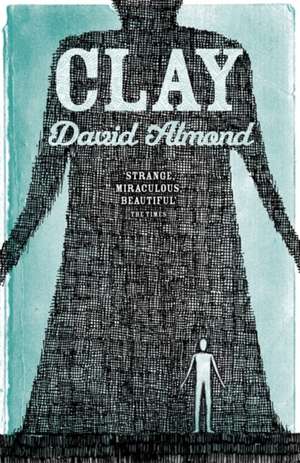
Clay
Autor David Almonden Limba Engleză Paperback – 3 oct 2013 – vârsta până la 13 ani
Ritmul narațiunii în Clay este construit cu o măiestrie care alternează între curiozitatea copilărească și o tensiune psihologică crescândă. Descoperim aici o poveste care începe cu observația atentă a doi prieteni, Davie și Geordie, și se transformă treptat într-o explorare profundă a limitelor creației. Stilul lui David Almond este unul atmosferic, în care dialogul natural dintre copii se împletește cu pasaje de o intensitate aproape mistică, menite să țină cititorul într-o stare de alertă emoțională.
Situat în peisajul industrial și mistic al nordului Angliei, romanul ne prezintă sosirea lui Stephen Rose, un băiat cu un trecut tulbure care pare să posede un talent neobișnuit: acela de a modela argila și de a-i insufla viață. Ceea ce începe ca o dorință inocentă a protagoniștilor de a găsi o „armă secretă” împotriva bătăușului local, Mouldy, devine o confruntare etică despre responsabilitatea de a aduce ceva în existență. Pe același raft cu The Falling Boy, această carte se adresează tinerilor cititori de peste 10-12 ani care caută povești cu substrat filosofic și o atmosferă ușor neliniștitoare.
În contextul operei sale, Clay continuă tradiția realismului magic începută cu Skellig, dar plonjează mai adânc în zonele obscure ale conștiinței umane. Dacă în Kit's Wilderness autorul explora memoria și trecutul minier, aici se concentrează pe intersecția dintre credință și realitate. Este un roman despre pierderea inocenței, unde granița dintre bine și rău nu este niciodată clar definită, oferind o experiență de lectură densă, recompensată prin numeroasele nominalizări la premii prestigioase precum Carnegie Medal.
Preț: 24.76 lei
Preț vechi: 65.77 lei
-62%
Carte disponibilă
Livrare economică 09-23 noiembrie
Livrare express 23-29 octombrie pentru 63.17 lei
Specificații
ISBN-10: 0340969954
Pagini: 304
Ilustrații: n/a
Dimensiuni: 130 x 198 x 26 mm
Greutate: 0.26 kg
Editura: Hachette Children's Group
Colecția Hodder Children's Books
Locul publicării:London, United Kingdom
De ce să citești această carte
Recomandăm Clay părinților care doresc să le ofere adolescenților o lectură provocatoare, care depășește divertismentul facil. Este o carte despre curaj moral și consecințele acțiunilor noastre, scrisă de un laureat al premiului Hans Christian Andersen. Cititorul câștigă o perspectivă nuanțată asupra prieteniei și a puterii imaginației, într-o poveste captivantă care a fost deja validată de critica literară și adaptată pentru ecran de către BBC.
Despre autor
David Almond, născut în 1951, este unul dintre cei mai apreciați scriitori britanici contemporani de literatură pentru copii și tineret. Recunoașterea sa internațională a culminat în 2010 cu premiul Hans Christian Andersen, considerat „Premiul Nobel” pentru literatura infantilă. Debutul său, Skellig, a devenit rapid un clasic modern, fiind votat printre cele mai bune zece cărți din istoria premiului Carnegie. Opera sa este marcată de un stil liric și de o capacitate unică de a îmbina viața cotidiană cu elemente supranaturale, explorând adesea teme precum suferința, speranța și puterea transformatoare a artei.
Descriere
Intrigued, Davie and Geordie befriend Stephen. But they are heading innocently down a path that brings with it a monster of an entirely unexpected nature. Their encounter with the mysterious Stephen is as incredible as it is menacing, and as the true story of Stephen's past slowly emerges, Davie's life is changed for ever...
A stunning novel from the author of the modern children's classic Skellig - winner of the Carnegie Medal and the Whitbread Children's Book Award. David Almond is also winner of the 2010 Hans Christian Andersen award.
Recenzii
Funny, mysterious, moving, frightening and so deftly constructed as to be fiercely compelling. This is extraordinary story telling.
A stunning read.
This adroit and perceptive novel has both immediate appeal and long-lasting resonance.
Both exhilarating and horrifying.
Dark and thought-provoking.
The climax of this strange miraculous, beautiful book will make it a classroom classic.
This is the best that children's fiction has to offer. Brilliant.
His most mysterious and spellbinding work yet.
Hypnotic storytelling.
An astonishing journey. I believe that Almond's books should be compulsory reading in all secondary schools.
... a work of art out of the simplest words ...
... funny, mysterious, moving, frightening, and so deftly constructed as to be fiercely compelling. ... not beneath the attention of adult readers.
He weaves a story web, spiderlike, that holds the reader spellbound while he spins new thought-threads on universal themes
... lilting prose and a seamless blending of primitive magic with discerning realism. ... elegiac lyricism of a lament for lost innocence but punctuated by moments of sharply observed humour, this adroit and perceptive novel has both immediate appeal and long-lasting resonance.
'... another gripping read from one of the master storytellers.'
'...this story is totally accessible...an involving and thought provoking read.'
'Focusing on good and evil, love and desire and the supernatural, Clay transcends the limitations of some writing for children.'
Notă biografică
Extras
He arrived in Felling on a bright and icy February morning. Not so long ago, but it was a different age. I was with Geordie Craggs, like I always was back then. We were swaggering along like always, laughing and joking like always. We passed a Players back and forward between us and blew long strings of smoke into the air. We'd just been on the altar. We were heading for Braddock's garden. We were on Watermill Lane when a red taxi rattled past us. Black fumes belched from it. The sign at the top said it was from down at the coast.
"What's that doing up here?" said Geordie.
A bit of communion wafer was still stuck to my teeth. I poked it free with my tongue and swallowed it, then drew on the cigarette again.
"God knows," I said.
The taxi stopped fifty yards away, outside Crazy Mary's house. Crazy came lolloping out with her red hair flying. She had a big flappy flowery dress and tartan slippers on. The kid got out of the taxi. He pulled a battered brown suitcase after him. Crazy paid the driver; then the two of them headed for her front door. She looked back at us. She tried to put her arm around the kid but he twisted away and went inside. Crazy followed him and the door slammed shut.
The taxi driver leaned out of his window as he went past.
"What you two nebbing at?" he said.
"Nowt much," I said.
"Why don't you nick off back to Whitley Bay?" said Geordie.
"Aye," I said. "Nick off, Fishface."
And we laughed and belted on towards the garden yelling, "Fishface! Fishface! Fishface!"
We went through the ancient iron gate, ducked through the thorns, splashed through the edge of the clay pond, went into the quarry, went into the cave. There was writing on the wall again. We held matches up to it. All it said was 'We're watching you. Your doomd,' then a big black X. Somebody had tried to draw a skull as well but it looked like they'd given up because they were too useless.
I wiped dirt over it all.
Geordie sharpened his knife on a stone.
He pointed it at me.
"Soon there'll be a proper battle," he said.
"Aye," I said.
"It'll be just them and us," he said.
I shivered. I tried to laugh.
"The Battle of Braddock's Garden," I said.
I looked out at the sheer craggy quarry walls, the thick weeds, the deep clay pond, the ruins of Braddock's house above. The sparrow hawk flew out from its stony nest and flapped up into the open sky.
"Who was that at Crazy's?" I said.
He shrugged.
"God knows," he said. "Wouldn't like to be him, though, holed up with that loony."
He took a syrup of figs bottle out of his pocket and lobbed it over. It was half full of the wine that he'd stolen after Mass that morning. I screwed the top off and swigged and smacked my lips. The wine was sticky and sweet and you could soon feel the little bit of dreaminess it brought.
"Pinching altar wine's a sin," I said.
We laughed and snapped some sticks, getting a fire ready.
I pointed to the ground.
"You'll burn in Hell, George Craggs," I said.
"Naa," said Geordie. "Not for that. You go to Hell for proper sins. Like nicking a million quid."
"Or killing somebody," I said.
"Aye." He stabbed the knife into the ground. "Murder!" He swigged the wine and swiped his hand across his lips. "I dreamed I killed Mouldy the other night."
"Did you?"
"Aye."
"Was there loads of blood?"
"Gallons. Blood and guts everywhere."
"Great!"
"I did it here. I stabbed him in the heart, then I chopped his head off and I hoyed it in the pond."
We giggled.
"Prob'ly that'd not be a sin at all," I said. "Prob'ly you'd go straight to Heaven for getting rid of a thing like Mouldy."
"Course you would," said Geordie. "The whole world'd be better off without things like Mouldy."
"Aye."
We were quiet while we thought of Mouldy. We listened to the noises in the quarry.
"You seen how big he's getting?" I said.
"Aye."
"Bliddy Hell," I whispered.
"Aye. Bliddy Hell. He's turning to a monster."
two
There was no mystery. It turned out the kid was called Stephen Rose. He was from Whitley Bay. He was just a bit older than us. The story was he'd gone away to Bennett College to train to be a priest. He went when he was eleven, which wasn't strange back then in the 1960s. We knew loads of lads that did it. Like lots of them, though, Stephen couldn't stand it and he came back out again two or three years later. He'd just been home a month when his dad dropped dead with a stroke. Then his mother went mad and was taken away in the middle of a stormy night to Prudhoe. Stephen was all alone. The Poor Clares were going to take him in; then somehow they found out there was a distant aunt, Crazy Mary, up here in Felling, and so he came to her. The plan was that his mother'd be out soon, they'd set up home down at the coast again, everything would settle down again. But when I heard my parents on about it, it seemed there wouldn't be much chance of that. They'd heard she was truly barmy. She'd gone way way round the bend.
"Worse than Crazy Mary?" I said.
Mam glared at me.
"Don't call the poor woman that," she said. "She's just a devout and troubled soul."
"Sorry," I said.
"You don't know how lucky you are," she said. "There but for the grace of God . . ."
"What?" I groaned. "You worried about my sanity, Mother?"
I twisted my mouth and stuck my tongue out and drooled.
"Stop it!" she snapped. "Don't tempt fate."
She crossed herself.
"Maybe we should call her Holy Mary," she said. "Have you seen anybody else so devout, anybody else that prays so hard, anybody else so filled with yearning?"
I shook my head.
"Well, then," she said. "Did you know there's stories that there's saints in Mary's past?"
"Saints?"
"Way back in her family. Back in Ireland, where the Doonans came from long ago."
Dad laughed.
"In the olden days," he said, "when saints walked in every village and an angel sat in every tree."
From the Hardcover edition.