Civil Disobedience
Autor Henry David Thoreauen Limba Engleză Paperback
Preț: 59.27 lei
Puncte Express: 89
Carte disponibilă
Livrare economică 10-24 noiembrie
Livrare prin curier în România Termenul estimat este afișat lângă disponibilitate.
Transport gratuit de la 400.00 lei Plată online sau ramburs, în funcție de opțiunile comenzii.
Retur gratuit în 14 zile Comandă securizată și suport în română.
Specificații
ISBN-13: 9781494790493
ISBN-10: 1494790491
Pagini: 44
Dimensiuni: 127 x 203 x 2 mm
Greutate: 0.05 kg
Editura: CREATESPACE
ISBN-10: 1494790491
Pagini: 44
Dimensiuni: 127 x 203 x 2 mm
Greutate: 0.05 kg
Editura: CREATESPACE
V-ar putea interesa
-
 Walden and Civil DisobedienceHenry David ThoreauPreț: 31.92 lei
 -
 Walden and Civil DisobedienceHenry David Thoreau-18%Preț: 59.62 lei72.56 lei
 -
 Henry David Thoreau: A Very Short IntroductionLawrence Buell-20%Preț: 57.03 lei71.06 lei
 -
 Walden, Civil Disobedience and Other WritingsHenry David ThoreauPreț: 135.45 lei
 -
 Civil Disobedience and Other EssaysHenry David Thoreau-29%Preț: 17.63 lei24.96 lei
 -
 Walden, Or, Life in the WoodsHenry David Thoreau-17%Preț: 39.06 lei47.32 lei
 -
 On LibertyJohn Stuart Mill-55%Preț: 20.91 lei46.20 lei
 -
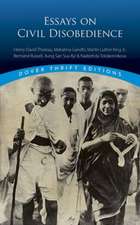 Essays on Civil DisobedienceVariousPreț: 53.81 lei
 -
 Walden and Other WritingsHenry David ThoreauPreț: 38.89 lei
 -
 The Night Thoreau Spent in JailJerome LawrencePreț: 87.47 lei
 -
 Locke: Political WritingsJohn Locke-17%Preț: 141.78 lei171.31 lei
 -
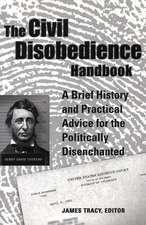 -31%Preț: 56.00 lei80.84 lei
 -
 Walden and Civil DisobedienceHenry Thoreau D-29%Preț: 50.57 lei70.73 lei
 -
 Walden & Civil Disobedience (Masterpiece Library Edition)Henry David ThoreauPreț: 124.32 lei
 -
 Walden and Civil Disobedience (Special Edition)Henry Thoreau D-31%Preț: 106.03 lei154.12 lei
 -
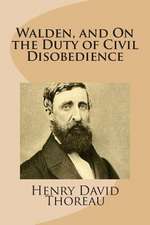 Walden, and on the Duty of Civil DisobedienceHenry David ThoreauPreț: 68.17 lei
 -
 On Civil DisobedienceHannah Arendt-19%Preț: 69.04 lei85.58 lei
 -
 Walden & Civil ObedienceHenry ClaridgePreț: 55.43 lei
 -
 Preț: 61.99 lei
 -
 UtopiaThomas MorePreț: 33.19 lei
Descriere
Descriere de la o altă ediție sau format:
In 1848, Henry David Thoreau twice delivered lectures in Concord, Massachusetts, on “the relationship of the individual to the state.” The essay now known as Civil Disobedience is a significant and widely admired contribution to abolitionist literature, as well as an anti-war tract, but Thoreau’s focus is less on political organization and solidarity than it is on personal choice and individual responsibility. Cultivating personal integrity in the face of political injustice is the project Thoreau defends in Civil Disobedience; this focus has made the work highly influential for twentieth- and twenty-first-century political movements.
Bob Pepperman Taylor’s new Introduction explains the work’s specific political context, helping readers to understand the text as Thoreau wrote it. The edition also offers a number of historical documents on Thoreau’s abolitionism; the war with Mexico; and Thoreau’s philosophical development in relation to other thinkers.
In 1848, Henry David Thoreau twice delivered lectures in Concord, Massachusetts, on “the relationship of the individual to the state.” The essay now known as Civil Disobedience is a significant and widely admired contribution to abolitionist literature, as well as an anti-war tract, but Thoreau’s focus is less on political organization and solidarity than it is on personal choice and individual responsibility. Cultivating personal integrity in the face of political injustice is the project Thoreau defends in Civil Disobedience; this focus has made the work highly influential for twentieth- and twenty-first-century political movements.
Bob Pepperman Taylor’s new Introduction explains the work’s specific political context, helping readers to understand the text as Thoreau wrote it. The edition also offers a number of historical documents on Thoreau’s abolitionism; the war with Mexico; and Thoreau’s philosophical development in relation to other thinkers.
Recenzii
In 1848, Henry David Thoreau twice delivered lectures in Concord, Massachusetts, on “the relationship of the individual to the state.” The essay now known as Civil Disobedience is a significant and widely admired contribution to abolitionist literature, as well as an anti-war tract, but Thoreau’s focus is less on political organization and solidarity than it is on personal choice and individual responsibility. Cultivating personal integrity in the face of political injustice is the project Thoreau defends in Civil Disobedience; this focus has made the work highly influential for twentieth- and twenty-first-century political movements.
Bob Pepperman Taylor’s new Introduction explains the work’s specific political context, helping readers to understand the text as Thoreau wrote it. The edition also offers a number of historical documents on Thoreau’s abolitionism; the war with Mexico; and Thoreau’s philosophical development in relation to other thinkers.
“In this season of political unrest, the arrival of Bob Pepperman Taylor’s teaching edition of Henry David Thoreau’s ‘Civil Disobedience’ couldn’t be better timed … it should be required reading for every person who opines on Thoreau’s essay, whether student, scholar or activist” — Laura Dassow Walls, Early American Literature
“This volume greatly contributes to our ability to understand Thoreau’s essay on civil disobedience as a product of a specific historical context. It is a valuable piece of scholarship on the history of political thought regarding Thoreau’s essay. The introduction is pitched at a level that is appropriate to undergraduates and is written in a very interesting, engaging, and readable style. But given the historically situated analysis of Thoreau’s writing of Civil Disobedience, this volume will also be a valuable resource for established scholars as well. The additional primary texts are thoughtfully selected and relevant, and they help give us a more complete portrait of Thoreau in his time: with these additional readings, we can better grasp the historical context of many of the enigmatic references Thoreau makes in Civil Disobedience.” — Shannon Mariotti, Southwestern University
“A masterful historical contextualization. Bob Pepperman Taylor’s introduction is a model of scholarship and his annotations are consistently illuminating. The supplementary voices, ranging from William Paley to Henry Highland Garnet to Daniel Webster to Ralph Waldo Emerson to Abraham Lincoln, help bring Thoreau to life by setting him in his place and time.” — Jack Turner, University of Washington, editor of A Political Companion to Henry David Thoreau
Bob Pepperman Taylor’s new Introduction explains the work’s specific political context, helping readers to understand the text as Thoreau wrote it. The edition also offers a number of historical documents on Thoreau’s abolitionism; the war with Mexico; and Thoreau’s philosophical development in relation to other thinkers.
“In this season of political unrest, the arrival of Bob Pepperman Taylor’s teaching edition of Henry David Thoreau’s ‘Civil Disobedience’ couldn’t be better timed … it should be required reading for every person who opines on Thoreau’s essay, whether student, scholar or activist” — Laura Dassow Walls, Early American Literature
“This volume greatly contributes to our ability to understand Thoreau’s essay on civil disobedience as a product of a specific historical context. It is a valuable piece of scholarship on the history of political thought regarding Thoreau’s essay. The introduction is pitched at a level that is appropriate to undergraduates and is written in a very interesting, engaging, and readable style. But given the historically situated analysis of Thoreau’s writing of Civil Disobedience, this volume will also be a valuable resource for established scholars as well. The additional primary texts are thoughtfully selected and relevant, and they help give us a more complete portrait of Thoreau in his time: with these additional readings, we can better grasp the historical context of many of the enigmatic references Thoreau makes in Civil Disobedience.” — Shannon Mariotti, Southwestern University
“A masterful historical contextualization. Bob Pepperman Taylor’s introduction is a model of scholarship and his annotations are consistently illuminating. The supplementary voices, ranging from William Paley to Henry Highland Garnet to Daniel Webster to Ralph Waldo Emerson to Abraham Lincoln, help bring Thoreau to life by setting him in his place and time.” — Jack Turner, University of Washington, editor of A Political Companion to Henry David Thoreau
Cuprins
Introduction
Civil Disobedience
Appendix A: Thoreau’s Abolitionism Developed
Civil Disobedience
Appendix A: Thoreau’s Abolitionism Developed
- From Henry David Thoreau, A Plea for Captain John Brown (1860)
- Henry Highland Garnet, Address to the Slaves of the United States (1865)
- Elizabeth Margaret Chandler, Tea-Table Talk (1836)
- William Lloyd Garrison, Declaration of Sentiments of the American Anti-Slavery Society (1852)
- From William Lloyd Garrison, Declaration of Sentiments Adopted by the Peace Convention, The Liberator (28 Sept. 1838)
- William Lloyd Garrison, The American Union (1845)
- Samuel Hoar, Report on His Mission to Charleston, South Carolina (1845)
- From Daniel Webster, Exclusion of Slavery from the Territories, 12 August 1848
- From Daniel Webster, Speech at Capon Springs, Virginia, 28 June 1851
- From Abraham Lincoln, Speech in U.S. House of Representatives on War with Mexico (1848)
- From William Paley, The Duty of Submission to Civil Government Explained (1822)
- Ralph Waldo Emerson, Politics (1844)
Notă biografică
Henry David Thoreau (July 12, 1817 - May 6, 1862) was an American naturalist, essayist, poet, and philosopher. A leading transcendentalist, he is best known for his book Walden, a reflection upon simple living in natural surroundings, and his essay "Civil Disobedience" (originally published as "Resistance to Civil Government"), an argument for disobedience to an unjust state.Thoreau's books, articles, essays, journals, and poetry amount to more than 20 volumes. Among his lasting contributions are his writings on natural history and philosophy, in which he anticipated the methods and findings of ecology and environmental history, two sources of modern-day environmentalism. His literary style interweaves close observation of nature, personal experience, pointed rhetoric, symbolic meanings, and historical lore, while displaying a poetic sensibility, philosophical austerity, and attention to practical detail.[5] He was also deeply interested in the idea of survival in the face of hostile elements, historical change, and natural decay; at the same time he advocated abandoning waste and illusion in order to discover life's true essential needs.Thoreau was a lifelong abolitionist, delivering lectures that attacked the fugitive slave law while praising the writings of Wendell Phillips and defending the abolitionist John Brown. Thoreau's philosophy of civil disobedience later influenced the political thoughts and actions of such notable figures as Leo Tolstoy, Mahatma Gandhi, and Martin Luther King Jr.