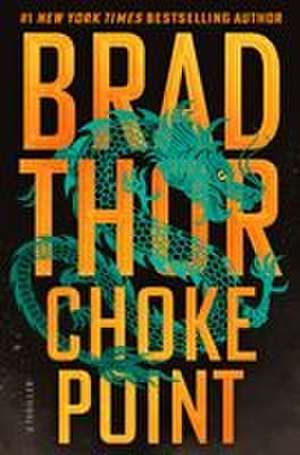
Choke Point
Autor Brad Thoren Limba Engleză Hardback – 29 iul 2026
A devastating series of bombings tears through Bangkok. Scores of American citizens are dead. The attacks send shock waves around the world.
As global assistance pours into Thailand—including the FBI’s famed Evidence Response Team—the president of the United States quietly prepares a plan B: Scot Harvath, America’s top spy, trained to operate outside the law and probe the dark corners others can’t…or won’t.
But the bomber Harvath is pursuing isn’t a terrorist. He’s something far more dangerous—one of ours.
Meanwhile, in Washington, a former United States Marine is being hunted—and he has no idea why. Desperate for answers, he turns to the one person he still trusts—his ex-fiancée, a rising star in the White House. The problem is, she isn’t sure she can trust him.
As Harvath closes in on the bomber, a devastating truth begins to emerge. China has quietly deployed its most elite intelligence unit to Thailand. Their objective: to ignite chaos, trigger a military coup, and seize control of a narrow but critical piece of land, one that could give Beijing a decisive advantage.
If the plan succeeds, Beijing will secure a key gateway between two oceans, eroding American naval dominance and tipping the balance in any war between the world’s great powers.
China will control the ultimate geopolitical choke point.
Preț: 327.73 lei
Nou
Puncte Express: 492
Carte disponibilă
Livrare economică 02-16 noiembrie
Livrare prin curier în România Termenul estimat este afișat lângă disponibilitate.
Transport gratuit de la 400.00 lei Plată online sau ramburs, în funcție de opțiunile comenzii.
Retur gratuit în 14 zile Comandă securizată și suport în română.
Specificații
ISBN-13: 9781420536126
ISBN-10: 1420536125
Dimensiuni: 140 x 218 x 30 mm
Greutate: 0.77 kg
Ediția:Text mare
Editura: Thorndike Press, a Cengage Group
ISBN-10: 1420536125
Dimensiuni: 140 x 218 x 30 mm
Greutate: 0.77 kg
Ediția:Text mare
Editura: Thorndike Press, a Cengage Group
Notă biografică
Brad Thor is the #1 New York Times bestselling author of twenty-six thrillers, including Cold Zero, Black Ice (ThrillerFix Best Thriller of the Year), Near Dark (one of Suspense Magazine’s Best Books of the Year), Backlash (nominated for the Barry Award for Best Thriller of the Year), Spymaster (“One of the all-time best thriller novels” —The Washington Times), The Last Patriot (nominated Best Thriller of the Year by the International Thriller Writers association), and Blowback (one of the “Top 100 Killer Thrillers of All Time” —NPR). Visit his website at BradThor.com and follow him on Facebook @BradThorOfficial, on Instagram @RealBradThor, and on X @BradThor.
Extras
Chapter 1 CHAPTER 1
ITBAYAT ISLAND
BATANES PROVINCE
NORTHERNMOST PHILIPPINES
SATURDAY
There was a click somewhere up ahead, and Scot Harvath, who was on point, gave the silent command for his team to freeze.
The sound had been so faint that he couldn’t distinguish what it was. Had a twig been snapped? Had someone, somewhere out in the darkness, flipped off a weapon’s safety?
Ever since they had moved into the forest, he had wondered if they were stepping into a trap.
Half of his discomfort was because of the men they were hunting. The other half was because operating in Itbayat’s subtropical forest reminded him of jungle warfare. He hated jungle warfare. He had hated it as a SEAL and he hated it even more now. It was hot, humid, and entirely too close for comfort. There were too many bugs, particularly mosquitoes, and the dense shrubs, vines, and ferns were a colossal pain in the ass to move through.
There was something ironic about having quit his job at a private intelligence agency that specialized in taking on the CIA’s most dangerous overflow assignments, only to return and be handed a jungle-style operation on Day One. He couldn’t tell if the powers that be at the Carlton Group were happy to see him back or trying to convince him he should have stayed away.
In all fairness, no one had truly wanted to see him go. What had pissed off his colleagues was his constant one foot in, one foot out, Hokey Pokey dance wherein he refused to even consider ceding the plum assignments to any of the just-as-qualified, younger operatives. He was scraping all the cream off the top for himself. But to his credit, Harvath was very good at what he did.
And while the other operatives may have been equally “qualified,” none of them came close to having the wealth of experience that he did—not in the Special Operations community, or in the espionage world. He was a freakish mashup of both, trained by the best, and he sat atop a very deadly food chain with few who could match him.
In his mind, failure was never an option. Neither were rules. If the bad guys weren’t going to play nice, then he wouldn’t either.
From the Geneva and Hague Conventions to the Marquess of Queensberry, if the other guy’s gloves came off, he was happy to follow suit. But once Harvath’s gloves were off, there was no “de-escalation,” no slow ride up the use-of-force curve. Things would get ugly, fast. As his friends liked to say—Harvath didn’t get PTSD, he gave it.
But now, out here in this subtropical coastal forest—less than 150 klicks across the Bashi Channel from Taiwan—his Spidey-senses were tingling and his cortisol levels were starting to spike. That click had put him even further on edge. He didn’t want to move until he had a better understanding of where that noise had come from.
Via a series of hand gestures, he let the team’s designated marksman, Mike Haney—an ex-Force Recon Marine—know where he wanted him to set up with his Heckler & Koch HK241 battle rifle and where former Delta Force operative Tyler Staelin should position himself with his SIG Sauer M250 light machine gun. If Harvath and his team were headed into an ambush, he was going to make the people who had prepared it sorry they had ever done so.
The next thing he needed to do was get some sort of visual on what was in front of them. Unfortunately, the canopy was too heavy to get one of their drones in the air. They would have to do it the old-fashioned way. Someone was going to have to quietly creep forward.
Normally, Harvath wouldn’t ask anyone on the team to do anything he wouldn’t do, but crawling along the jungle floor was a younger person’s game, and so he chose the youngest member of the team, a man in his early thirties, who was also an ex-Delta Force operative, named Palmer.
Palmer lived for getting dirty. Having recently rained, there was plenty of mud to keep him happy. Turning toward him, Harvath signaled what he wanted done.
Pulling his boot out of the heavy mud, Palmer looked down and then, looking back at Harvath, gave him the finger.
The good-natured insult notwithstanding, Palmer knew his place on the totem pole. Dropping his pack, he readied his weapon, and disappeared into the understory.
Besides Haney and Staelin, everyone else on the team was carrying suppressed, 10.5-inch short-barreled rifles in 300BLK from a company called Noveske in Grants Pass, Oregon. Considering the variety of environments within which the Carlton Group was called upon to carry out its assignments—urban, maritime, and even underground—the Noveske “Shorty” SBR was hard to beat.
In addition to their encrypted, satellite-connected radios with bone-conducting microphones, they were also sporting ENVG-B night vision goggles with overlaid thermal imaging fusion. When it came to the safety and performance of its operatives, the Carlton Group spared no expense.
Despite all that money and technology, however, Harvath and his team hadn’t been able to locate four Chinese nationals who had vanished into the woods as they’d pulled up to their safe house. It was almost as if the men had known they were coming and already had an escape plan in place.
Affixed to Harvath’s chest rig was a hinged, hard-plastic case containing his cell phone. Flipping it down, he let his eyes adjust and studied the imagery from the NSA satellite passing overhead in low earth orbit. If the Chinese were in the woods, there was absolutely no sign of them. Wherever they were hiding, they were doing a damn good job of it. Too good of a job.
The fact that their trail had gone cold almost the moment they were in the forest, the fact that no trace of them could be seen via the team’s night vision devices or the satellite, told Harvath that he was hunting the right men. These guys were pros. And that confirmation only elevated his stress levels. What the hell was he walking into?
The four Chinese were believed to be military intelligence agents working for the PLA. Their job was to covertly surveil joint U.S.-Philippines military exercises, specifically how the United States and the Philippines would deny Chinese naval vessels the ability to transit the Bashi Channel—a vital maritime corridor between the Philippines and Taiwan linking the South China Sea to the broader Pacific Ocean.
U.S. Intelligence also had information that the four-man team was additionally responsible for sabotaging American ground-based anti-ship missiles on Itbayat if hostilities broke out.
Harvath’s assignment had been to capture and interrogate the men. Should that prove too difficult, he was authorized to kill them, but in such a way that it sent a strong message back to Beijing as to what would happen if it sent any more spies.
Of course, Washington didn’t want their fingerprints on the job and neither did Manila. Neither country was itching to directly antagonize the Chinese. Hence, Harvath and his team had been dispatched to handle the situation while providing plausible deniability to both America and the Philippines.
But none of that was going to matter if he couldn’t track down his target.
Activating his radio, he was about to hail Palmer when the forest erupted with the sound of automatic weapons fire and Palmer’s voice came over all his teammates’ earpieces.
“Contact left!” he exclaimed. “Contact left!”
ITBAYAT ISLAND
BATANES PROVINCE
NORTHERNMOST PHILIPPINES
SATURDAY
There was a click somewhere up ahead, and Scot Harvath, who was on point, gave the silent command for his team to freeze.
The sound had been so faint that he couldn’t distinguish what it was. Had a twig been snapped? Had someone, somewhere out in the darkness, flipped off a weapon’s safety?
Ever since they had moved into the forest, he had wondered if they were stepping into a trap.
Half of his discomfort was because of the men they were hunting. The other half was because operating in Itbayat’s subtropical forest reminded him of jungle warfare. He hated jungle warfare. He had hated it as a SEAL and he hated it even more now. It was hot, humid, and entirely too close for comfort. There were too many bugs, particularly mosquitoes, and the dense shrubs, vines, and ferns were a colossal pain in the ass to move through.
There was something ironic about having quit his job at a private intelligence agency that specialized in taking on the CIA’s most dangerous overflow assignments, only to return and be handed a jungle-style operation on Day One. He couldn’t tell if the powers that be at the Carlton Group were happy to see him back or trying to convince him he should have stayed away.
In all fairness, no one had truly wanted to see him go. What had pissed off his colleagues was his constant one foot in, one foot out, Hokey Pokey dance wherein he refused to even consider ceding the plum assignments to any of the just-as-qualified, younger operatives. He was scraping all the cream off the top for himself. But to his credit, Harvath was very good at what he did.
And while the other operatives may have been equally “qualified,” none of them came close to having the wealth of experience that he did—not in the Special Operations community, or in the espionage world. He was a freakish mashup of both, trained by the best, and he sat atop a very deadly food chain with few who could match him.
In his mind, failure was never an option. Neither were rules. If the bad guys weren’t going to play nice, then he wouldn’t either.
From the Geneva and Hague Conventions to the Marquess of Queensberry, if the other guy’s gloves came off, he was happy to follow suit. But once Harvath’s gloves were off, there was no “de-escalation,” no slow ride up the use-of-force curve. Things would get ugly, fast. As his friends liked to say—Harvath didn’t get PTSD, he gave it.
But now, out here in this subtropical coastal forest—less than 150 klicks across the Bashi Channel from Taiwan—his Spidey-senses were tingling and his cortisol levels were starting to spike. That click had put him even further on edge. He didn’t want to move until he had a better understanding of where that noise had come from.
Via a series of hand gestures, he let the team’s designated marksman, Mike Haney—an ex-Force Recon Marine—know where he wanted him to set up with his Heckler & Koch HK241 battle rifle and where former Delta Force operative Tyler Staelin should position himself with his SIG Sauer M250 light machine gun. If Harvath and his team were headed into an ambush, he was going to make the people who had prepared it sorry they had ever done so.
The next thing he needed to do was get some sort of visual on what was in front of them. Unfortunately, the canopy was too heavy to get one of their drones in the air. They would have to do it the old-fashioned way. Someone was going to have to quietly creep forward.
Normally, Harvath wouldn’t ask anyone on the team to do anything he wouldn’t do, but crawling along the jungle floor was a younger person’s game, and so he chose the youngest member of the team, a man in his early thirties, who was also an ex-Delta Force operative, named Palmer.
Palmer lived for getting dirty. Having recently rained, there was plenty of mud to keep him happy. Turning toward him, Harvath signaled what he wanted done.
Pulling his boot out of the heavy mud, Palmer looked down and then, looking back at Harvath, gave him the finger.
The good-natured insult notwithstanding, Palmer knew his place on the totem pole. Dropping his pack, he readied his weapon, and disappeared into the understory.
Besides Haney and Staelin, everyone else on the team was carrying suppressed, 10.5-inch short-barreled rifles in 300BLK from a company called Noveske in Grants Pass, Oregon. Considering the variety of environments within which the Carlton Group was called upon to carry out its assignments—urban, maritime, and even underground—the Noveske “Shorty” SBR was hard to beat.
In addition to their encrypted, satellite-connected radios with bone-conducting microphones, they were also sporting ENVG-B night vision goggles with overlaid thermal imaging fusion. When it came to the safety and performance of its operatives, the Carlton Group spared no expense.
Despite all that money and technology, however, Harvath and his team hadn’t been able to locate four Chinese nationals who had vanished into the woods as they’d pulled up to their safe house. It was almost as if the men had known they were coming and already had an escape plan in place.
Affixed to Harvath’s chest rig was a hinged, hard-plastic case containing his cell phone. Flipping it down, he let his eyes adjust and studied the imagery from the NSA satellite passing overhead in low earth orbit. If the Chinese were in the woods, there was absolutely no sign of them. Wherever they were hiding, they were doing a damn good job of it. Too good of a job.
The fact that their trail had gone cold almost the moment they were in the forest, the fact that no trace of them could be seen via the team’s night vision devices or the satellite, told Harvath that he was hunting the right men. These guys were pros. And that confirmation only elevated his stress levels. What the hell was he walking into?
The four Chinese were believed to be military intelligence agents working for the PLA. Their job was to covertly surveil joint U.S.-Philippines military exercises, specifically how the United States and the Philippines would deny Chinese naval vessels the ability to transit the Bashi Channel—a vital maritime corridor between the Philippines and Taiwan linking the South China Sea to the broader Pacific Ocean.
U.S. Intelligence also had information that the four-man team was additionally responsible for sabotaging American ground-based anti-ship missiles on Itbayat if hostilities broke out.
Harvath’s assignment had been to capture and interrogate the men. Should that prove too difficult, he was authorized to kill them, but in such a way that it sent a strong message back to Beijing as to what would happen if it sent any more spies.
Of course, Washington didn’t want their fingerprints on the job and neither did Manila. Neither country was itching to directly antagonize the Chinese. Hence, Harvath and his team had been dispatched to handle the situation while providing plausible deniability to both America and the Philippines.
But none of that was going to matter if he couldn’t track down his target.
Activating his radio, he was about to hail Palmer when the forest erupted with the sound of automatic weapons fire and Palmer’s voice came over all his teammates’ earpieces.
“Contact left!” he exclaimed. “Contact left!”
Recenzii
"Fabulous... It might be the best... Lots of Americans are going to want to read CHOKE POINT."
"Scot Harvath is the Gold Standard of the political thriller."
"Master of the genre."
"Another Banger!!!"
"This book absolutely rips."
"Scot Harvath is the Gold Standard of the political thriller."
"Master of the genre."
"Another Banger!!!"
"This book absolutely rips."
Descriere
Descriere de la o altă ediție sau format:
#1 New York Times bestselling author Brad Thor returns with his twenty-fifth thriller in the beloved Scot Harvath series.
#1 New York Times bestselling author Brad Thor returns with his twenty-fifth thriller in the beloved Scot Harvath series.