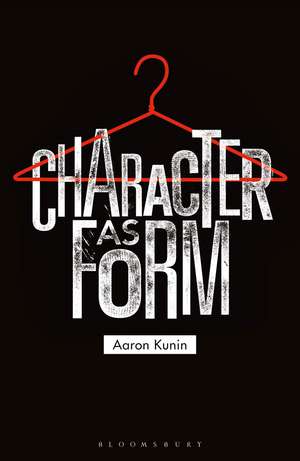
Character as Form
Autor Dr Aaron Kuninen Limba Engleză Hardback – 7 mar 2019
Character as Form celebrates the old meaning of character. The advantage of the old meaning is that it allows for generalization. Characters funnel whole societies of beings into shapes that are compact, elegant, and portable.
This book tests the old meaning of character against modern examples from poems, novels, comics, and performances in theater and film by Shakespeare, Molière, Austen, the Marx Brothers, Raul Ruiz, Denton Welch, and Lynda Barry. The heart of the book is the character of the misanthrope, who, in Shakespeare's phrase, "banishes the world."
Preț: 580.33 lei
Preț vechi: 851.60 lei
-32%
Puncte Express: 870
Carte tipărită la comandă
Livrare economică 27 noiembrie-11 decembrie
Livrare prin curier în România Termenul estimat este afișat lângă disponibilitate.
Transport gratuit pentru acest produs Plată online sau ramburs, în funcție de opțiunile comenzii.
Retur gratuit în 14 zile Comandă securizată și suport în română.
Specificații
ISBN-13: 9781474222716
ISBN-10: 1474222714
Pagini: 256
Ilustrații: 20 bw illus
Dimensiuni: 129 x 198 mm
Greutate: 0.37 kg
Editura: Bloomsbury Publishing
Colecția Bloomsbury Academic
Locul publicării:London, United Kingdom
ISBN-10: 1474222714
Pagini: 256
Ilustrații: 20 bw illus
Dimensiuni: 129 x 198 mm
Greutate: 0.37 kg
Editura: Bloomsbury Publishing
Colecția Bloomsbury Academic
Locul publicării:London, United Kingdom
Cuprins
Introduction
1. Many is not more than one
2. Banish the world
3. What fiction means
4. The wish to be an object
Acknowledgments
Works cited
Index
1. Many is not more than one
2. Banish the world
3. What fiction means
4. The wish to be an object
Acknowledgments
Works cited
Index
Recenzii
Idiosyncratic, often brilliant.
The extraordinary value of Kunin's book lies in his sensitivity to these aesthetic codes, to the way that artworks selectively augment and mute different aspects of their subjects. This is how content happens, and Kunin has an extremely good ear (and eye) for it.
Character as Form is a bracingly original study of narrative character.
Throughout, [Kunin's] analysis is acute and lucid.
Combine[s] moments of thoughtful close reading with a vast and eclectic corpus is impressive; perhaps its most useful and intriguing contribution is the notion that ideas of 'character' not only permeate and shape our engagement with fictional people but also underpin their engagements with each other.
The extraordinary value of Kunin's book lies in his sensitivity to these aesthetic codes, to the way that artworks selectively augment and mute different aspects of their subjects. This is how content happens, and Kunin has an extremely good ear (and eye) for it.
Character as Form is a bracingly original study of narrative character.
Throughout, [Kunin's] analysis is acute and lucid.
Combine[s] moments of thoughtful close reading with a vast and eclectic corpus is impressive; perhaps its most useful and intriguing contribution is the notion that ideas of 'character' not only permeate and shape our engagement with fictional people but also underpin their engagements with each other.