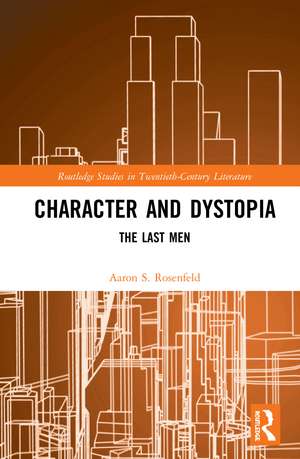
Character and Dystopia: The Last Men: Routledge Studies in Twentieth-Century Literature
Autor Aaron S. Rosenfelden Limba Engleză Hardback – sep 2020
Din seria Routledge Studies in Twentieth-Century Literature
- 15%
 Preț: 457.01 lei
 -
 Preț: 327.22 lei
 - 18%
 Preț: 1289.25 lei
 - 18%
 Preț: 763.72 lei
 - 18%
 Preț: 1293.42 lei
 - 15%
 Preț: 421.30 lei
 -
 Preț: 310.12 lei
 -
 Preț: 485.98 lei
 - 18%
 Preț: 1248.98 lei
 - 18%
 Preț: 1297.76 lei
 - 15%
 Preț: 468.12 lei
 - 18%
 Preț: 1390.25 lei
 - 15%
 Preț: 420.47 lei
 - 18%
 Preț: 1259.69 lei
 - 15%
 Preț: 452.00 lei
 - 15%
 Preț: 470.87 lei
 - 18%
 Preț: 1247.42 lei
 -
 Preț: 486.81 lei
 - 18%
 Preț: 1433.30 lei
 - 15%
 Preț: 465.33 lei
 - 18%
 Preț: 1306.27 lei
 - 18%
 Preț: 1254.47 lei
 -
 Preț: 463.57 lei
 - 18%
 Preț: 1254.12 lei
 - 18%
 Preț: 1256.55 lei
 - 15%
 Preț: 419.92 lei
 - 15%
 Preț: 432.20 lei
 - 18%
 Preț: 1251.67 lei
 -
 Preț: 484.25 lei
 - 15%
 Preț: 435.94 lei
 - 18%
 Preț: 1248.18 lei
 - 18%
 Preț: 1115.51 lei
 - 18%
 Preț: 1254.81 lei
 -
 Preț: 404.23 lei
 -
 Preț: 417.67 lei
Preț: 1112.48 lei
Preț vechi: 1356.68 lei
-18%
Puncte Express: 1669
Carte tipărită la comandă
Livrare economică 03-17 decembrie
Livrare prin curier în România Termenul estimat este afișat lângă disponibilitate.
Transport gratuit pentru acest produs Plată online sau ramburs, în funcție de opțiunile comenzii.
Retur gratuit în 14 zile Comandă securizată și suport în română.
Specificații
ISBN-13: 9780367422752
ISBN-10: 0367422751
Pagini: 286
Dimensiuni: 152 x 229 x 18 mm
Greutate: 0.45 kg
Ediția:1
Editura: Taylor & Francis
Colecția Routledge
Seria Routledge Studies in Twentieth-Century Literature
Locul publicării:Oxford, United Kingdom
ISBN-10: 0367422751
Pagini: 286
Dimensiuni: 152 x 229 x 18 mm
Greutate: 0.45 kg
Ediția:1
Editura: Taylor & Francis
Colecția Routledge
Seria Routledge Studies in Twentieth-Century Literature
Locul publicării:Oxford, United Kingdom
Cuprins
1 Introduction: The Last Men in Europe
2 The Character of Dystopia
The Language of Despair
Realist Dystopia
Setting and Character
Setting as Character
3 What We Talk About When We Talk About Dystopia
The Good Place
Anti-utopianism and Anti-utopias
Dystopian Narrative
Dystopian Law
Post-apocalypse
Future (Im)Perfect
Section II De-forming Character
4 The Last (Hu)Man(ist)
Humanism in Crisis
Utopian and Dystopian Humanism and Anti-humanism
Dystopianism, Naturalism, and Modernism
Defensive Forms: Humanism, Anti-humanism, and the Dystopian Novel
Dystopian Humanism
Dystopian Anti-humanism
5 Anti-Bildungsroman: Dystopia and the End of Character in Zamyatin, Burgess, and Ishiguro
The Novel of De-formation
Allegories of Progress
Divine Minus: Zamyatin’s Reverse Bildungsroman
The Predator’s Progress: Burgess’s Satiric Bildungsroman
Crimes Against Posthumanity: Ishiguro’s Bildungsroman Incarnate
6 Paranoid Plots: Dystopia and the Fantasy of Centrality in Dostoevsky and Orwell
Romantic Paranoia
Paranoid Poetics
"Streets that follow like a tedious argument/ Of insidious intent"
Diseased Romanticism: Dostoevsky’s Psychological Dystopia
He Loved Big Brother: Orwell and the Fantasy of Persecution
Section III Dystopian Variations
7 American Anti-pastoral: Running Down a Dream in West and Mamet
Dystopian Design
What Happens to a Dream Deformed?
West’s World: Dystopian Picaresque in West’s A Cool Million
Utopian Plots: Dystopian Capitalism in Mamet’s Glengarry Glen Ross
8 Romancing the Child: First Teens in Lowry’s The Giver and Butler’s Parable of the Sower
First Teens
New Worlds for Old Desires
A Family Affair: Romantic Humanism in Lowry’s The Giver
On the Road Again: Anti-romantic Anti-humanism in Butler’s Earthseed
9 Epilogue: The Dystopian Real
2 The Character of Dystopia
The Language of Despair
Realist Dystopia
Setting and Character
Setting as Character
3 What We Talk About When We Talk About Dystopia
The Good Place
Anti-utopianism and Anti-utopias
Dystopian Narrative
Dystopian Law
Post-apocalypse
Future (Im)Perfect
Section II De-forming Character
4 The Last (Hu)Man(ist)
Humanism in Crisis
Utopian and Dystopian Humanism and Anti-humanism
Dystopianism, Naturalism, and Modernism
Defensive Forms: Humanism, Anti-humanism, and the Dystopian Novel
Dystopian Humanism
Dystopian Anti-humanism
5 Anti-Bildungsroman: Dystopia and the End of Character in Zamyatin, Burgess, and Ishiguro
The Novel of De-formation
Allegories of Progress
Divine Minus: Zamyatin’s Reverse Bildungsroman
The Predator’s Progress: Burgess’s Satiric Bildungsroman
Crimes Against Posthumanity: Ishiguro’s Bildungsroman Incarnate
6 Paranoid Plots: Dystopia and the Fantasy of Centrality in Dostoevsky and Orwell
Romantic Paranoia
Paranoid Poetics
"Streets that follow like a tedious argument/ Of insidious intent"
Diseased Romanticism: Dostoevsky’s Psychological Dystopia
He Loved Big Brother: Orwell and the Fantasy of Persecution
Section III Dystopian Variations
7 American Anti-pastoral: Running Down a Dream in West and Mamet
Dystopian Design
What Happens to a Dream Deformed?
West’s World: Dystopian Picaresque in West’s A Cool Million
Utopian Plots: Dystopian Capitalism in Mamet’s Glengarry Glen Ross
8 Romancing the Child: First Teens in Lowry’s The Giver and Butler’s Parable of the Sower
First Teens
New Worlds for Old Desires
A Family Affair: Romantic Humanism in Lowry’s The Giver
On the Road Again: Anti-romantic Anti-humanism in Butler’s Earthseed
9 Epilogue: The Dystopian Real
Notă biografică
Aaron Rosenfeld holds a Ph.D. in English Literature from New York University and is Associate Professor of English at Iona College, teaching classes in 20th-century literature.
Descriere
Character and Dystopia examines dystopian characterization through analysis of the "last man" figure. By reading character as crucial to the dystopian project, the book makes a case for dystopia as a sensitive register of modern anxieties about subjectivity and its portrayal in literary works.