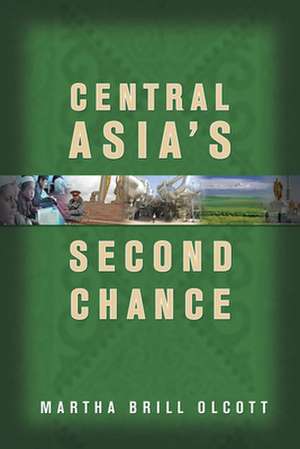
Central Asia's Second Chance
Autor Martha Brill Olcotten Limba Engleză Paperback – 5 aug 2005
A leading authority on Central Asia offers a sweeping review of the region's path from independence to the post-9/11 world. The first decade of Central Asian independence was disappointing for those who envisioned a straightforward transition from Soviet republics to independent states with market economies and democratic political systems. Leaders excused political failures by pointing to security risks, including the presence of terrorist training camps in Afghanistan. The situation changed dramatically after 9/11, when the camps were largely destroyed and the United States introduced a military presence. More importantly the international community engaged with these states to give them a "second chance" to address social and economic problems. But neither the aid-givers nor the recipients were willing to approach problems in new ways. Now, terrorists groups are once again making their presence felt and some states may be becoming global security risks. This book explores how the region squandered its second chance and what might happen next.
Preț: 148.63 lei
Puncte Express: 223
Carte disponibilă
Livrare economică 14-28 noiembrie
Livrare prin curier în România Termenul estimat este afișat lângă disponibilitate.
Transport gratuit de la 400.00 lei Plată online sau ramburs, în funcție de opțiunile comenzii.
Retur gratuit în 14 zile Comandă securizată și suport în română.
Specificații
ISBN-13: 9780870032172
ISBN-10: 0870032178
Pagini: 406
Ilustrații: 1 folded col. map
Dimensiuni: 152 x 229 x 24 mm
Greutate: 0.66 kg
Editura: Carnegie Endowment for International Peace
Locul publicării:United States
ISBN-10: 0870032178
Pagini: 406
Ilustrații: 1 folded col. map
Dimensiuni: 152 x 229 x 24 mm
Greutate: 0.66 kg
Editura: Carnegie Endowment for International Peace
Locul publicării:United States
V-ar putea interesa
-
 Edmund BurkeJesse NormanPreț: 94.21 lei
 -
 ArgoAntonio MendezPreț: 101.09 lei
 -
 -34%Preț: 583.85 lei879.20 lei
 -
 Biohackers: The Politics of Open ScienceAlessandro DelfantiPreț: 261.62 lei
 -
 Demanding the ImpossibleSlavoj ZizekPreț: 130.99 lei
 -
 Human Rights in Our Own Backyard – Injustice and Resistance in the United StatesWilliam T. ArmalinePreț: 284.63 lei
 -
 Power Play: The Bush Presidency and the ConstitutionJames P. Pfiffner-23%Preț: 146.73 lei191.40 lei
 -
 Preț: 144.51 lei
Notă biografică
Martha Brill Olcott , selected by Washingtonian magazine for its list of "71 People the President Should Listen To" about the war on terrorism, is a senior associate at the Carnegie Endowment for International Peace specializing in Centr
Descriere
A leading authority on Central Asia offers a sweeping review of the region's path from independence to the post-9/11 world. The first decade of Central Asian independence was disappointing for those who envisioned a straightforward transition from Soviet republics to independent states with market economies and democratic political systems. Leaders excused political failures by pointing to security risks, including the presence of terrorist training camps in Afghanistan. The situation changed dramatically after 9/11, when the camps were largely destroyed and the United States introduced a military presence. More importantly the international community engaged with these states to give them a "second chance" to address social and economic problems. But neither the aid-givers nor the recipients were willing to approach problems in new ways. Now, terrorists groups are once again making their presence felt and some states may be becoming global security risks. This book explores how the region squandered its second chance and what might happen next.