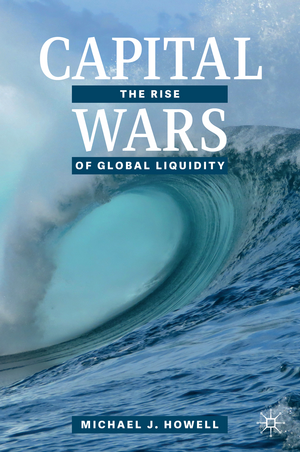
Capital Wars
Autor Michael J. Howellen Limba Engleză Hardback – 25 mar 2020
În analiza piețelor financiare contemporane, adesea ne pierdem în zgomotul ratelor dobânzilor, ignorând forța care mișcă cu adevărat prețurile activelor: cantitatea de fluxuri financiare. Găsim în Capital Wars o abordare riguroasă și autoritară asupra Lichidității Globale, un bazin de 130 de trilioane de dolari care guvernează volatilitatea actuală. Volumul oferă instrumente analitice fundamentale, precum modelul de lichiditate (The Liquidity Model) și indicii specializați Global Liquidity Indexes, transformând un concept adesea vag într-o metrică precisă pentru investitori și economiști. Structura lucrării urmează o progresie logică de la definirea banilor globali către mecanismele complexe de transmisie. Descoperim aici cum dereglarea și inovația au propulsat globalizarea financiară peste vârfurile atinse înainte de Primul Război Mondial. Michael J. Howell disecă rolul băncilor centrale, importanța sistemului shadow banking și ascensiunea piețelor Repo, demonstrând de ce profiturile de pe Wall Street din ultimele decenii sunt mai degrabă produsul lichidității decât al câștigurilor corporative brute. Complementar lucrării Global Financial Flows in the Pre- and Post-global Crisis Periods, care se concentrează pe crizele trecute precum cea a creditelor subprime, volumul de față acoperă zona dinamică a schimbării polului de putere către Est, explorând „Drumul Financiar al Mătăsii” și dominanța crescândă a Chinei. Dacă în lucrarea sa anterioară, Timothy's Titanic Scrapbook, autorul explora teme narative legate de credință și pierdere sub formă de jurnal, în Capital Wars adoptă un ton analitic tranșant, dedicat înțelegerii războaielor de capital moderne. Apreciem în mod deosebit capitolele dedicate interacțiunii dintre Fed, BCE și PBoC, care oferă cititorului un cadru strategic pentru a anticipa schimbările de evaluare macroeconomice într-o lume tot mai volatilă.
Preț: 414.50 lei
Preț vechi: 499.39 lei
-17%
Carte disponibilă
Livrare economică 31 octombrie-14 noiembrie
Livrare express 17-23 octombrie pentru 42.52 lei
Specificații
ISBN-10: 3030392872
Pagini: 304
Ilustrații: XXII, 304 p. 109 illus., 108 illus. in color.
Dimensiuni: 159 x 237 x 27 mm
Greutate: 0.67 kg
Ediția:2020 edition
Editura: Springer Nature Switzerland AG
Locul publicării:Cham, Switzerland
V-ar putea interesa
-
 Preț: 192.25 lei
 -
 The Cash NexusNiall Ferguson-19%Preț: 97.81 lei120.58 lei
 -
 Risk and LiquidityHyun Song Shin-18%Preț: 249.74 lei304.94 lei
 -
 Financial Times Guide to Using the Financial Pages, TheRomesh Vaitilingam-20%Preț: 226.42 lei283.02 lei
 -
 Preț: 344.03 lei
 -
 The Death of MoneyJames Rickards-31%Preț: 63.50 lei92.05 lei
 -
 This Time is DifferentCarmen M. ReinhartPreț: 143.00 lei
 -
 Irrational ExuberanceRobert J. ShillerPreț: 127.87 lei
 -
 Paper PromisesPhilip Coggan-20%Preț: 62.40 lei78.11 lei
 -
 The Shifts and the ShocksMartin Wolf-28%Preț: 77.69 lei108.55 lei
 -
 Financial Cold WarJames A FokPreț: 187.36 lei
 -
 Finance and Financial MarketsKeith Pilbeam-31%Preț: 451.53 lei652.32 lei
 -
 -18%Preț: 178.33 lei217.75 lei
 -
 Any Happy Returns - Structural Changes and Super Cycles in MarketsPeter C. OppenheimerPreț: 244.82 lei
 -
 The Collapse of Global LiberalismPhilip PilkingtonPreț: 115.00 lei
 -
 -23%Preț: 90.83 lei117.92 lei
 -
 Currency Wars: The Making of the Next Global CrisisJames RickardsPreț: 122.26 lei
 -
 What Went Wrong With CapitalismRuchir SharmaPreț: 93.65 lei
 -
 How to Listen When Markets SpeakLawrence McDonaldPreț: 92.71 lei
 -
 Doom LoopEswar S. PrasadPreț: 185.03 lei
De ce să citești această carte
Recomandăm această carte profesioniștilor din finanțe și factorilor de decizie care doresc să înțeleagă mecanismele invizibile ale fluxurilor de capital. Veți câștiga o perspectivă clară asupra modului în care lichiditatea, și nu doar inflația, dictează succesul investițiilor. Este un ghid esențial pentru a naviga într-o economie globală unde China joacă un rol central și unde volatilitatea este noul standard.
Despre autor
Michael J. Howell este un expert recunoscut în analiza fluxurilor financiare internaționale, cu o vastă experiență în monitorizarea lichidității globale. În Capital Wars, publicată de Springer, el își valorifică expertiza tehnică pentru a explica transformările din sistemul bancar angrosist și piețele de capital. Deși palmaresul său include și lucrări de ficțiune bazate pe fapte istorice, precum Timothy's Titanic Scrapbook, Howell este consacrat în mediul academic și profesional pentru capacitatea de a cuantifica fenomene economice complexe, fiind un reper pentru economiștii care studiază impactul politicilor băncilor centrale asupra piețelor emergente.
Descriere scurtă
International spill-overs of these rapacious cross-border flows sets off capital wars and exposes the unattractive face of liquidity called ‘risk.’ As the world grows bigger, it becomes ever more volatile. From the early 1960s onwards, the world economy and its financial markets have suffered from three broad types of shocks – labour costs, oil and commodities, and global liquidity. Financial markets spin on fragile axes and the absence of liquidity often provides a warning of upcoming troubles.
Global Liquidity is a much-discussed, but narrowly-researchedand vaguely-defined topic. This book deeply explores the subject by clearly defining and measuring liquidity worldwide and by showing its importance for investors. The roles of central banks, shadow banking, the rise of Repo and growth of wholesale money are discussed. Additionally, covering the latest developments in China’s increasingly dominant financial economy, this book will appeal to practitioners, policy-makers, economists and academics, as well as those with a general interest in how financial markets work.
Cuprins
Recenzii
“As a description of the workings of the modern global financial system and the interrelationship of finance and the real economy, it has no current rival. Not for beginners, but essential reading for market practitioners.” (John Plender, Financial Times, July 12, 2020)