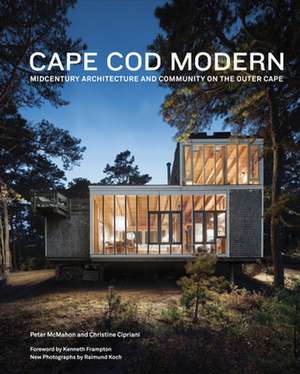
Cape Cod Modern
Fotografii de Raimund Kochen Limba Engleză Hardback – 30 iun 2014
Publicat într-un format Hardback generos de către Metropolis Books, volumul Cape Cod Modern se impune imediat prin calitatea tactilă a hârtiei și claritatea celor 330 de ilustrații. Observăm o atenție deosebită acordată reproducerilor, unde cele 130 de planșe color reușesc să redea fidel textura lemnului și dialogul dintre sticlă și lumina marină. Fotografiile semnate de Raimund Koch nu sunt simple documentări tehnice, ci experiențe vizuale care ne transportă în „laboratoarele” de locuit ale unor vizionari care au ales izolarea creativă pe coasta Atlanticului. Ne-a atras atenția modul în care autorii recuperează o istorie nescrisă a arhitecturii americane, pornind de la reuniunea simbolică din 1937 a maeștrilor Bauhaus — Walter Gropius, Marcel Breuer sau László Moholy-Nagy. Pe raftul de artă, alături de monografia Walter Gropius. 1883 - 1969, acest album se distinge prin abordarea sa regională: nu este doar o analiză a stilului internațional, ci o poveste despre adaptarea rigorii europene la spiritul vernacular al satelor de pescari. Dacă volume precum Bauhaus (English Edition) oferă o perspectivă academică asupra școlii germane, Cape Cod Modern ne propune o privire intimă asupra modului în care aceleași idealuri au fost traduse în case de vacanță experimentale, ridicate în păduri sau pe dune de nisip. Structura narativă ne poartă de la primele cabane închiriate până la brutalismul reinterpretat de Charlie Zehnder. Ritmul lecturii este susținut de alternanța între schițe de arhivă și imagini contemporane, oferind o perspectivă completă asupra unui fenomen intelectual care a transformat Outer Cape într-un focar de avangardă. Este o celebrare a designului care nu caută opulența, ci comuniunea cu natura.
Preț: 318.15 lei
Carte disponibilă
Livrare economică 16-30 noiembrie
Livrare express 30 octombrie-05 noiembrie pentru 117.90 lei
Specificații
ISBN-10: 1935202162
Pagini: 272
Ilustrații: 330 illustrations, 130 in colour
Dimensiuni: 217 x 274 x 30 mm
Greutate: 1.52 kg
Editura: Metropolis Books
V-ar putea interesa
-
 Bauhaus ImaginistaGrant Watson-16%Preț: 274.94 lei326.78 lei
 -
 BauhausFrank Whitford-17%Preț: 90.89 lei109.57 lei
 -
 Bauhaus Goes WestAlan Powers-19%Preț: 76.37 lei93.91 lei
 -
 GropiusFiona MaccarthyPreț: 226.68 lei
 -
 -16%Preț: 261.34 lei311.30 lei
 -
 Walter Gropius in Britain: Emigration and CollaborationsAlborz Dianat-14%Preț: 1109.57 lei1290.20 lei
 -
 From Bauhaus to Our HouseTom WolfePreț: 88.97 lei
 -
 Breuer's BohemiaJames Crump-18%Preț: 284.04 lei344.69 lei
 -
 Anni & Josef AlbersNicholas Fox Weber-19%Preț: 681.71 lei841.97 lei
 -
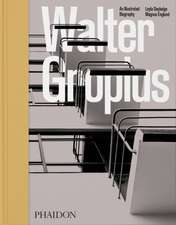 Walter GropiusLeyla Daybelge-21%Preț: 661.14 lei832.98 lei
 -
 Isokon and the Bauhaus in BritainLeyla Daybelge-13%Preț: 172.39 lei198.80 lei
 -
 Fire Island Modernist: Horace Gifford and the Architecture of SeductionChristopher Rawlins-11%Preț: 413.86 lei465.01 lei
 -
 -28%Preț: 209.49 lei292.94 lei
 -
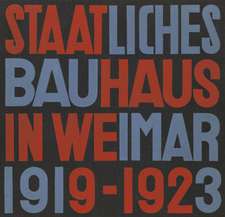 -15%Preț: 420.57 lei496.46 lei
 -
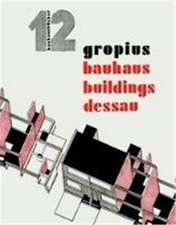 -22%Preț: 288.26 lei367.84 lei
 -
 50 Bauhaus Icons You Should KnowStraber, Josef-10%Preț: 98.99 lei110.19 lei
 -
 Walter Gropius. 1883 - 1969Paul SigelPreț: 132.13 lei
 -
 Bauhaus (English Edition)Magdalena DrostePreț: 132.13 lei
 -
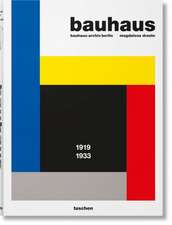 BauhausMagdalena Droste-15%Preț: 555.19 lei653.17 lei
De ce să citești această carte
Recomandăm această carte pasionaților de arhitectură care doresc să descopere o latură mai puțin cunoscută a modernismului american. Cititorul câștigă acces la interioare și planuri de arhitectură ale unor reședințe private, rareori accesibile publicului. Este o resursă vizuală excepțională care demonstrează cum estetica Bauhaus a fost îmblânzită de peisajul de coastă, oferind inspirație concretă pentru un stil de viață bazat pe simplitate și creativitate.